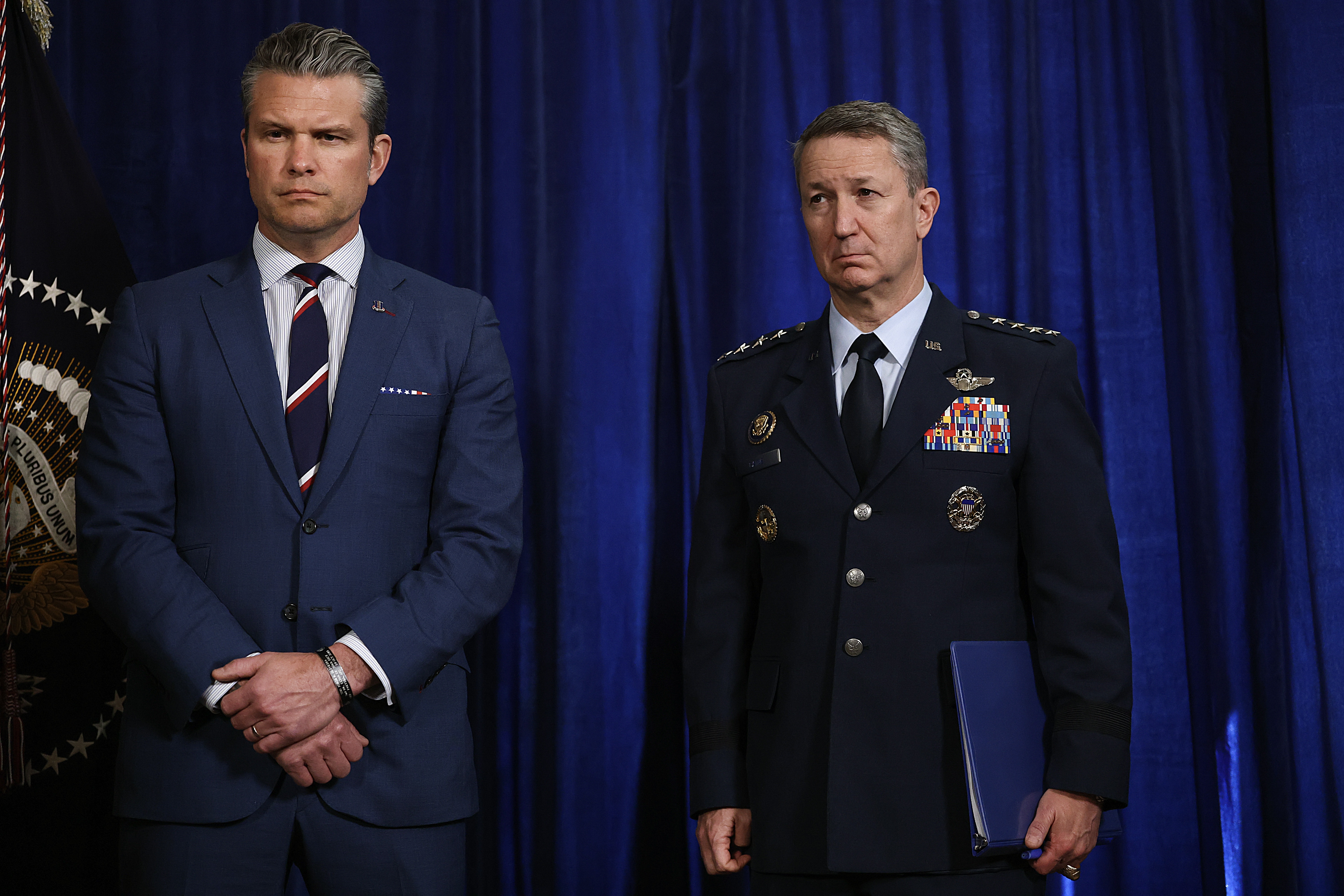
The Department of Defense is entering a period of structural upheaval that hasn't been seen since the Goldwater-Nichols Act of 1986. Pete Hegseth, the nominee for Secretary of Defense, has made it clear that the incoming administration views the current military bureaucracy not as a shield, but as a self-sustaining ecosystem that prioritizes institutional inertia over lethality. When Hegseth claims that the United States didn't start the current global "war" but intends to finish it under Donald Trump, he isn't just talking about kinetic conflict in Eastern Europe or the Middle East. He is describing an internal purge of the "managerial class" within the Pentagon.
The mission is simple. The execution will be bloody.
To understand the shift, one must look past the cable news soundbites and into the mechanics of how the U.S. military actually functions. For the last twenty years, the Pentagon has operated on a "forever war" footing that benefited defense contractors and high-ranking flag officers more than the tactical proficiency of the rank-and-file. The new mandate is to strip away the social engineering initiatives and bureaucratic bloat that have come to define the modern military experience, refocusing every dollar and man-hour on the singular goal of winning a high-intensity conflict against a peer adversary.
The Dismantling of the General Officer Class
The most immediate friction point involves the proposed "Warrior Board." This is a mechanism designed to review three- and four-star generals to determine if they are fit for leadership or if they have become too entrenched in the political messaging of the previous decade. For decades, the promotion track to the highest levels of the Pentagon required a specific type of political navigation. Generals had to be as comfortable in a Senate hearing or a corporate boardroom as they were in a command center.
The incoming leadership views this as a fatal flaw.
The argument is that the military has become top-heavy. During World War II, the ratio of general officers to enlisted personnel was lean. Today, even as the total number of active-duty troops has shrunk, the "brass" has remained inflated. This creates a bottleneck of decision-making. By clearing out the top tier, the administration aims to promote a younger, more aggressive generation of colonels and brigadiers who are less invested in the status quo and more focused on the technological demands of 21st-century attrition.
Procurement as a Weapon of Statecraft
If you want to know why American military readiness has slipped, follow the money. The defense acquisition process is a labyrinth designed to prevent failure, which, paradoxically, makes it impossible to succeed at speed. It takes ten years to field a new software-defined radio while a teenager in a garage can iterate on a drone design in three weeks.
Hegseth and the broader Trump circle view the current procurement model as a national security threat. The "war" they intend to finish is the one against the "Big Five" defense contractors who have enjoyed cost-plus contracts for decades. These contracts guarantee profit regardless of performance, leading to projects like the F-35 which, while capable, became a fiscal black hole.
The strategy involves a pivot toward:
- Mass-producible autonomous systems: Moving away from a few "exquisite" platforms (like a $13 billion aircraft carrier) toward thousands of cheap, expendable drones.
- Fixed-price contracting: Forcing companies to eat the cost of delays and overruns, shifting the risk from the taxpayer to the shareholder.
- Silicon Valley integration: Bypassing traditional beltway firms to bring in companies that move at the speed of commercial tech.
This isn't just about saving money. It is about out-pacing China in the South China Sea. If the U.S. cannot produce more munitions and platforms than its primary competitor, the deterrent effect of the American military vanishes.
Cultural Recalibration and the Recruitment Crisis
The military is currently facing its worst recruitment numbers in the history of the all-volunteer force. The Pentagon’s internal data suggests that "woke" policies are the primary culprit. Critics of this view argue that a tight labor market and declining physical fitness among youth are the real issues. However, the incoming administration is betting the house on the idea that the military’s "brand" has been diluted by DEI (Diversity, Equity, and Inclusion) programs and social experimentation.
The plan is to return to a "meritocracy-only" model. This means ending the practice of prioritizing demographic targets in favor of raw combat effectiveness. To the veteran community, this is a polarizing but popular move. There is a deep-seated belief among the combat arms branches that the focus on "sensitivity training" has undermined the "warrior ethos" necessary to survive a brutal conflict.
Whether or not these cultural shifts will actually fix recruitment remains to be seen. You cannot simply wish a new generation of soldiers into existence. But by signaling a return to a more traditional, perhaps even "hard-nosed" military culture, the administration hopes to re-engage the traditional base of military families in the rural South and Midwest who have historically provided the bulk of the fighting force.
The NATO Ultimatum
Finishing the "war" also applies to the lopsided relationship with European allies. The rhetoric coming from the new Pentagon leadership suggests that the era of the American security umbrella being provided for free is over. The "war" being finished here is the decades-old debate over "burden sharing."
The expectation is simple: 2% of GDP spent on defense is the floor, not the ceiling.
Countries that fail to meet this requirement may find themselves at the bottom of the priority list for American intelligence sharing, advanced weaponry sales, and troop rotations. This is a cold, transactional view of geopolitics. It recognizes that the U.S. can no longer afford to be the world's policeman while its own domestic infrastructure and military readiness are in decline. It is a pivot toward "Fortress America," where alliances are based on mutual capability rather than historical sentiment.
The Threat of a Politicized Military
The greatest risk in this overhaul is the potential for the military to become a political tool. The American tradition of a non-partisan military is fragile. By targeting generals who are deemed too "progressive," there is a danger that the military will be purged of anyone who offers a dissenting view.
A military that only says "yes" to the Commander-in-Chief is a military that can lead a nation into disaster. The challenge for the new Pentagon leadership will be to balance the need for a cultural reset with the necessity of maintaining professional, objective advice from the joint staff. History is littered with examples of leaders who mistook loyalty for competence, only to find their forces hollowed out when the shooting started.
The Drone Revolution and the End of Conventional Dominance
War is changing. The conflict in Ukraine has proven that a $500 drone can take out a $5 million tank. The U.S. military, with its heavy reliance on massive, expensive platforms, is currently ill-equipped for this reality. Finishing the war means rapidly evolving the force to survive in a "transparent" battlefield where everything can be seen and everything that can be seen can be killed.
This requires a fundamental rethink of:
- Logistics: How do you supply a force when your supply lines are constantly under drone surveillance?
- Force Protection: How do you protect a base when the enemy can swarm it with 1,000 autonomous kamikaze aircraft?
- Command and Control: How do you lead when electronic warfare has severed your satellite links?
The new Pentagon will likely prioritize "Replicator"—a program aimed at fielding thousands of autonomous systems—at the expense of traditional legacy programs. This will create a civil war within the halls of the Pentagon as branch chiefs fight to save their favorite ships, planes, and tanks.
The defense industry will fight back. Lobbyists will swarm Capitol Hill. But the mandate from the White House is clear: the era of the "unbeatable" American military is a myth that needs to be replaced with a military that can actually win a modern, high-tech slugfest.
The sheer scale of the intended transformation cannot be overstated. It is a gamble that the current system is so broken it cannot be repaired, only replaced. If successful, the U.S. military will emerge as a leaner, more lethal, and more technologically advanced force capable of deterring the world's most dangerous actors. If it fails, the resulting chaos within the chain of command could leave the nation vulnerable at the exact moment its enemies are looking for a weakness.
The bureaucracy is deep. The resistance will be fierce. But for those currently holding the keys to the Pentagon, the status quo is no longer an option. The war against the old way of doing business has already begun.
Audit your unit's readiness today, because the standards for who stays in the fight are about to become much more unforgiving.