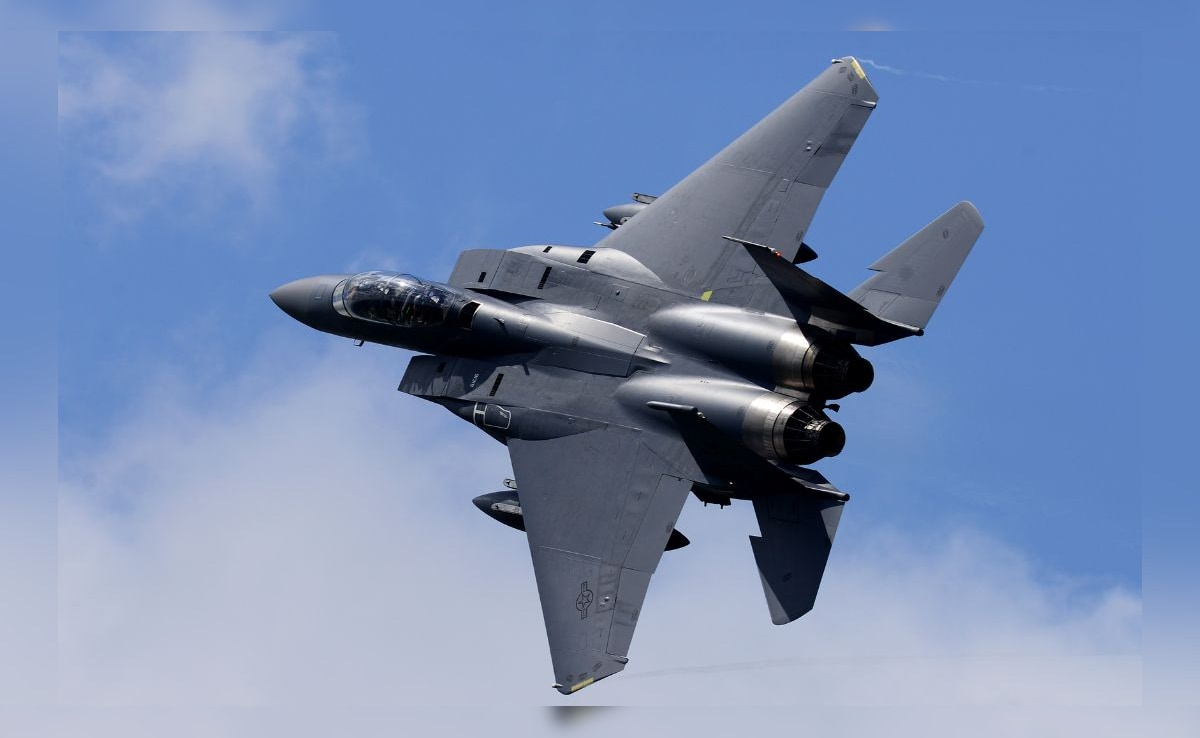
Military aviation history is littered with tragedies born from the "fog of war," but few incidents carry the stinging irony of the November 1991 shootdown of a US Air Force F-15C Eagle. This wasn't a clash over the burning oil fields of Baghdad or a dogfight against a desperate Iraqi MiG. It happened months after the liberation of Kuwait, during a routine training exercise where a Kuwaiti pilot, flying an American-made A-4KU Skyhawk, locked onto and destroyed one of the most advanced air-superiority fighters in the world.
The incident resulted in the loss of a multi-million dollar aircraft and nearly cost an American pilot his life. While the official reports often lean on the sterile language of "procedural errors," the reality reveals a breakdown in the very systems designed to prevent fratricide. It exposed a raw truth about high-speed aerial combat: when the Identification Friend or Foe (IFF) systems fail or are ignored, the technology doesn't care whose flag is painted on the tail.
The Mechanics of a Friendly Fire Disaster
On November 20, 1991, the desert sky was supposed to be a safe classroom. Major Fayez al-Mansour of the Kuwaiti Air Force was maneuvering his A-4KU Skyhawk. Opposite him was Captain Bill "Gis" Giese of the 33rd Fighter Wing, piloting an F-15C. The F-15 is a behemoth, designed to dominate the sky through raw power and sophisticated radar. The Skyhawk, by comparison, is a "scooter"—small, nimble, and aging, but still lethal in the right hands.
During a simulated engagement, the "rules of play" dictated that kills were to be virtual. However, the Kuwaiti pilot’s weapons system was "hot." Mansour fired a single AIM-9L Sidewinder missile. The heat-seeker did exactly what it was engineered to do. It tracked the massive thermal signature of the F-15’s Pratt & Whitney F100 engines and detonated near the tail.
Giese felt the violent shudder of the impact. The Eagle, renowned for its ability to fly even after losing a wing, was crippled beyond repair. He stayed with the aircraft as long as possible before ejecting into the harsh desert terrain. He survived, but the invincibility of the F-15—which boasts a combat record of over 100 kills to zero losses in air-to-air combat—had been punctured by an ally.
Why the Tech Failed to Prevent the Kill
The primary safeguard against such an event is the IFF system. This is a cryptographic "handshake" between aircraft. An interrogator sends a signal, and a transponder on the friendly aircraft sends back a coded response. If the code matches, the pilot sees a "friendly" symbol on their display.
In the 1991 incident, several factors neutralized this advantage. First, in a tight, visual-range dogfight, pilots often rely on their eyes rather than their screens. Second, the stress of high-G maneuvers can lead to "target fixation," a psychological state where a pilot becomes so focused on the kill that they ignore warnings from their own cockpit.
There is also the matter of the AIM-9L Sidewinder itself. Unlike radar-guided missiles that can be "broken" if the launching aircraft turns away, the Sidewinder is a "fire-and-forget" weapon. Once the seeker head locks onto a heat source and the trigger is pulled, the missile is an autonomous hunter. It does not check IFF codes mid-flight. The failure wasn't in the missile's circuitry, but in the human decision-making chain that allowed a live weapon to be armed during a training sortie.
The Invisible Strain of Post-War Integration
To understand why a Kuwaiti pilot would make such a catastrophic error, one must look at the state of the Kuwaiti Air Force in late 1991. The nation had just been reclaimed from Iraqi occupation. Their military was in a state of rapid, chaotic reconstruction. Pilots were being cycled through intense training programs to regain proficiency, often working alongside American instructors and peers in a high-pressure environment.
The power dynamic played a role. Small air forces often feel a desperate need to prove their mettle against the "big brothers" of the US Air Force. This drive to win a training engagement can sometimes bypass safety protocols. When you are flying a subsonic Skyhawk against a supersonic Eagle, you take every window of opportunity you get. In this case, that window should have stayed closed.
The Problem of Live Ordnance in Training
In the aftermath, the most glaring question was why a live Sidewinder was on the rail during a "Red Air" vs. "Blue Air" exercise. Standard procedure for Dissimilar Air Combat Training (DACT) involves using "captive" training missiles. These have the seeker heads to practice locking onto targets but lack the rocket motor and warhead.
The presence of live ammo was a logistical failure. In the post-war environment of Kuwait, the separation of combat-ready aircraft and training-ready aircraft was blurred. Ground crews, working under the remnants of wartime urgency, loaded the Skyhawk for a patrol that was later diverted or converted into a training mission. It was a chain of small mistakes that led to a massive explosion.
Comparing the Eagle and the Skyhawk
It is tempting to view this as a fluke, but the engagement proved the A-4 Skyhawk’s enduring utility. Designed in the 1950s by Ed Heinemann, the Skyhawk was nicknamed "Heinemann’s Hot Rod." It was built for simplicity and agility.
| Feature | F-15C Eagle | A-4KU Skyhawk |
|---|---|---|
| Role | Air Superiority | Light Attack / Trainer |
| Top Speed | Mach 2.5+ | Mach 0.94 |
| Radar Range | 100+ miles | Minimal (Visual optimized) |
| Turning Radius | Large (High energy) | Very Small (Highly nimble) |
In a long-range fight, the F-15 would have seen the Skyhawk from a hundred miles away and destroyed it with an AIM-120 AMRAAM before the Kuwaiti pilot even knew he was in a fight. But the exercise brought them into the "phone booth"—close-quarters maneuvering where the Skyhawk’s small size makes it difficult to see and its tight turning radius allows it to get behind a larger opponent. The F-15’s sophisticated radar is less of an advantage in a knife fight where eyes and heat-seekers rule.
The Cost of the "Clean" Record
The US Air Force maintains that the F-15 has never been lost to an enemy in air-to-air combat. Technically, this remains true. Because the Kuwaiti Air Force was an ally, the 1991 shootdown is classified as an "attrition" loss or an accident rather than a combat loss.
This distinction is important for the branding of the aircraft and the morale of the pilots, but it is a semantic shield. To the pilot who had to pull the ejection handle, the source of the missile mattered much less than the fact that his aircraft was disintegrating. This incident forced a massive overhaul of how the US military conducts joint training with foreign nationals, leading to the implementation of the "Training Rules" (TRs) that are now standard in every pre-flight brief. These rules strictly mandate the physical verification of "dry" rails—ensuring no live weapons are present before any simulated dogfighting begins.
The 1991 shootdown serves as a permanent reminder that the most dangerous element in any cockpit is not the enemy, but a breakdown in communication and discipline. Even the most advanced fighter in the world is just a high-speed target if the person behind the trigger on your wing gets it wrong.
The wreckage of that F-15 buried in the Kuwaiti sand was a total loss of $30 million. It remains a stark lesson in the lethality of "friendly" intentions. Ensure your own IFF is squawking correctly before you enter the merge.
Would you like me to analyze the specific changes made to NATO's IFF Mode 5 protocols following this and similar fratricide incidents?


