The recent engagement involving the Israeli Air Force (IAF) and Iranian long-range surface-to-air missile (SAM) batteries represents a critical shift from electronic suppression to direct kinetic liquidation of high-value defensive assets. While media reports focus on the spectacle of "neutralization," a rigorous strategic analysis reveals a systematic dismantling of the S-300 "Favorite" architecture, specifically targeting the engagement radars and command-and-control (C2) nodes. This operation provides a blueprint for modern SEAD (Suppression of Enemy Air Defenses) where the objective is not merely to "blind" the enemy temporarily, but to permanently degrade the physical hardware required for territorial denial.
The Architecture of Iranian Air Defense Failure
To understand the failure of the Iranian defense, one must first deconstruct the functional components of a long-range SAM battery. An S-300 system is not a single unit but a distributed network consisting of:
- Target Acquisition Radars (TAR): Long-range sensors that scan the horizon for incoming threats.
- Engagement Radars (ER): High-frequency, narrow-beam sensors that "paint" the target for the missile’s seeker.
- Command Post (CP): The computational brain that processes radar data and assigns firing solutions.
- Transporter Erector Launchers (TEL): The physical platforms housing the interceptor missiles.
Israeli targeting logic prioritized the 30N6E2 Tomb Stone engagement radar. By destroying the ER, the entire battery is rendered inert, regardless of how many missiles remain in the TELs. A battery without an engagement radar is a collection of high-explosive tubes with no eyes. The IAF utilized standoff precision-guided munitions (PGMs)—likely the "Rampage" or "Rocks" supersonic missiles—which allow aircraft to release payloads from outside the S-300’s engagement envelope.
The Cost Function of Attrition
The economic and temporal asymmetry of this engagement is a primary driver of regional instability. An S-300 battery represents a multi-hundred-million-dollar investment with a replacement lead time measured in years, not months.
- Manufacturing Bottlenecks: The 30N6 radar series is produced by Almaz-Antey. Due to ongoing global conflicts and sanctions, the export availability of these components is severely constrained.
- Training Deficit: Neutralizing the "soldiers activating the system" refers to the loss of highly specialized technicians. Operating a 64N6E big bird radar or a 30N6E engagement radar requires years of technical training. The loss of human capital is more difficult to replenish than the hardware itself.
- Depletion of Interceptors: Even in scenarios where the radar survives, the "magazine depth" of the defender is usually shallower than the "salvo size" of the attacker.
The IAF exploited these bottlenecks by forcing the Iranian operators into a high-stress decision window. When an engagement radar is activated, it emits an electromagnetic signature that acts as a beacon for anti-radiation missiles (ARMs). Iranian operators face a "Survival Paradox": leave the radar off and remain blind, or turn the radar on and become a target.
Tactical Decoupling and the Kill Chain
The neutralization of the Iranian systems was achieved through a multi-stage kill chain that decoupled the defense's ability to react.
Stage 1: Electronic Preparation of the Battlespace
Before physical munitions entered the theater, Israeli electronic warfare (EW) assets likely flooded the Iranian 1L119 Nebo-SVU early warning radars with "noise" or "spoof" signals. This forces the system to increase its gain, making it easier for ELINT (Electronic Intelligence) aircraft to pinpoint the exact coordinates of the mobile units.
Stage 2: Saturation and Decoy Deployment
Attackers often deploy "air-launched decoys" (MALD-type systems) that mimic the radar signature of a strike fighter. This triggers the Iranian S-300 to activate its engagement radars and fire its expensive 48N6 interceptors at ghosts. Once the battery has revealed its position and exhausted its ready-to-fire missiles, it enters a "Reload Vulnerability Window."
Stage 3: Kinetic Interdiction
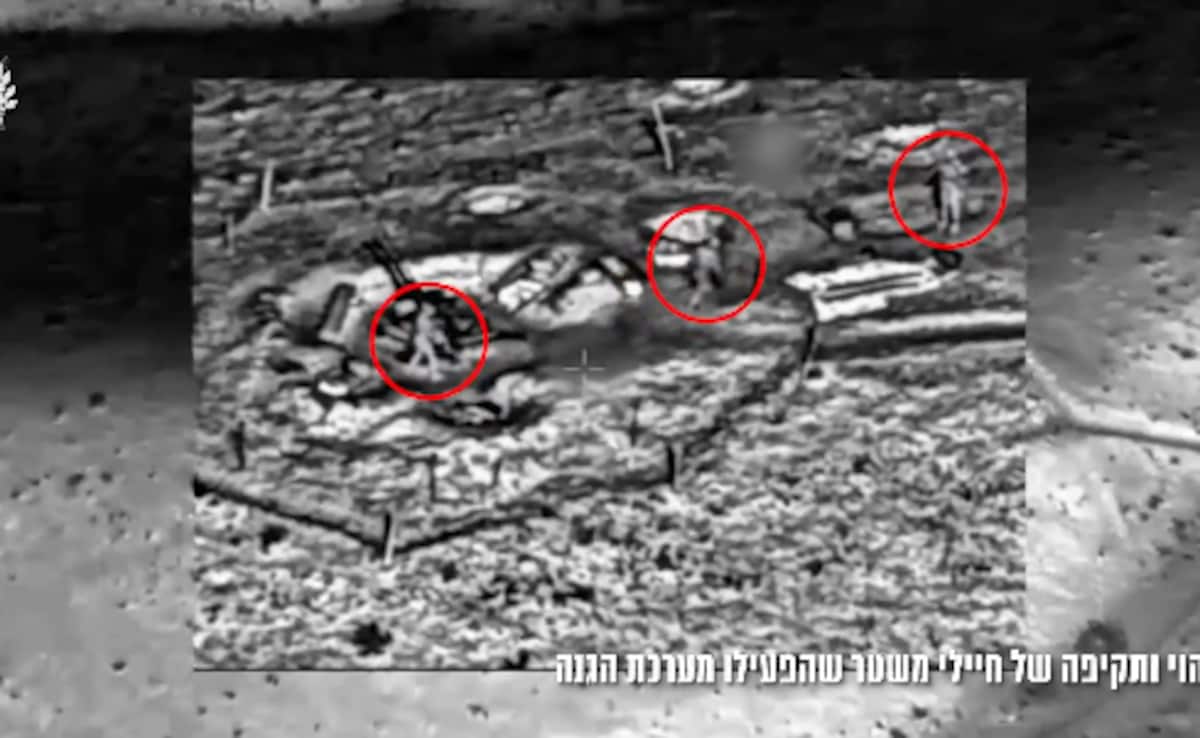
With the radars active and the battery committed to an engagement, the IAF delivered the terminal strike. The "On Camera" evidence indicates a high-probability-of-kill (Pk) strike on the central radar mast. This is a surgical operation; hitting a radar dish from 100 kilometers away requires GPS/INS guidance coupled with terminal infrared (IR) or active radar homing.
Geopolitical Implications of Technical Degradation
The destruction of these systems removes the "Protective Umbrella" over Iranian nuclear and energy infrastructure. The S-300 was the cornerstone of Iranian air sovereignty. Without it, they are forced to rely on indigenous systems like the Bavar-373, which, while capable on paper, has not been battle-tested against the EW suites of a tier-one air force.
This creates a Security Vacuum. When the primary tier of a long-range Integrated Air Defense System (IADS) is compromised, the shorter-range systems (Tor-M1, Pantsir-S1) become isolated. Shorter-range systems are designed for point defense, not area denial. They cannot protect large industrial complexes against high-altitude standoff strikes.
The Engineering Reality of Radar Replacement
The Iranian military cannot "repair" a radar that has taken a direct hit from a 500lb PGM. The internal components—traveling wave tubes (TWTs), phased-array phase shifters, and high-speed signal processors—are destroyed by both the kinetic impact and the resulting thermal spike.
Replacing these units requires:
- Diplomatic Capital: Securing a new export license from Russia.
- Logistical Risk: Transporting oversized radar components through contested corridors.
- Integration Time: Re-syncing a new radar unit into the existing C2 network, a process that requires weeks of calibration to ensure the IADS can distinguish between friendly and hostile tracks.
Strategic Recommendation for Defense Procurement
Nations facing high-end aerial threats must move away from centralized, "exquisite" platforms like the S-300 and toward Distributed Sensor Networks. The vulnerability of the Iranian defense was its reliance on a few high-powered radar nodes. A more resilient strategy involves:
- Passive Coherent Location (PCL): Using ambient electromagnetic energy (FM radio, cellular signals) to track aircraft without emitting a "track me" signal.
- Sensor Disaggregation: Separating the transmitter from the receiver by kilometers so that an ARM strike on the transmitter does not kill the receiver.
- Mobility as Defense: Decreasing the "Shoot-to-Scoot" time to under five minutes, which is the current threshold for satellite-cued counter-battery fire.
The IAF’s operation demonstrated that in the era of supersonic PGMs, static or semi-mobile air defense is a liability. The primary strategic play for any actor in this theater is now the rapid indigenous production of low-cost, attritable UAVs to serve as "Loyal Wingmen" or "Decoy Swarms," forcing an attacker to expend multi-million dollar missiles on five-thousand dollar targets. Failure to adapt to this "Cost-per-Kill" inversion will result in the total obsolescence of traditional air defense architectures.
Would you like me to analyze the specific electronic warfare signatures typically used to suppress the 30N6E2 radar systems in these scenarios?