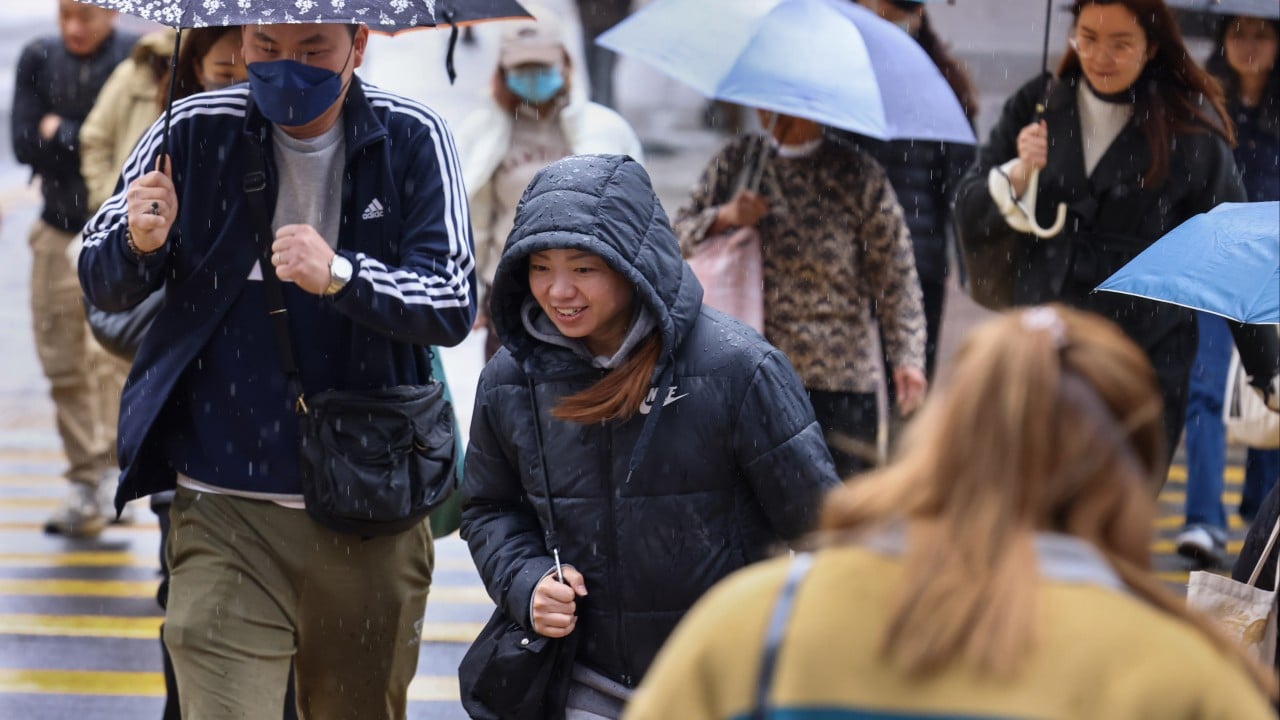
Hong Kong is braced for a sharp thermal collapse this Tuesday as a surge of the northeast monsoon sweeps across the Guangdong coast. Temperatures are projected to bottom out at 16 degrees Celsius, accompanied by persistent rain and a grey, lightless sky that will define the work week. While the mercury drop might seem like a routine seasonal shift, the arrival of this cold front highlights a recurring failure in the city’s urban design and public health readiness. Hong Kong is a city built for the heat, and when the thermometer dips, the infrastructure simply cannot keep up.
The Hong Kong Observatory (HKO) has confirmed that the arrival of a significant moisture-laden trough will coincide with the cold air mass. This isn't just a "chilly day." It is a systemic shock to a population living in uninsulated high-rises where the internal temperature often mirrors the external reality within hours. Unlike cities in temperate climates, Hong Kong’s building codes do not mandate central heating or even basic thermal retention. When 16 degrees hits, it feels significantly colder due to the high humidity, creating a "bone-chilling" effect that local hospitals are already preparing for.
The Physics of the 16 Degree Threshold
To understand why a seemingly mild 16 degrees causes such a stir, we have to look at the interaction between the northeast monsoon and the South China Sea. The monsoon is a seasonal wind pattern driven by the cooling of the Asian landmass. As the air moves from the high-pressure zones of Siberia and Mongolia toward the coast, it picks up speed.
By the time it reaches the Pearl River Delta, it is dense and dry. However, the current "Rainy Tuesday" scenario is complicated by a low-level southerly airstream meeting that cold front right over the city. This creates a sandwich of air masses. The result is "stratiform" rain—not a quick thunderstorm, but a relentless, fine drizzle that soaks through clothing and keeps the ground slick.
The thermal conductivity of water is much higher than that of air. When your clothes are damp, you lose body heat at an accelerated rate. For the elderly living in subdivided flats in districts like Sham Shui Po or Kwun Tong, 16 degrees isn't a fashion choice; it’s a health hazard. These buildings act like concrete refrigerators. They soak up the cold and radiate it inward, and without the presence of insulation, the cost of heating these spaces with portable electric units becomes a significant financial burden for the working poor.
The Hidden Economic Toll of a Wet Tuesday
When the clouds settle over Victoria Peak, the city’s productivity takes a measurable hit. We often talk about typhoons as the primary disruptor of Hong Kong’s economy, but the "slow-burn" of a wet, cold week has a more insidious impact.
Retail foot traffic in open-air markets like those in Mong Kok or Yuen Long evaporates. Logistics and last-mile delivery services—the backbone of the city’s modern economy—slow down as motorbike couriers navigate treacherous, oily roads. The risk of accidents increases, and with it, the strain on emergency services.
The Transit Bottleneck
Hong Kong’s transport network is a marvel of efficiency, yet it is notoriously brittle when rain enters the equation.
- The MTR Effect: Commuters who usually walk ten minutes to a station will instead opt for taxis or ride-sharing apps to avoid the drizzle, leading to gridlock in the Cross-Harbour Tunnel.
- The Bus Surge: Above-ground transport becomes a lottery. The humidity inside a packed double-decker bus with closed windows leads to rapid fogging and an uncomfortable, germ-heavy environment.
- Pavement Hazards: The city’s penchant for tiled pedestrian walkways turns many districts into ice rinks when wet. Slip-and-fall incidents spike during these 48-hour rainy windows, yet there is little movement toward retrofitting these surfaces with high-friction coatings.
Why Our Buildings Are Failing Us
The architectural philosophy of Hong Kong has long been "ventilation at all costs." In the 1970s and 80s, the goal was to move air to combat the sweltering humidity of July. This meant thin walls, single-pane glass, and a reliance on "cross-breeze" layouts.
In the modern era, we have transitioned to glass-curtain walls that look sleek in the Central skyline but are thermal nightmares. These buildings have massive "U-values," meaning they allow heat to escape almost instantly in the winter. We are essentially trying to heat the outdoors.
The government has pushed for "Green Building" certifications, but these metrics often prioritize water saving or light sensors over the basic human need for thermal stability. A truly resilient city would require a complete overhaul of the Building Energy Code to account for these increasingly volatile cold snaps. We are seeing more frequent "extreme" weather events—both hot and cold—and the current housing stock is a liability.
The Public Health Gap
Our medical professionals see the Tuesday forecast and know exactly what is coming. It starts with a surge in respiratory admissions. Cold, damp air irritates the lungs and makes individuals more susceptible to viral infections.
But there is a deeper issue: the "Cold Weather Warning" system. The HKO typically issues this when temperatures are expected to drop to 12 degrees or below. However, 16 degrees with 90% humidity can be more dangerous for a person with cardiovascular issues than 10 degrees in a dry climate. The current warning thresholds are too rigid. They don't account for the "feels like" temperature that dictates how the human body actually reacts.
There is also the matter of the "Flu Season" overlap. Hong Kong is currently navigating a complex post-pandemic immunological environment. When the rain forces people into cramped, poorly ventilated indoor spaces, the transmission rates for seasonal influenza and other pathogens climb. We are effectively herding the population into high-risk zones because our outdoor spaces become unusable.
Energy Poverty in the Cold
As the rain falls this Tuesday, thousands of households will be forced to make a choice between staying warm and staying solvent. Electricity prices in Hong Kong have not been immune to global volatility.
Running a space heater in a 200-square-foot apartment can easily add hundreds of dollars to a monthly bill. In public housing estates, where many residents are on fixed incomes, the "solution" is often to simply wrap themselves in layers of blankets and endure the dampness. This leads to mold growth—a silent killer in Hong Kong apartments. Mold thrives in the exact conditions predicted for this week: high humidity, low light, and temperatures between 15 and 20 degrees.
The government’s response has historically been to open a few dozen temporary shelters. This is a band-aid on a gaping wound. We need a permanent strategy for energy subsidies during weather extremes and a mandatory retrofitting program for the city’s most vulnerable housing blocks.
The Reality of the "New Normal"
Climate change isn't just about things getting hotter. It’s about the destabilization of the Jet Stream, which allows cold polar air to "leak" further south than it used to. This means that while our summers are becoming unbearable, our winters and shoulder seasons are becoming more erratic.
A 16-degree Tuesday is a warning shot. It’s a reminder that we have optimized our city for a climate that no longer exists. We have built a world of concrete and glass that is excellent at reflecting the sun but terrible at holding onto the heat we generate.
The rain will eventually stop, and the sun will return by the weekend, but the underlying vulnerabilities will remain. We cannot keep treating a cold, rainy week in March as a surprise. It is a predictable, recurring event that exposes the cracks in our urban fabric.
Check your windows for leaks today. Ensure your heaters are dust-free and functioning. If you have elderly neighbors, knock on their door. The city isn't going to get any warmer on its own, and the buildings certainly aren't going to help you. You have to take control of your own micro-climate before the first drops hit the pavement.
Stay dry, keep your core temperature up, and don't trust the single-pane glass to keep the cold at bay.