The dirt in the Hefer Valley doesn’t care about geopolitics. It is a stubborn, thirsty red that clings to the undersides of fingernails and the treads of heavy boots. For Somchai, a man whose real home sits six thousand miles away in the humid green of Udon Thani, this soil is both a lifeline and a predator. He spends twelve hours a day coaxing bell peppers and tomatoes from the desert, his back bent in a permanent question mark, all to ensure a daughter he hasn't hugged in three years can attend university.
Then the sky began to growl. For another look, consider: this related article.
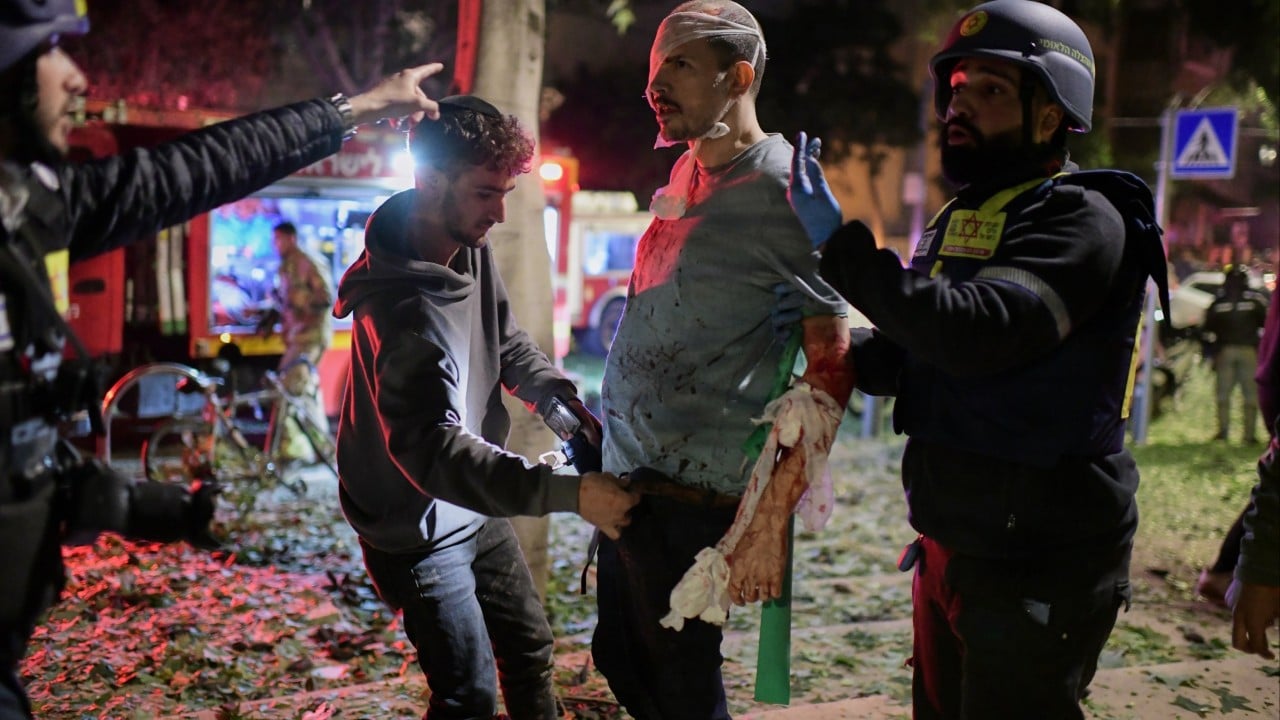
It wasn't the low rumble of a passing storm. This was the mechanical snarl of the Iron Dome, the sharp, metallic cracks of interceptions that turn the midnight blue into a strobe light of orange and white. When Iran launched its volley of drones and missiles across the Middle East, the world watched on news tickers from the safety of climate-controlled living rooms. But for the nearly 30,000 Thai laborers scattered across Israel’s agricultural heartlands, the conflict wasn't a headline. It was a vibration in their teeth.
The Invisible Backbone
We often speak of borders as lines on a map, but they are actually built of people. In Israel, the food security of the nation rests largely on the shoulders of Southeast Asian migrants. They are the quiet engine of the Arava and the Galilee. When the sirens wail, these workers face a choice that no contract ever explicitly outlines: do you run for the concrete shelter, or do you finish the harvest because the overtime pay is the only thing keeping your family's debt collectors at bay? Similar insight on this matter has been provided by NPR.
The stakes are invisible to the casual observer. We see a statistic: "Thousands of Thai workers remain in high-risk zones." We don't see the WeChat calls home, where a father holds his phone up to the window so his wife can hear the booms, both of them pretending it’s just thunder.
Consider the mathematics of fear. A worker in the northern orchards might earn more in a month here than they could in a year back in rural Thailand. That delta—that gap between poverty and a middle-class future—is exactly the size of a ballistic missile's shadow. It is a brutal trade. You exchange the immediate risk of a shrapnel wound for the long-term protection against the slow death of generational poverty.
Shelter is a Relative Term
In the moshavs near the border, the architecture of safety is uneven. Some farms have state-of-the-art bunkers. Others have "protected spaces" that are little more than concrete pipes covered in sandbags. During the recent escalations, the Thai Ministry of Foreign Affairs faced a logistical nightmare. How do you evacuate a workforce that doesn't always want to leave?
It’s a paradox of the human spirit. After the horrific events of October 7th, where dozens of Thai workers were killed or taken hostage, thousands fled back to Bangkok. The Thai government provided repatriation flights. There was a brief moment of national mourning. But within months, the flow reversed. The hunger for a better life proved more persistent than the fear of the Red Alert.
The reality of the situation is a jagged pill to swallow. Security is a luxury. For someone like Somchai, the "safe" option is to return to a village where the crops are failing and the bank is knocking. In his mind, the drone in the sky is a lottery. The debt at home is a certainty.
The Geography of the Strike
The Iranian strikes changed the geography of risk. Previously, the danger was localized—Hamas in the south, Hezbollah in the north. Now, the entire sky is a potential theater of war. When the GPS jamming starts, turning every smartphone map into a glitching mess, the isolation of the rural worker becomes absolute. They are strangers in a strange land, unable to read the Hebrew emergency instructions, relying on translated Telegram groups to know if they should duck or dive.
There is a specific kind of silence that follows an interception. It is the sound of thousands of people holding their breath at once. In those moments, the distinction between "foreign worker" and "citizen" evaporates. The shrapnel is indifferent to the color of your passport.
A Contract Signed in Longing
Critics often ask why the Thai government doesn't simply ban its citizens from working in such volatile zones. The answer lies in the grim reality of global labor. If the Thais leave, the Israeli agricultural sector collapses. If the jobs vanish, the Thai rural economy withers. It is a codependency forged in necessity.
Think of it as a bridge made of glass. It’s beautiful because it allows passage to a better world, but you can never forget how thin the floor is.
The Iranian regional shadow-play isn't just about drones and deterrents. It’s about the ripple effect on the guy picking citrus. Every time a missile is launched from Isfahan, a mother in a Thai village stops eating. Every time the Israeli Cabinet meets to discuss a counter-response, a wire transfer is delayed.
The world talks about "strategic depth" and "regional stability." These are cold, hollow words. They don't capture the smell of scorched earth or the way a man’s hands shake as he sorts peppers while the sky above him shatters.
The Weight of the Return
The true cost of this conflict isn't found in the defense budget. It’s found in the psychological toll on those who live between two worlds. Many workers report a strange kind of vertigo upon returning home. They have seen the high-tech shield of a first-world nation defend itself against a rain of fire, only to return to a village where the biggest threat is a seasonal drought.
They become legends in their hometowns—the ones who braved the "Iron Rain" to build the big house on the edge of the rice paddy. But they carry the sky with them. Every loud motorcycle or sudden thunderclap sends them back to the bunkers of the Negev.
The narrative of the Middle East is usually written in the blood of its residents, but we must leave room for the ink of the migrants. They are the witnesses who didn't ask to be part of the story, yet they are the ones who keep the lights on and the tables full while the giants throw stones.
The sun sets over the Mediterranean, casting long, golden shadows across the furrows of the field. Somchai wipes the sweat from his brow and looks up. For now, the sky is empty. No drones. No streaks of white smoke. Just the first few stars blinking into existence. He reaches into his pocket, feels the cold metal of his phone, and begins to type a message to his daughter. He tells her the weather is fine. He tells her the harvest is good. He tells her he will be home soon, even though "soon" is a word that has lost its meaning in a land where the horizon is always on fire.
The red dirt remains under his nails, a stubborn reminder of the life he is digging out of a war zone, one tomato at a time.