A bag of cement in Gaza is never just a bag of cement. It is a quiet, heavy defiance against the gravity of history. For the better part of a year, the sound of the Gaza Strip was changing. The rhythmic thud of the percussion drill and the high-pitched whine of the circular saw had begun to replace the sharper, more sudden cracks of artillery.
Mohammed, a man whose hands are mapped with the callouses of three decades in masonry, finally felt the ground stop shaking long enough to build something that might actually last. He isn’t a politician. He doesn’t study macroeconomics. But he knew the price of a cinder block had stabilized, and for a father in Gaza, that is the only inflation that matters. He was adding a room to his house for his eldest son’s upcoming wedding. The "recovery" the economists wrote about in their glossy PDF reports was, for Mohammed, the smell of wet concrete and the sight of a new window frame looking out over a street that was finally being paved.
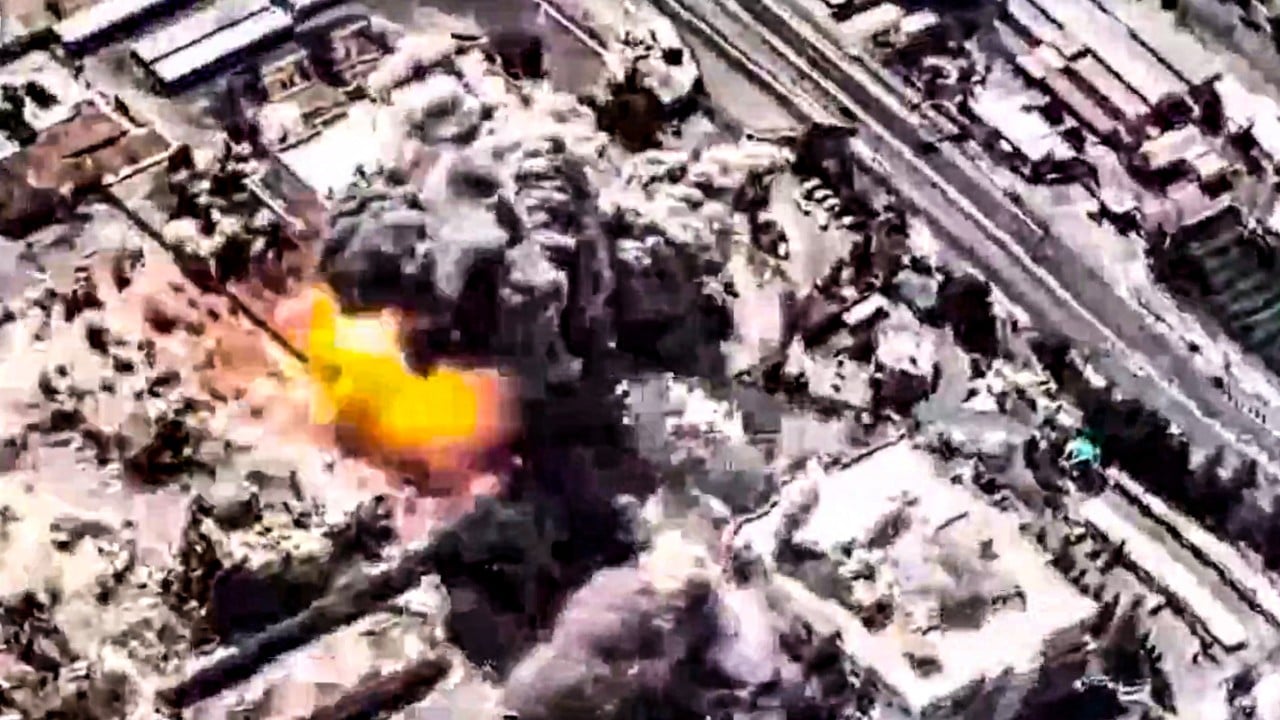
Then the sky turned gray again.
The Fragile Architecture of Hope
To understand what is happening now, we have to look at the math of survival. Before the most recent escalation, Gaza’s economy was performing a miracle of respiration. It was breathing through a straw, but it was breathing. Following the devastation of 2021, a cautious, fragile reconstruction phase had taken hold.
The numbers told a story of "progress," a word that feels dangerously thin when applied to a place where the borders are controlled by others. GDP had ticked upward. Thousands of work permits had been issued for Gazans to find employment across the fence, bringing home wages that didn't just buy bread, but fueled a micro-boom in local services.
Think of it as a bone that has been broken and reset multiple times. The calcification—the scar tissue—makes it stronger in some places, but brittle in others. The 2022 and 2023 "growth" periods were that scar tissue. International aid was flowing into specific pipes: fixing water desalination plants, patching up the power grid, and ensuring that the rubble from the last war was recycled into the foundations of the next era.
But recovery in a conflict zone is not a linear climb. It is a treadmill. You have to run at full speed just to remain in the same place. When a new war erupts, it doesn't just stop the treadmill; it throws the runner off the back and into a brick wall.
The Invisible Stakes of the Rubble
When we watch the news, we see the explosions. We see the smoke plumes that look like dark cauliflower rising over the Mediterranean. What we don't see is the "opportunity cost," a dry term that hides a bleeding heart.
Every time a factory is leveled, it isn't just the physical building that disappears. It is the supply chain. It’s the institutional knowledge of the manager who spent ten years learning how to keep 40-year-old machines running without spare parts. It’s the confidence of the investor who decided, against all odds, to put $50,000 into a garment workshop rather than hiding it under a mattress.
Conflict doesn't just destroy the present; it loots the future.
Consider the energy sector. For months, engineers had been working on "Gaza Marine," a project to tap into natural gas fields off the coast. It was the ultimate carrot—a promise of energy independence and billions in revenue. It was the "game-changer" that everyone was afraid to call a game-changer because, in this part of the world, hope is a liability. Now, that gas stays in the seabed. The engineers are in shelters. The blueprints are covered in dust.
The tragedy of the "overshadowed recovery" is that we are forced to mourn the same buildings twice. We mourn them when they are built with such difficulty, and we mourn them when they fall with such ease.
The Psychological Deficit
There is a ledger that the World Bank doesn't track: the emotional debt of starting over.
Imagine you are a baker in Gaza City. You spent the last two years securing a loan to buy a modern industrial oven from Italy. You navigated the Byzantine "dual-use" permit system to get it through the Kerem Shalom crossing. You finally installed it. Your bread is the fluffiest in the neighborhood. You are finally making enough to pay back the bank and maybe, just maybe, take your daughters to the beach on Friday without worrying about the cost of an ice cream.
Then, a strike hits the building next door. The shockwave shatters your oven’s heating elements. They cannot be replaced because the border is closed.
Do you start again?
This is the "invisible stake." The most dangerous thing about the recurring cycle of war isn't the destruction of the concrete; it’s the destruction of the will to build. When "recovery" is repeatedly revealed to be a temporary illusion, people stop investing in the long term. They invest in the immediate. They buy canned goods instead of seeds. They hoard cash instead of buying equipment.
The economy shifts from a productive model to a survivalist one. It’s a regression of the human spirit.
A Ghost in the Machinery of Trade
The "overshadowing" the news speaks of is also a literal darkening of the trade routes. Gaza's recovery was predicated on a specific kind of quiet—a "calm for economy" trade-off.
When the rockets fly and the jets scream, the crossings close. Kerem Shalom and Erez aren't just gates; they are valves. When they shut, the blood stops flowing to the organs of the city.
The impact is immediate. Perishable goods rot in the sun. Fuel for the lone power plant dwindles to hours of supply. The "progress" of the last year wasn't built on a solid foundation; it was built on a bridge of glass. We are now seeing what happens when that glass is shattered.
It isn't just that things are getting worse; it’s that the starting point for the next recovery is now miles behind where it was five years ago. We are digging a hole within a hole.
The Geometry of Loss
We often talk about Gaza as a monolith, but the "recovery" was happening in pockets. In the IT hubs of Gaza City, young coders were working remotely for firms in Dubai, London, and San Francisco. They were the "digital refugees," escaping the physical blockade through fiber-optic cables.
They represented the most sophisticated version of Gaza’s potential. They weren't asking for aid; they were asking for bandwidth. They were building a service-based economy that didn't rely on the physical movement of goods—a clever workaround for a land under siege.
When the power goes out and the internet towers fall, that entire sector vanishes. A coder who hasn't been online for three weeks doesn't just lose a paycheck; they lose their clients. They lose the reputation they spent years building in a global marketplace that doesn't have the patience for a war it can’t solve.
The "recovery" wasn't just overshadowed. It was uninstalled.
The Heavy Cost of the "New Normal"
There is a terrifying phrase used by analysts: "Mowing the grass." It implies that these escalations are a necessary, periodic maintenance of a status quo.
But humans aren't grass.
When you "mow" a society, you aren't just trimming its capabilities; you are traumatizing its DNA. The children who watched the "recovery" of 2022—the new parks, the repainted schools, the bustling markets—are now watching the same locations become focal points of violence.
The lesson they learn is that stability is a lie.
If we look at the statistics of the previous recovery, we see that the most significant growth was in construction and services. These are the two sectors most vulnerable to kinetic warfare. Manufacturing, which requires long-term stability and heavy machinery, has remained stagnant for a decade. Why build a factory if it has a shelf-life of eighteen months?
The result is a "de-developed" economy. Gaza is forced to stay in a state of permanent emergency, where the only growth industry is humanitarian aid. This isn't just a failure of policy; it’s a failure of our collective imagination to see Gaza as anything other than a battlefield.
The Sound of the Second Hammer
Mohammed, the mason, sits in the dust of his half-finished room. He has covered his bags of cement with a plastic tarp, hoping the rain doesn't get to them before the bombs do. He is waiting.
Everyone in Gaza is waiting.
They are waiting for the "overshadowing" to pass so they can step back out into the sun and assess what is left of the "progress" they were told they were making. They will find that the price of cement has tripled. They will find that the workers who helped them pour the last slab are now in tents or under them.
And then, because there is no other choice, Mohammed will pick up his trowel.
He will scrape the dried mortar from his tools. He will look at the ruins of the "recovery" and start to build a new one, knowing full well that the sky might turn gray again tomorrow. This is the most profound fact of Gaza: the economy is not made of numbers, trade deals, or natural gas. It is made of a stubborn, exhausted, and terrifyingly resilient refusal to stay buried.
The tragedy isn't that the recovery is being overshadowed. The tragedy is that we have made "starting over" the only sustainable industry in the region.