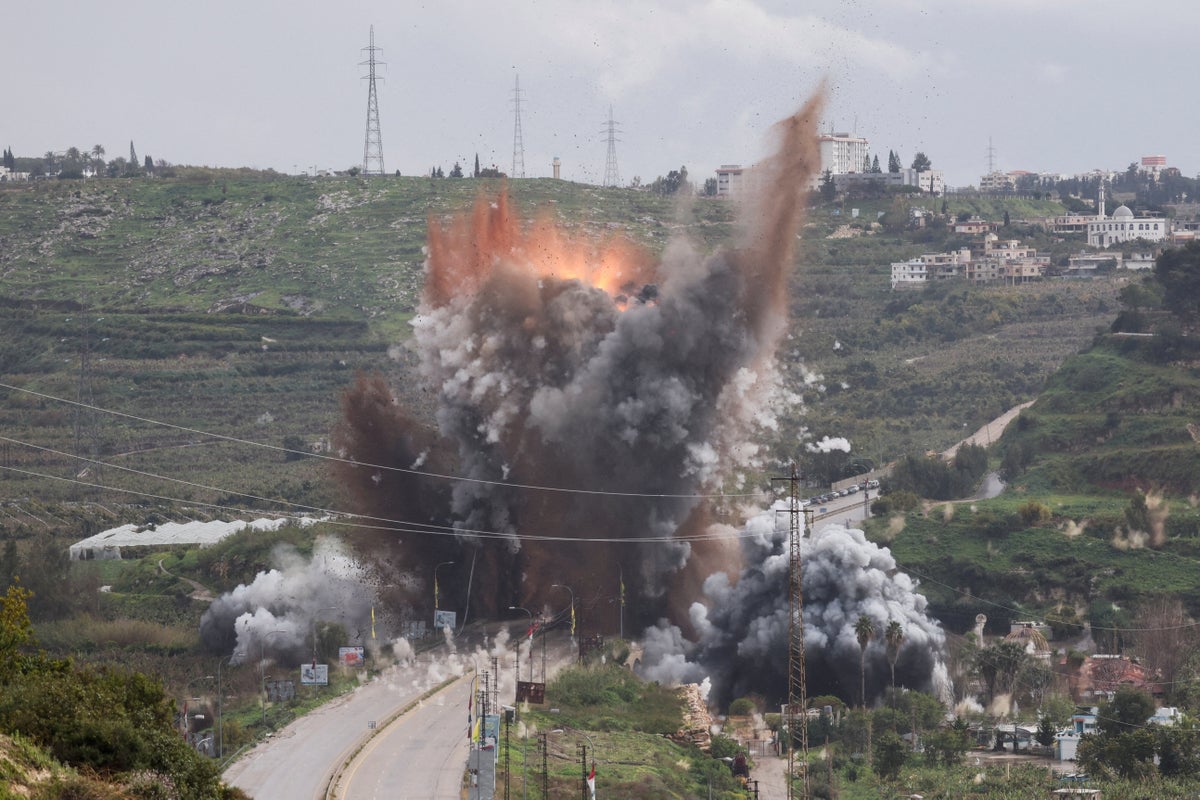
The objective of modern high-intensity conflict is rarely the physical occupation of territory but the psychological and structural collapse of the adversary’s decision-making apparatus. When Israeli officials articulate a strategy of bringing Tehran "to its knees," they are describing a transition from a war of attrition to a war of systemic disintegration. This strategy hinges on three identifiable pillars: economic exhaustion, the neutralization of regional proxies, and the credible threat of kinetic decapitation. Success in this theater is not measured by captured ground, but by the point at which the cost of maintaining the status quo exceeds the perceived survival value of the regime itself.
The Calculus of Asymmetric Pressure
A state reaches its "knees" when its internal stability is compromised by the very mechanisms it built for external defense. For Iran, this creates a paradoxical vulnerability. The Islamic Revolutionary Guard Corps (IRGC) serves as both a military force and a massive economic conglomerate. Kinetic strikes against IRGC infrastructure simultaneously degrade military capability and the financial patronage networks that keep the regime's loyalists tethered to the center.
The current Israeli posture shifts the "Ring of Fire" strategy—where Iran used proxies to surround Israel—into a "Centripetal Pressure" model. In this framework, the center (Tehran) is forced to absorb the costs that were previously outsourced to Lebanon, Gaza, and Yemen. When the periphery fails to provide a buffer, the core must decide between direct, high-risk engagement or a retreat that signals weakness to a restive domestic population.
The Fiscal Threshold of Kinetic Resilience
Military operations are governed by a cost-exchange ratio. If Israel can destroy $100 million of nuclear or energy infrastructure with a $1 million missile sortie, the economic delta becomes a weapon of mass exhaustion.
- Infrastructure Degradation: Targeted strikes on oil refineries or power grids do more than hamper logistics; they deplete the hard currency reserves required to suppress internal dissent.
- Proxy Defunding: As the cost of domestic repair rises, the capital available for Hezbollah or the Houthis evaporates. A proxy without a paycheck is a liability, not an asset.
- Technological Overmatch: The introduction of advanced AI-driven targeting and hypersonic interceptors forces Iran into a defensive spending spiral it cannot sustain given its limited access to global credit markets.
The Failure of Strategic Depth
For decades, Tehran relied on "strategic depth," the idea that the battlefield should always be someone else's soil. The collapse of this doctrine is the primary driver of the current escalation. If Israel can strike with impunity within Iranian borders, the concept of strategic depth is inverted; the Iranian heartland becomes the front line, while the leadership has no secondary fallback position.
The "on its knees" objective requires the systematic removal of Iran’s escalatory options. This is achieved through a "Escalation Ladder Pruning" process:
- Step 1: Neutralizing the Shield. Degrading the air defense networks (such as S-300 or domestic variants) to ensure the regime feels physically vulnerable.
- Step 2: Severing the Arms. Systematically dismantling the command-and-control links between Tehran and the Levant.
- Step 3: Targeting the Brain. Shifting from tactical targets to the individuals and institutions that provide the ideological and operational blueprint for the "Axis of Resistance."
Internal Fragility as a Strategic Variable
A data-driven analysis of Iranian stability reveals that the regime is most vulnerable when its security apparatus is stretched thin. The "knees" metaphor refers to the intersection of external military pressure and internal socio-economic volatility.
The Iranian Rial’s volatility is a leading indicator of the regime's ability to wage long-term war. When the currency devalues, the cost of importing dual-use technologies for the missile program skyrockets. This creates a bottleneck in the supply chain. If the Israeli military can maintain a tempo of operations that outpaces the Iranian replacement rate, the Iranian military becomes a "hollow force"—possessing the platforms but lacking the precision-guided munitions or fuel to utilize them effectively.
The logic of total capitulation assumes that at a certain point of degradation, the Iranian military leadership will prioritize institutional survival over ideological expansion. This creates a friction point between the IRGC and the traditional military (Artesh), a fault line that Israeli intelligence seeks to widen through psychological operations and targeted kinetic pressure.
The Risk of the Cornered Actor
The limitation of a "to its knees" strategy is the unpredictability of a cornered nuclear-threshold state. Logic suggests that an actor facing total collapse might opt for a "Samson Option"—a final, catastrophic escalation intended to take the adversary down with them.
The mathematical probability of this outcome increases as the regime’s perceived "survival window" closes. To mitigate this, the Israeli strategy involves "Calculated Incrementalism." Instead of a single, regime-toppling blow that might trigger a desperate nuclear breakout or a massive regional chemical strike, the pressure is applied in waves. Each wave is designed to leave the regime with a "choice" that is slightly worse than the previous one, but better than total annihilation.
Structural Bottlenecks in the Iranian Response
Tehran’s response to the Israeli strategy is constrained by three primary bottlenecks:
- Intelligence Penetration: The repeated success of Israeli operations deep inside Iran suggests a level of human and signals intelligence (HUMINT/SIGINT) that renders Iranian secrecy moot. This creates a "Paranoia Tax," where the regime spends more resources hunting internal traitors than it does on external strategy.
- Logistical Fragility: The "Land Bridge" from Tehran to the Mediterranean is vulnerable at multiple transit points. The cost of securing this line of communication is becoming prohibitive.
- Obsolescence of Hardware: While Iran has made strides in drone and missile technology, its conventional air force and navy are decades behind. In a high-end kinetic exchange, these assets are essentially target practice for Fifth-Generation aircraft.
This technological gap means that Iran can only win through "Saturation Attacks"—overwhelming defenses with sheer volume. However, saturation is a depletable strategy. Once the stockpiles of low-cost drones are exhausted, the regime has no high-end conventional backup.
The Role of the United States in the Capitulation Framework
The Israeli ambassador's statement to the U.S. reflects a desire for a unified "Maximum Pressure 2.0." This is not merely about sanctions, but about a "Total Theater Lock." If the U.S. provides the diplomatic umbrella and the logistical tail (refueling, heavy lift, deep-penetration munitions), Israel can focus its entire operational capacity on the "Head of the Snake."
The synergy between U.S. economic hegemony and Israeli tactical lethality creates a pincer movement. The U.S. cuts off the oxygen (dollars), while Israel cuts off the blood flow (proxies and infrastructure). The intended result is a state that is physically intact but functionally paralyzed.
Identifying the Breaking Point
Historical precedents for regime capitulation—such as the end of the Iran-Iraq war in 1988—suggest that the breaking point occurs when the "Cost of Persistence" $\text{(Cp)}$ exceeds the "Cost of Surrender" $\text{(Cs)}$.
$$\text{Cp} = \text{Economic Loss} + \text{Military Attrition} + \text{Internal Dissent}$$
$$\text{Cs} = \text{Loss of Ideological Purity} + \text{Geopolitical Retreat}$$
Currently, the Iranian leadership views $\text{Cs}$ as higher than $\text{Cp}$ because they believe surrender leads to immediate regime change. The Israeli strategy aims to artificially inflate $\text{Cp}$ until the equation flips, forcing the Supreme Leader to "drink from the poisoned chalice" once again.
Operational Conclusion for Regional Stakeholders
The path to Tehran’s capitulation is not a straight line but a series of calculated shocks. For regional players—including the Gulf States and Turkey—the strategy demands a repositioning. They must prepare for a vacuum or a radically weakened Iran.
The final strategic play involves the "De-escalation through Decimation" model. Israel will continue to strike targets that are increasingly closer to the regime’s "center of gravity"—its financial assets in the Bonyads and its command bunkers—until the IRGC is forced to choose between defending the borders or defending the palaces.
The objective is to ensure that when the conflict reaches its peak, the Iranian leadership finds itself without the means to fight, the money to pay its defenders, or a population willing to endure the fallout. The war continues not until the last soldier falls, but until the first general refuses to follow an order that leads to certain institutional suicide.
Monitor the frequency of strikes on Iranian energy export terminals and the exchange rate of the Rial; these are the true barometers of the "knees" strategy. When the regime can no longer pay its domestic security forces in a currency that holds value, the structural collapse is imminent. Expect a shift toward targeting the "Dual-Use Elite"—individuals who manage both the regime's finances and its clandestine weapons programs—to accelerate this internal decoupling.
Would you like me to map the specific economic sectors in Iran most vulnerable to this kinetic-fiscal pincer strategy?