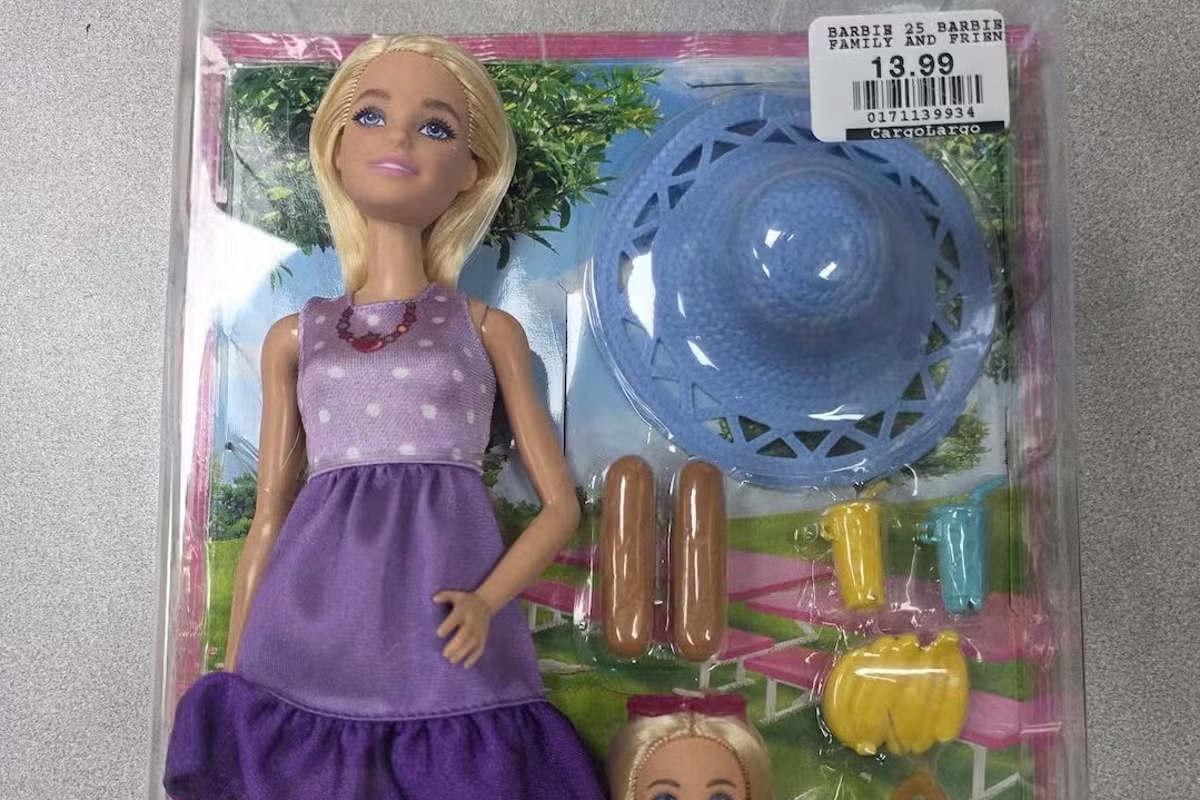
The headlines are a masterclass in clickbait-fueled hysteria. A mother in Missouri opens a Barbie doll, finds a suspicious baggie, and suddenly the internet is convinced that Mexican cartels are targeting toddlers through the toy aisle at Walmart. It is the perfect storm of suburban anxiety and chemical illiteracy. It is also, from a logistical and economic standpoint, absolute nonsense.
We need to stop pretending that every misplaced white powder is a targeted assassination attempt on the American middle class. The "fentanyl in the toy box" narrative isn't just a local news scare; it’s a symptom of a deeper refusal to understand how drug markets actually operate. If you want to protect your children, start by turning off the local news and looking at the math.
The Economics of a Non-Existent Threat
Let’s dismantle the logic of the "drug mule doll."
Transnational criminal organizations are, above all else, businesses. They are ruthlessly efficient. They do not give away their product for free to people who have no intention of buying it. Fentanyl is cheap to produce, but the logistics of smuggling it into the United States carry immense risk.
Why would a distributor waste inventory by tucking it into a $15 Mattel box?
- Zero ROI: There is no profit in "hooking" a four-year-old. Addiction is a long-term business model; poisoning a random child in a suburb provides no return on investment and brings heat that no rational dealer wants.
- Logistical Failure: If a dealer were using toy packaging as a "stealth" shipping method, the last place that package would end up is on a retail shelf. If a baggie ended up in a Barbie box, it wasn't a "trap." It was a massive mistake by a low-level worker or a return-fraud scheme gone wrong.
- The Scale Problem: Millions of toys move through the global supply chain. If this were a systemic "tactic," we wouldn't see one isolated incident in Missouri. We would see a body count in the thousands. We don't.
The reality is that "accidental" exposure via consumer goods is the modern equivalent of the "razor blades in Halloween candy" myth. It is a campfire story for the digital age, designed to make parents feel like the world is a minefield, rather than addressing the actual causes of the opioid crisis.
The Physical Impossibility of the "Touch" Overdose
The Missouri story—and hundreds like it—relies on the pervasive myth that merely touching fentanyl, or being in the same room as a baggie, can cause a fatal overdose.
I have spoken with toxicologists who have spent decades studying synthetic opioids. The American College of Medical Toxicology (ACMT) and the American Academy of Clinical Toxicology (AACT) issued a joint statement years ago that should have ended this conversation. They were clear: the risk of clinically significant exposure to emergency responders (and by extension, moms in Missouri) from incidental skin contact is "extremely low."
Fentanyl is not a magical nerve agent. It is a pharmaceutical compound. For it to enter your bloodstream through the skin, it requires a specific formulation (like a transdermal patch) and prolonged contact. You cannot overdose by picking up a baggie and dropping it. You cannot overdose because you "breathed the air" near a doll.
When we see videos of people collapsing after "touching" a pill, we aren't seeing an opioid overdose. We are seeing a panic attack. The symptoms—hyperventilation, rapid heart rate, fainting—are the physiological opposite of an opioid overdose, which involves respiratory depression and a slow, fading pulse.
By spreading these "horror stories," we are training the public to be afraid of a ghost while the real monster walks through the front door.
The Hidden Cost of Your Outrage
Why does it matter if a few parents get scared? Because policy follows panic.
When we focus on "Barbie doll fentanyl," we divert resources away from the actual drivers of mortality. We spend millions on "detecting" drugs in places they don't exist, while cutting funding for harm reduction, needle exchanges, and evidence-based treatment.
We also create a culture of "stranger danger" that ignores the statistics. Most children who encounter dangerous substances do so because of unsecured medications or household chemicals within their own homes, not because of a sinister plot by a cartel.
I’ve watched departments burn through budgets on high-end scanners and HAZMAT suits for "incidental contact" while the local rehab centers have a six-month waiting list. That is the real horror story.
Stop Testing Your Toys
If you find something weird in a package, call the police or the retailer. But stop posting "PSA" videos that claim your child was seconds away from death.
You are not an expert in chemical identification. Neither is the local news anchor. When you share these stories, you are participating in a cycle of misinformation that makes it harder for actual addicts to get help and harder for first responders to do their jobs without paralyzing fear.
The Missouri incident was likely a fluke of the return system—a user or dealer hiding a stash in a box and returning it to the store for a refund. It is a failure of retail quality control, not a national security threat.
The Brutal Truth
The world is dangerous, but it isn't dangerous in the way the "Mom Groups" tell you it is.
Fentanyl is a devastating crisis. It is killing over 100,000 Americans a year. But those people are dying in dark rooms, in cars, and in back alleys because of a poisoned drug supply and a lack of medical support. They aren't dying because they bought a Barbie at Target.
If you actually care about the "fentanyl horror," stop looking for it in the toy aisle. Start looking at the prescription practices in your own medicine cabinet. Start looking at the lack of mental health resources in your community.
Fear is a choice. You can choose to be the person who shakes a Barbie box looking for a boogeyman, or you can be the person who demands that your tax dollars go toward something that actually saves lives—like Narcan distribution and supervised injection sites.
The cartels aren't coming for your toddler. They don't have to. They are already making billions off the adults we've failed to protect.
Go check the locks on your cleaning supplies. That’s where the real danger lives.