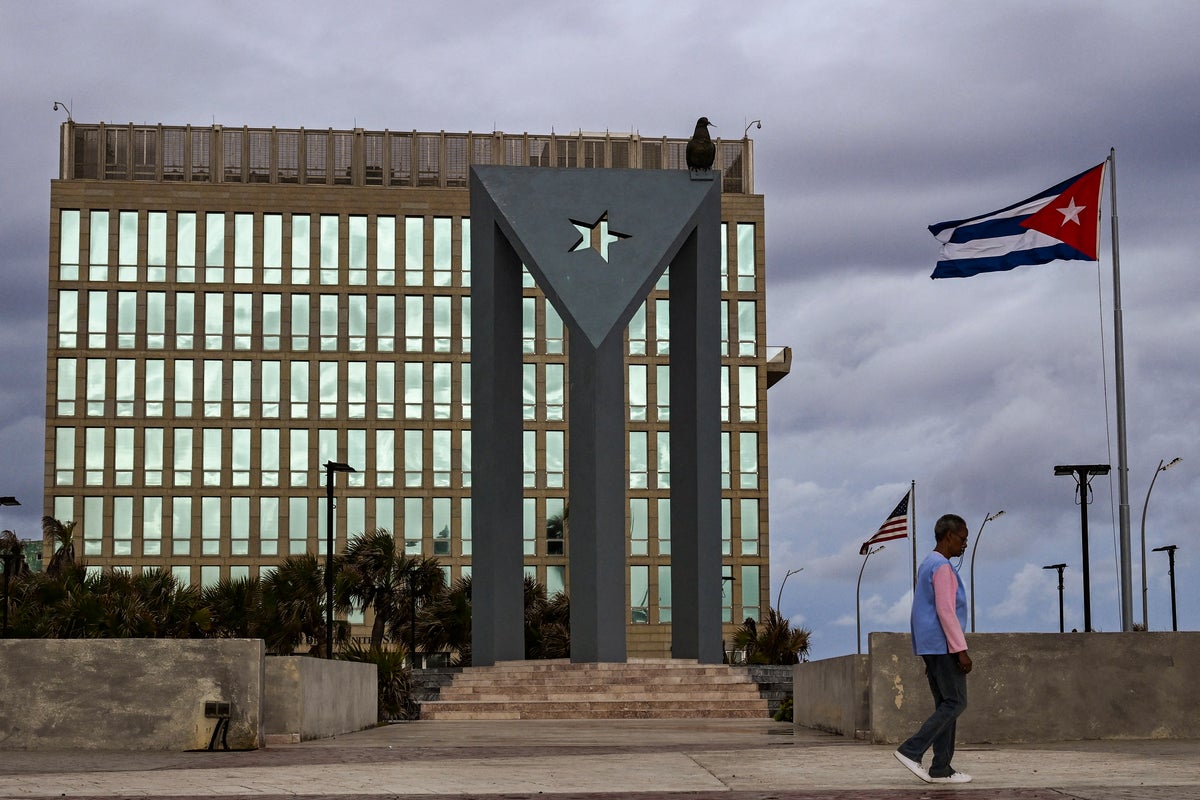
The United States has moved beyond traditional sanctions into what can only be described as a functional maritime blockade, pushing Cuba to the brink of a total systemic collapse that Havana insists it will meet with military resistance if necessary. This is no longer a slow-burn diplomatic dispute. By March 2026, the strategy of "maximum pressure" under the second Trump administration has evolved into a high-stakes ultimatum, leveraging the recent ousting of Nicolás Maduro in Venezuela to sever Cuba’s primary energy lifeline and demand the resignation of President Miguel Díaz-Canel.
While the White House frames this as a "friendly takeover" designed to rescue a failing nation, the Cuban leadership is digging in. Deputy Foreign Minister Carlos Fernández de Cossío recently made it clear that while they view a direct US military intervention as improbable, the nation is mobilizing for exactly that scenario. This is the "how" of Cuban survival. The island has pivoted to a wartime footing, not because they expect a D-Day style invasion, but because the current energy blockade serves the same functional purpose as an act of war.
The Asphyxiation Strategy
The current crisis was not sparked by a single event but by the methodical closing of every side door the Cuban government used to keep the lights on. In January 2026, Executive Order 14380 declared a national emergency, authorizing tariffs on any country—most notably Mexico—that provides oil to the island. This was the masterstroke. By threatening the Mexican state-owned Pemex with punitive duties, Washington effectively forced President Claudia Sheinbaum to halt shipments, leaving Havana with a dry tank and a collapsing power grid.
The results on the ground are visceral. Since early February, the island has endured rolling blackouts that culminated in a total grid failure on March 16. In Havana, the silence is punctuated only by the sound of cacerolazos—the rhythmic banging of pots and pans by a frustrated populace. Garbage is piling up in the streets because the trucks have no diesel. Public transport has largely ceased.
For the veteran observer, this looks less like a diplomatic maneuver and more like the "Donroe Doctrine" in action. This is the unofficial term for the current administration's expansion of the 1823 Monroe Doctrine, asserting a unilateral right to intervene in the Western Hemisphere to protect American interests. The logic is brutal. If the oil stops, the economy stops; if the economy stops, the people rise; if the people rise, the regime falls.
The Military Calculation
Havana's talk of military readiness is often dismissed by critics as revolutionary theater, but it serves a specific internal and external purpose. Internally, it justifies the continued dominance of the military-industrial conglomerate GAESA, which controls the lion's share of the Cuban economy. Externally, it signals to Washington that any attempt at a "Maduro-style" extraction or a kinetic strike on infrastructure will not be a bloodless affair.
The Cuban Revolutionary Armed Forces (FAR) are not equipped to win a conventional war against the United States. They know this. Their doctrine is the "War of All the People," a decentralized insurgency model designed to make the cost of occupation prohibitively high. By announcing their readiness, they are telling the hawks in Washington—specifically Secretary of State Marco Rubio, who is leading the Cuba initiative—that a "friendly takeover" is a fantasy.
The Leverage Points
- Energy Isolation: The blockade of Venezuelan and Mexican oil has reduced Cuba to a state of survival.
- Targeted Tariffs: Using trade policy as a weapon against third-party nations.
- Regime Ultimatum: The explicit demand for Díaz-Canel’s exit as a condition for aid.
The Negotiation Paradox
Behind the fiery rhetoric, there is a quiet, desperate dance of diplomacy. In March 2026, Díaz-Canel confirmed that "sensitive" talks are occurring. Cuba has already made concessions, releasing 51 political prisoners in what they call a gesture of goodwill. The Holy See is once again acting as a back-channel mediator, trying to find a middle ground between "total surrender" and "humanitarian catastrophe."
The US side remains unyielding. The White House has even floated a license allowing companies to sell oil to Cuba’s nascent private sector, a move designed to bypass the state and further erode the Communist Party’s control. It is a sophisticated attempt to de-couple the Cuban people from their government by making the latter appear solely responsible for the misery.
Beyond the Rhetoric
The hard truth is that Cuba has never been this vulnerable. The loss of Venezuela as a patron, combined with a US administration willing to use secondary tariffs as a primary weapon, has stripped away Havana's traditional defenses. The question is no longer whether the regime will change, but whether it will crumble under its own weight or be pushed over the edge by external force.
The risk of a "humanitarian intervention" is high. If the blackouts lead to widespread civil unrest and a subsequent violent crackdown, the pressure on Washington to move from an oil blockade to direct kinetic action will become immense. The Cuban government is banking on its ability to endure "maximum pressure" as it did in the 1990s, but the geopolitical landscape of 2026 lacks the breathing room of the past.
You should monitor the movement of US Coast Guard vessels in the Florida Straits over the next 48 hours to see if the interdiction of humanitarian aid from Mexico marks the next escalation.