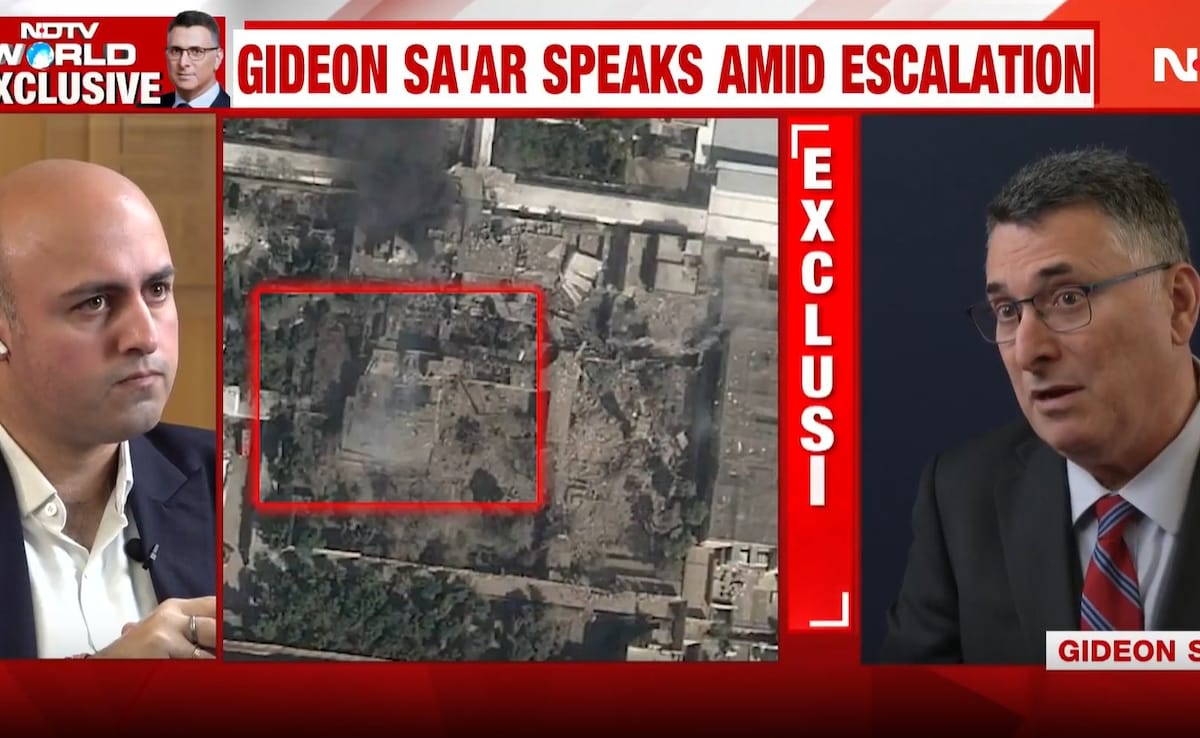
Deep under the central Iranian plateau, the earth does not move. It is weighted down by layers of reinforced concrete and the crushing expectation of a nation. The Natanz nuclear facility is not just a collection of centrifuges; it is a point of pride, a symbol of defiance, and, according to recent reports, the target of a strike that shifted the geopolitical floorboards of the Middle East.
When the news broke that the United States and Israel had allegedly struck the site, the official statements were predictably sterile. They spoke of "kinetic effects" and "disruption of enrichment capabilities." But those words fail to capture the reality of a high-stakes shadow war. They ignore the hum of the machines and the sudden, violent silence that follows when a precision strike finds its mark.
The Physics of Ambition
To understand what happened at Natanz, you have to understand the IR-1 centrifuge. Picture a slender, spinning cylinder, rotating at speeds that defy intuition—over 1,000 revolutions per second. At that velocity, the metal is under such immense stress that even a microscopic imperfection can cause the entire machine to disintegrate. It doesn't just break. It explodes into a cloud of shrapnel, taking every neighboring machine with it in a catastrophic chain reaction.
Iran has spent decades perfecting this mechanical ballet. They buried the halls deep underground to shield them from the sky. They surrounded them with anti-aircraft batteries and elite guards. Yet, the vulnerability of such a complex system lies in its very precision. You do not always need a massive bunker-buster bomb to stop a nuclear program. Sometimes, you just need to tilt the world by a fraction of a degree.
The reported joint operation between Washington and Jerusalem represents a escalation that moves beyond the digital sabotage of the Stuxnet era. While the 2010 malware attack was a ghost in the machine, the latest reports suggest something more visceral. Physical damage. Structural compromise. A direct message delivered through the crust of the earth.
The Human Toll of Geometry
Imagine a technician named Reza. He is a hypothetical composite of the thousands of engineers who descend into the cooling air of the Natanz tunnels every morning. For Reza, the "nuclear file" is not a series of bullet points in a Geneva briefing room. It is the rhythmic vibration of the floor beneath his boots. It is the steady glow of a monitor.
When a strike occurs, the terror isn't just the blast. It is the realization that the most secure location in your world has been breached by an invisible hand. There is a psychological weight to knowing that despite the miles of desert and the tons of steel, the ceiling can still fall.
This is the invisible cost of the Iranian nuclear program. For the scientists and laborers, every day is a gamble against the inevitable friction between their government’s ambitions and the red lines drawn in offices thousands of miles away. The strike at Natanz didn't just break machines; it shattered the illusion of invulnerability that Tehran has worked so hard to cultivate.
A History Written in Shadows
This isn't the first time the desert has swallowed a secret. The history of the Natanz facility is a timeline of "accidents" and "anomalies."
- 2010: The Stuxnet worm causes centrifuges to spin out of control while displaying normal readings to operators.
- 2020: A mysterious explosion at a centrifuge assembly plant causes significant damage.
- 2021: A blackout, described by Iran as "nuclear terrorism," hits the power grid of the facility.
Each incident follows a similar pattern. First, a denial. Then, a redirection of blame. Finally, a quiet admission that the damage was worse than initially reported. The latest strike fits perfectly into this historical mosaic. It signals a shift from covert disruption to overt destruction.
The collaboration between the US and Israel is the most significant factor here. While the two nations often share intelligence, a coordinated physical strike is a different animal. It suggests a level of tactical synchronization that should keep military planners in Tehran awake at night. It says that the diplomatic table is no longer the only place where the future of the region is being decided.
The Logic of the Unthinkable
Critics of these strikes argue that they only serve to harden Iran's resolve. They claim that for every centrifuge destroyed, two more will be built in an even deeper bunker. There is a logic to this. You cannot bomb knowledge out of a human brain. The blueprints exist. The physics is understood.
However, the counter-argument is based on the most precious commodity in geopolitics: time.
Every time a hall at Natanz goes dark, the "breakout time"—the window Iran needs to produce enough weapons-grade material for a bomb—widens. It forces the regime to spend billions on repairs rather than expansion. It creates a friction that slows the march toward a nuclear-armed state.
But at what cost?
The air in the region is thick with the scent of a wider conflict. When you strike a sovereign nation's most sensitive site, you are not just playing chess; you are knocking over the table. The response from Tehran is rarely immediate or direct. Instead, it manifests in the shipping lanes of the Persian Gulf, in the proxy wars of the Levant, or in the digital infrastructure of Western banks.
The Weight of the Desert
The sun sets over the salt flats near Natanz, casting long, jagged shadows across the landscape. To the casual observer, the site looks like a series of nondescript vents and mounds. But the world knows better.
We are currently witnessing a period where the line between "gray zone" warfare and full-scale conflict has become a blur. The strike on Natanz is a testament to the fact that the most important wars of the 21st century are being fought in places we will never see, using technologies we barely understand, for stakes that involve the survival of millions.
There is a terrifying elegance to it. A missile travels thousands of miles, or a saboteur bypasses layers of security, all to stop a cylinder from spinning.
The silence that currently hangs over the Natanz enrichment halls is not peaceful. It is a heavy, expectant silence. It is the sound of a vacuum waiting to be filled. Whether it will be filled with the hum of new machines or the roar of a larger war is a question that remains buried deep beneath the sand.
The earth stays still. For now.