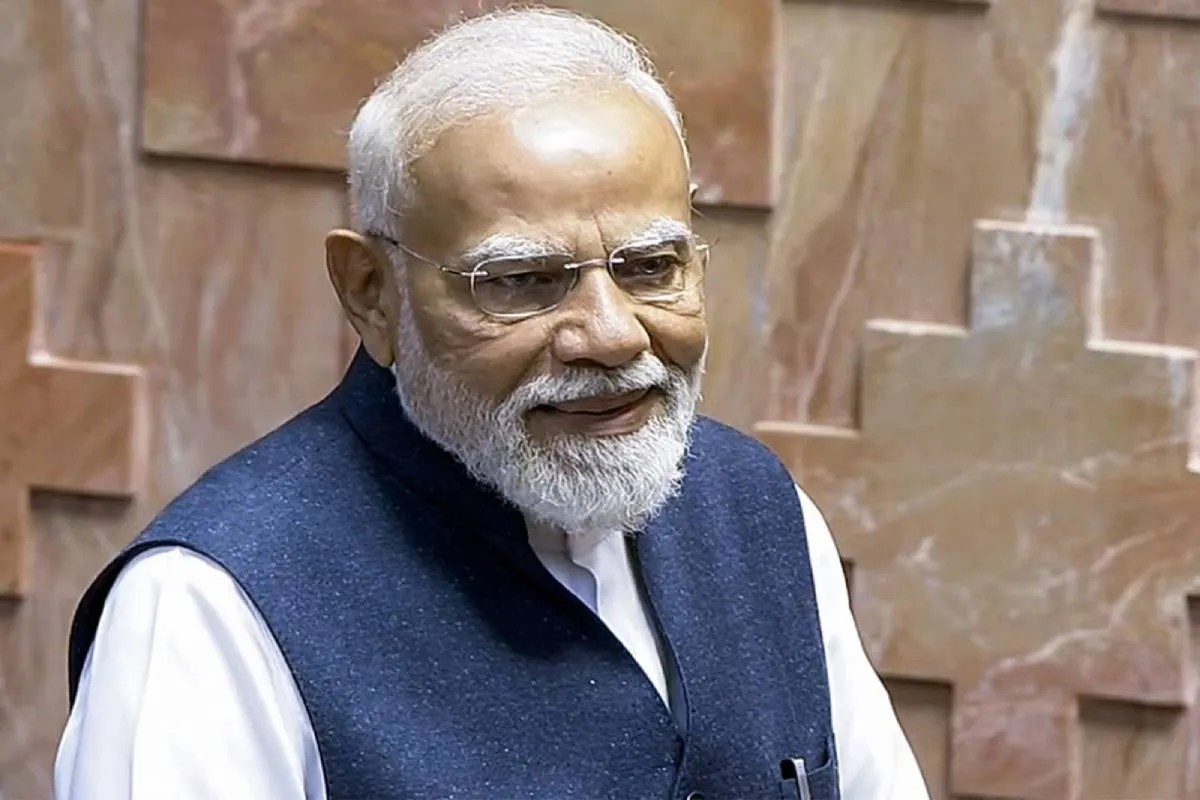
Recent data from Morning Consult confirms a recurring trend in international geopolitics. Narendra Modi remains the most popular major world leader, currently holding a 68 percent domestic approval rating. This figure places him significantly ahead of his counterparts in the G7 and other emerging economies. While many outlets report these numbers as a simple scorecard of success, the reality behind such sustained popularity is far more complex than a mere headline. It is the result of a sophisticated blend of grassroots welfare delivery, a mastery of nationalistic narrative, and a fragmented domestic opposition that has yet to find its footing on a national scale.
Understanding this 68 percent involves looking past the surface. This is not just a high number; it is a statistical outlier in an era of global anti-incumbency. Most Western leaders struggle to cross the 40 percent threshold as they grapple with inflation, immigration, and political polarization. Modi’s ability to maintain this level of support after more than a decade in power suggests a deep-rooted connection with the electorate that transcends traditional political cycles.
The Infrastructure of Public Consent
The primary driver of these approval ratings is the shift from patronage politics to direct benefit transfers. In previous decades, government aid in India was often lost in a maze of middle-men and local corruption. The current administration bypassed this by linking biometric identification with bank accounts. When a farmer receives a subsidy or a rural household gets a gas connection, the credit is attributed directly to the Prime Minister. This creates a powerful sense of individual gratitude.
It is a retail model of governance. By focusing on tangible "last-mile" delivery—toilets, electricity, and water—the administration has built a foundation of support among the socio-economically vulnerable. These voters do not view politics through the lens of macro-economic indicators or civil liberties. They view it through the lens of improved daily life. This "labharthi" or beneficiary class has become a loyal voting bloc that remains largely immune to the criticisms leveled by urban intellectuals or international media.
The Nationalism Multiplier
Beyond material benefits, the Prime Minister has successfully rebranded the Indian identity. He has positioned himself not just as a political leader, but as a cultural custodian. This resonates deeply in a country that is reclaiming its historical and religious heritage. By projecting an image of a "strong India" on the global stage, he taps into a collective desire for international respect.
Every international summit or bilateral meeting is framed for the domestic audience as a moment of national pride. When world leaders praise the Indian economy or seek its cooperation in global conflicts, it reinforces the narrative that India has arrived as a "Vishwaguru" or global teacher. This psychological shift is a major component of the approval rating. Even voters who may be struggling with local issues often support the Prime Minister because they believe he has enhanced the country's prestige.
The Absence of a Viable Alternative
Popularity is often relative. One cannot analyze Modi’s 68 percent rating without looking at the 32 percent who disapprove and the void where a unified opposition should be. In many democracies, high disapproval for an incumbent leads to a surge for the challenger. In India, the opposition remains divided by regional interests and leadership disputes.
The "There Is No Alternative" factor is a significant tailwind for the Prime Minister. When voters are asked why they support him, a common response is a question of their own: "If not him, then who?" This vacuum allows the administration to survive scandals or economic downturns that would typically sink a government. The lack of a singular, credible face to challenge the Prime Minister means that even dissatisfied voters often stick with the status quo, fearing the perceived instability of a coalition of disparate regional parties.
Economic Contradictions and the Approval Ceiling
Despite the high ratings, there are structural cracks that the 68 percent figure masks. Unemployment remains a persistent shadow over the Indian growth story. While the GDP grows at an enviable rate, the creation of high-quality jobs has not kept pace with the millions of young people entering the workforce every year. There is a visible divide between the booming digital and service sectors and the stagnant agricultural heartland.
Inflation, particularly in food prices, is the one variable that historically topples Indian governments. The administration has been careful to manage this through aggressive supply-side interventions and export bans. However, the pressure is constant. The 68 percent rating is not a permanent shield. It is a high-water mark that requires constant maintenance through welfare spending and high-decibel communication strategies. If the economic pain reaches a tipping point where welfare can no longer compensate for the loss of purchasing power, that rating will face its first true test.
Global Context and the Polarization Dividend
Modi’s standing is also bolstered by the relative weakness of his peers. When compared to the domestic struggles of leaders in the United States, United Kingdom, or France, the Indian Prime Minister appears uniquely stable. This stability is attractive to global investors who prioritize predictability over all else. The "stability premium" allows India to attract foreign direct investment even when global markets are volatile.
However, this popularity comes with a degree of polarization that is often ignored in simple polling. The 68 percent represents a massive majority, but the remaining 32 percent often feels deeply alienated. The intensity of support on one side is frequently matched by the intensity of opposition on the other. This gap is bridged not through consensus, but through the sheer scale of the majority. The government does not seek to win over the dissenters; it seeks to expand the beneficiary base so that the dissenters become mathematically irrelevant.
The Digital Communication Machine
No analysis of these numbers is complete without acknowledging the role of the world’s most efficient political communication apparatus. The use of social media, messaging apps, and a dedicated army of volunteers ensures that the government’s message is never diluted. They control the narrative from the moment a policy is conceived to the moment it is implemented.
This is not just about broadcasting; it is about feedback loops. The administration uses data to understand exactly which demographics are wavering and shifts its rhetoric accordingly. It is a data-driven approach to popularity. When the numbers dipped slightly during the pandemic, the response was a massive, free food grain program that reached 800 million people. The rating didn't just recover; it solidified. This ability to pivot and address grievances through large-scale intervention is what separates this administration from its predecessors.
The Long Road to 2029
Maintaining a 60-plus percent approval rating over three terms is virtually unprecedented in modern democracy. As the administration looks toward the end of the decade, the challenges will shift from basic infrastructure to more complex issues like climate change, artificial intelligence, and a changing global trade order. The "easy" gains of building roads and providing gas cylinders have largely been achieved. The next phase of governance will require deeper structural reforms that may not be as universally popular as direct welfare.
The durability of this popularity will depend on whether the Prime Minister can transition from being a provider of basic needs to a facilitator of high-end opportunity. The youth of India, while currently supportive, will eventually demand more than just social security; they will demand social mobility. If the government fails to provide the ladder to the middle class, the very demographic that fueled its rise could become its greatest liability.
The current 68 percent is a testament to a decade of tactical brilliance and a deep understanding of the Indian psyche. It is a fortress built on welfare and pride. But even the strongest fortresses require constant renovation to survive the changing seasons of public sentiment.
Study the shift in rural spending patterns against the upcoming budget allocations to see if the government is doubling down on the beneficiary model or pivoting toward industrial incentives.