The grass at the Rose Bowl or the MetLife Stadium doesn’t know about sanctions. A soccer ball, inflated to the standard eight point five pounds per square inch, obeys the laws of physics regardless of the passport held by the man who kicks it. But in the wood-paneled offices of soccer federations and the sterile corridors of diplomatic buildings, the game is no longer about physics. It is about paper. Specifically, the kind of paper that allows a young man from Tehran to stand in a tunnel in New Jersey and wait for the whistle.
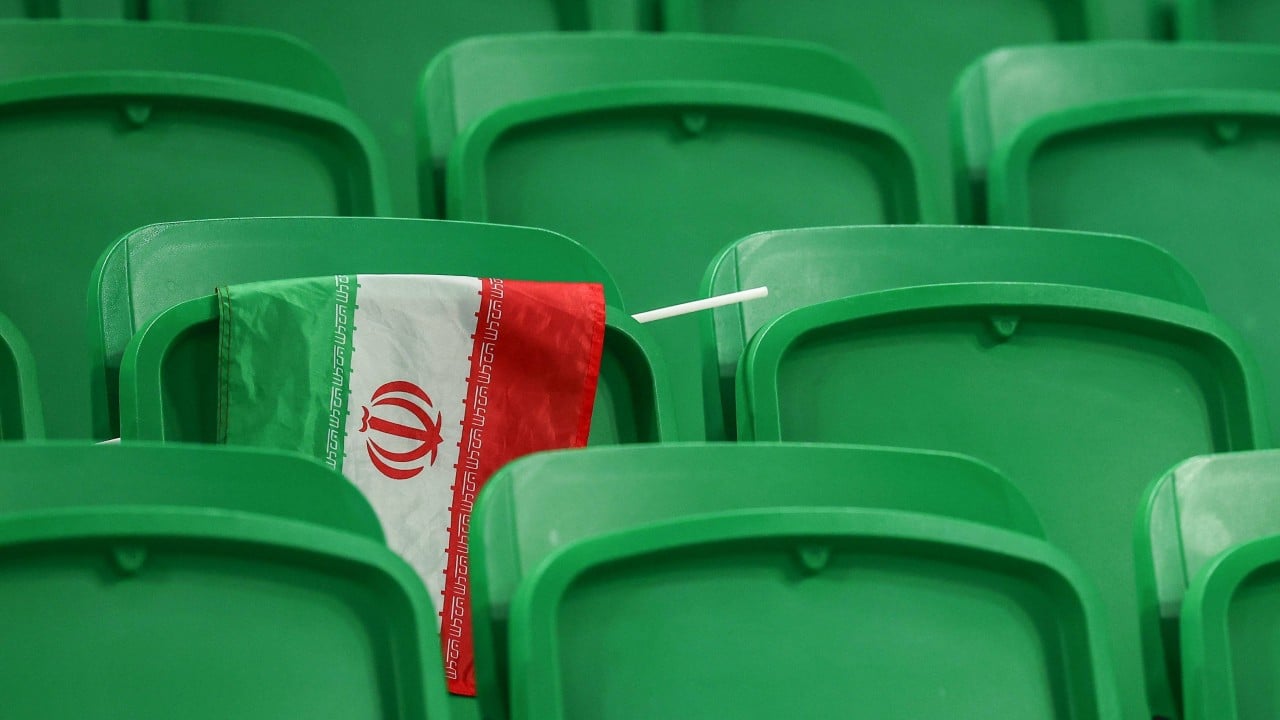
Mehdi Taj, the president of Iran’s football federation, recently sat before a microphone and let a heavy truth hang in the air. The 2026 World Cup, a tournament designed to be a sprawling, three-nation celebration of "the beautiful game," is facing a logistical and political wall. Iran has qualified for the last three World Cups. They are a powerhouse in Asia. Yet, as it stands, their participation in the North American tournament is shrouded in a thick, gray fog of uncertainty.
Consider a hypothetical midfielder named Alireza. He grew up playing on the concrete lots of Isfahan. He has spent four years training for this moment. He has visualized the roar of a crowd in Los Angeles. To Alireza, the World Cup is the pinnacle of human achievement. To a consular officer at a visa processing center, Alireza is a set of security protocols and a potential diplomatic liability.
The Geography of Exclusion
The 2026 World Cup is unique because of its scale. It spans Canada, Mexico, and the United States. While Canada and Mexico maintain functional diplomatic channels with Iran, the United States does not. There is no Iranian embassy in Washington D.C. There is no American embassy in Tehran. For an entire national team, coaching staff, and support crew to obtain the necessary travel documents, they must travel to a third country—perhaps Turkey or the United Arab Emirates—just to begin a process that offers no guarantee of success.
This isn't just about a few visas for players. A national team is a small village. It includes physiotherapists, kit managers, analysts, and federation officials. Under current U.S. policy, certain members of the Iranian delegation may face insurmountable hurdles due to their mandatory military service records or affiliations with state entities. If the starting goalkeeper is granted entry but the head coach is denied, is the competition still fair? If the team’s medical staff is held up in administrative processing while the players are on the pitch, has the integrity of the sport been compromised?
When the Anthem Starts to Fade
Sports are often described as a bridge. We like to believe that for ninety minutes, the geopolitical friction of the world grinds to a halt. We saw this in 1998, when the U.S. and Iran played in Lyon, France. The players traded white roses. They posed for a joint photo that remains one of the most iconic images in sports history. It was a moment of profound humanity that bypassed the rhetoric of "The Great Satan" and the "Axis of Evil."
But Lyon was in France. France had an open door.
The 2026 tournament creates a different friction because the host is also the primary enforcer of the sanctions that have isolated Iran from the global financial and diplomatic system. Taj’s concern isn't just a grievance; it’s a mathematical reality. FIFA, the governing body of world soccer, requires host nations to guarantee entry for all qualified teams. This is a core tenant of the bidding process. Yet, the U.S. government maintains that its national security laws supersede any agreement made by a sports organization.
We are witnessing a collision between the idealistic "One World" branding of FIFA and the hard-edged reality of 21st-century border enforcement.
The Cost of the Empty Chair
If Iran is forced to withdraw or is effectively barred through bureaucratic inertia, the loss isn't just a spot in the bracket. It is the loss of a narrative.
Soccer in Iran is a cultural heartbeat. It is the language of the streets. When the national team—Team Melli—wins, the traffic in Tehran stops because people are dancing in the avenues. For the Iranian diaspora living in North America, this World Cup was supposed to be a homecoming of sorts. There are hundreds of thousands of Iranians in Southern California alone. For them, seeing their team play in a stadium ten miles from their homes would be a bridge across a forty-year chasm.
Imagine the stadium if that bridge is cut. Imagine the group stage of the world’s most-watched event with a glaring, political asterisk.
The struggle also extends to the financial lifeblood of the team. Because of international banking sanctions, the Iranian federation often finds itself unable to collect the millions of dollars in prize money it earns from FIFA. They are a team that wins on the field but is starved in the accounts. Taj has noted that without access to these funds, even the preparation for the tournament becomes a feat of desperation. They are trying to compete at a Formula 1 level while being denied the money to buy fuel.
The Ghost at the Feast
The uncertainty creates a psychological weight that is hard to quantify. A player’s career is a brief, flickering candle. They have perhaps two chances, maybe three, to stand on that world stage. To have that opportunity held hostage by a visa process is a specific kind of cruelty. It turns the locker room into a waiting room.
The United States, for its part, finds itself in a precarious position. If it bends the rules for Iranian athletes, it risks domestic political backlash and the appearance of weakening its stance on Tehran. If it holds firm, it risks being seen as a host that cannot fulfill the most basic requirement of a global tournament: letting the guests in.
This isn't a problem that can be solved with a better training regimen or a new tactical formation. It can’t be fixed by a star striker or a brilliant save. It is a game being played on a map, not a pitch.
As the clock ticks toward 2026, the silence from the organizers is becoming a roar. Every day that passes without a clear, diplomatic bypass for the athletes is a day that the World Cup moves further away from its promise of unity and closer to becoming a closed-door gala.
The ball is currently in a place where no player can reach it. It is sitting in a file on a desk in a city where the grass is just something you see through a window, and the only thing that matters is the color of the ink on a stamp.
Somewhere in Tehran, a young man is still running sprints in the heat. He is still practicing his headers. He is still dreaming of the bright lights of a stadium in a country he has never seen. He is doing everything right, but he is realizing that in the modern world, being the best isn't always enough to get you through the gate.