The leather is scarred. It is a small thing, a five-ounce sphere of cork and yarn wrapped in cowhide, yet it carries the weight of a geopolitical standoff that has outlived most of the men who started it. In a dusty field outside Havana, a young shortstop pivots. He doesn't think about the State Department. He doesn't think about the Office of Foreign Assets Control. He thinks about the sting in his palm and the scouts he knows are watching from the shadows of a digital screen thousands of miles away.
Baseball in Cuba is not a pastime. It is a secular religion, a diplomatic currency, and, occasionally, a hostage.
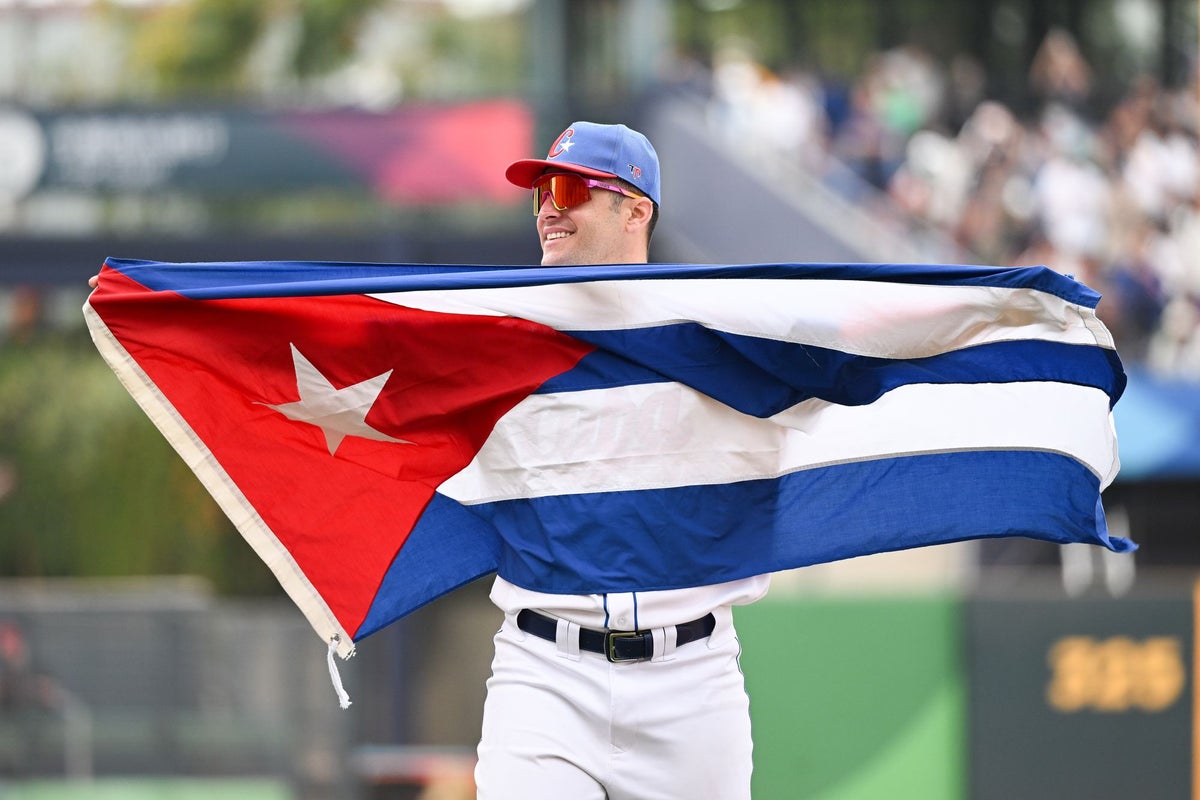
The latest friction point isn't a missed call at home plate or a blown save. It is a piece of paper—or the lack of one. As the World Baseball Classic approaches, the Cuban national team finds itself trapped in a familiar purgatory. Visas are being denied. Players who were promised a stage are being told the door is locked. But the Cuban Federation has issued a defiant response that echoes through the streets of Matanzas and the corridors of Miami alike: they will play anyway.
The Ghost at First Base
To understand why a visa denial feels like a heartbreak, you have to look at the roster. For decades, the Cuban national team was a monolith of "loyalists," players who stayed on the island and played for the love of the revolution. If you left, you were a desertor. You were scrubbed from the record books. Your name was a whisper.
Then the world shifted. In a historic and fragile compromise, the 2023 World Baseball Classic saw the first "unified" Cuban team. Men who had fled on rafts or walked through Mexican deserts to sign MLB contracts were invited back to wear the jersey. It was supposed to be a bridge. Imagine a father and son who haven't spoken in ten years suddenly finding themselves on the same side of a double play. That was the emotional stakes of the "Team Asere" movement.
Now, that bridge is swaying in the wind. When a player is denied entry into the United States for a tournament, it isn't just a bureaucratic hiccup. It is a reminder that the Cold War never truly ended; it just moved to the dugout.
The Calculus of a Curveball
The logic of the embargo is often described in sterile, academic terms. We talk about "economic pressure" and "diplomatic leverage." But consider the reality for a trainer in Villa Clara. He is trying to teach a teenager how to throw a slider with a ball that has been re-stitched twelve times because new equipment is trapped behind a wall of trade restrictions.
The Cuban Federation’s vow to compete despite the visa hurdles is a gamble. They are essentially saying that the talent is so undeniable, the spirit so stubborn, that the tournament will be illegitimate without them. They are right. You cannot have a "World" Baseball Classic and exclude the island that treats the sport as its primary export.
The logistical nightmare is staggering. If a key pitcher is denied a visa, the team has to scramble. They have to find neutral ground to train. They have to navigate a maze of third-party countries just to get a flight. This isn't just sports management; it’s a black-ops operation disguised as a road trip.
A Tale of Two Cities
Think of a hypothetical player—let’s call him Yuli. Yuli grew up in Sancti Spíritus. He has a 98-mile-per-hour fastball and a grandmother who still lives in a house with a leaking roof. Yuli knows that if he plays well in the Classic, his life changes. He isn't just playing for a trophy; he is playing for a ticket to a reality where he can buy his grandmother a new house.
When the news comes down that the U.S. has denied visas to several members of the delegation, Yuli doesn't read the policy papers. He feels the walls closing in. He wonders if the game he was told was universal is actually gated.
The tension is exacerbated by the internal politics of the Cuban diaspora. In Miami, the "Exilio" community is a cacophony of conflicting emotions. Some see the national team as a puppet of a repressive government. Others see the players as their brothers, victims of a system they didn't choose. When the team takes the field, the stadium becomes a pressure cooker. Every strikeout is a political statement. Every home run is a scream for recognition.
The High Price of the Game
We often hear that sports and politics shouldn't mix. It’s a nice sentiment, usually uttered by people who have never had their travel documents scrutinized by three different intelligence agencies. In the Caribbean, sports and politics are the same soil.
The Cuban Federation’s defiance is rooted in a specific type of pride. It’s the pride of the underdog who has been told he doesn't belong in the room, so he decides to kick the door down. By vowing to compete, they are forcing the organizers and the fans to look at the absurdity of the situation. They are highlighting the fact that while the world watches the stars of the Dominican Republic, Japan, and the United States, some of the best players on earth are currently sitting in an office in Havana, waiting for a stamp that may never come.
The cost isn't just measured in wins and losses. It’s measured in the erosion of the game’s integrity. If the best aren't allowed to play, the "Classic" becomes an exhibition. It becomes a curated experience rather than a raw competition.
The Invisible Players
There is a silence that falls over a stadium when a team realizes they are shorthanded. It’s the sight of an empty spot in the batting order or a bullpen that’s stretched too thin. But the Cuban team has become masters of the "shorthanded" life. They are used to making do. They are used to the "inventing"—the Cuban art of resolver, of fixing a broken engine with a piece of wire and a prayer.
They will find a way to the tournament. They will fly through Panama, or Mexico, or Spain. They will sleep in airports if they have to. They will show up with their mismatched gear and their defiant stares because, for them, the baseball diamond is the only place where the embargo doesn't exist. Between the white lines, the ball doesn't know about the 1960s. The grass doesn't care about the Helms-Burton Act.
The tragedy is that it has to be this hard.
We watch these games for the moments of transcendence—the sliding catch, the walk-off hit, the tears in the eyes of a veteran. We don't want to think about the visa applications. We don't want to think about the lawyers. But for the Cuban team, the lawyer is as important as the lead-off hitter.
The Final Inning of the Argument
The world is watching to see if the U.S. will blink, or if Cuba will fold. Neither is likely. Instead, we will get a messy, beautiful, frustrated display of resilience. The Cuban team will arrive, perhaps smaller in number than they hoped, but larger in significance.
They are carrying the hopes of a divided people. They are carrying the ghosts of the players who came before them and the dreams of the kids who are currently throwing rocks at mangoes in the streets of Pinar del Río.
When the first pitch is thrown, the politics will recede for a moment. The roar of the crowd will drown out the rhetoric of the politicians. But as long as a player has to prove his political purity to play a game of catch, the sport is not truly free.
The leather ball continues to spin. It travels 60 feet, 6 inches, crossing a gap that fifty years of diplomacy couldn't bridge. The batter swings. The sound of the wood hitting the ball is sharp, like a gunshot in a quiet room. It is a reminder that no matter how many walls you build, a well-hit ball will always find a way to fly over them.
A scout leans forward in his seat. He isn't looking at a passport. He is looking at the rotation of the ball, the twitch in the hips, and the fire in the eyes of a man who traveled halfway around the world just to be told he wasn't supposed to be there.
The shortstop catches the ball and throws to first. The play is clean. The out is recorded. For one second, everything is simple. Then the inning ends, the players walk back to the dugout, and the shadow of the border falls across the field once more.