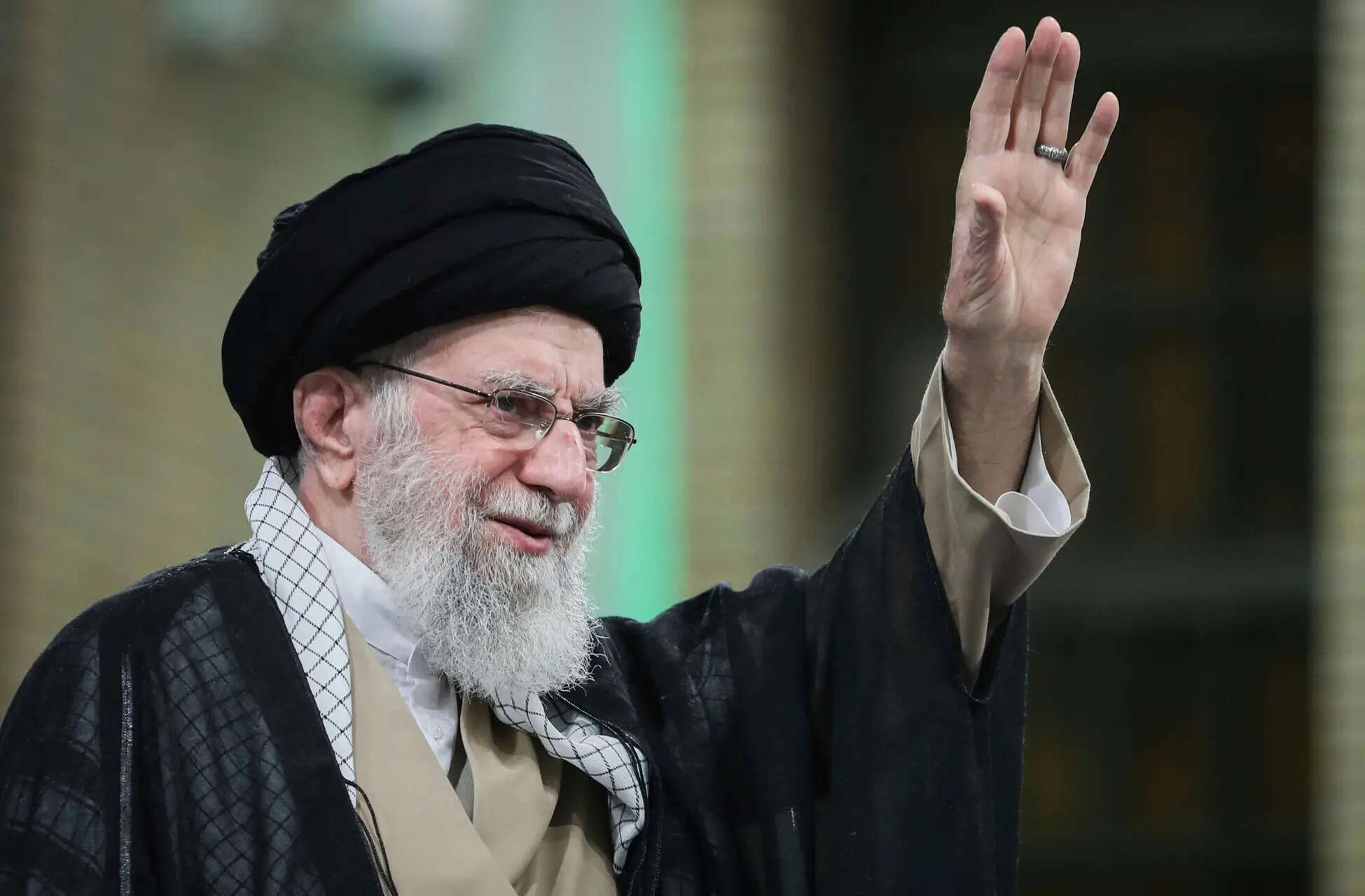
Social media is a fever dream right now. If you've spent any time on X or Telegram lately, you probably saw a surreal image that looks like it belongs on a 1990s airbrushed t-shirt. It shows Iranian Supreme Leader Ayatollah Ali Khamenei sitting in a lush, glowing garden, surrounded by young women in flowing robes. The caption? Usually something along the lines of "Iranian state media just posted Khamenei in heaven with his 72 virgins."
It’s a wild claim. It's also exactly the kind of thing that makes people click, rage, and share without thinking. But before you buy into the narrative that Tehran’s propaganda machine has finally lost its mind, you need to look at where this stuff actually comes from.
The image isn't a leak. It isn't a mistake. And it definitely didn't come from an official Iranian government broadcast.
Where the Khamenei Heaven Image Actually Started
In the world of Middle Eastern geopolitics, information is a weapon. When tensions between Israel, the US, and Iran hit a boiling point, the "meme war" goes into overdrive. This specific image of Khamenei started circulating heavily after rumors of his declining health began to swirl again in late 2024 and early 2025.
I’ve seen this pattern a dozen times. A low-quality, AI-generated image appears on a pro-opposition Persian account or a satirical Israeli channel. Within hours, it’s picked up by English-speaking accounts with blue checks who present it as "breaking news" from Iranian state media.
Here is the reality. Iranian state media, like IRNA or Fars News, is incredibly conservative. They treat the Supreme Leader with a level of somber, religious gravity that doesn't allow for flashy, AI-rendered kitsch. The idea of them depicting him with "72 virgins"—a concept that is often used as a Western trope or a radical extremist talking point rather than mainstream Shia iconography—is absurd.
If you look closely at the "heaven" image, the tell-tale signs of cheap AI are all over it. The hands are blurry. The lighting makes no sense. The faces of the women in the background are distorted. This wasn't a professional propaganda piece. It was a digital "shitpost" designed to mock the regime.
Why People Believe These Hoaxes So Easily
We believe what we want to believe about our enemies. Because the Iranian government is seen as a hardline religious autocracy, the idea that they’d post something "cringey" about the afterlife feels plausible to a casual observer.
But there is a specific strategy behind these fakes.
- Dehumanization: By making the leader of a country look ridiculous or obsessed with carnal rewards in the afterlife, it strips away political legitimacy.
- Rage-Baiting: It triggers a specific response in Western audiences who view these religious concepts with a mix of fear and mockery.
- Distraction: While everyone is laughing at a fake image of Khamenei in a garden, they aren't looking at actual troop movements, enrichment levels, or diplomatic backchannels.
I’ve tracked these disinformation loops for years. It usually starts on Telegram. A channel like "Middle East Spectator" or a parody account posts it as a joke. Then, someone else takes a screenshot, removes the context, and posts it to X with a caption like "YOU WON'T BELIEVE WHAT IRAN JUST POSTED." By the time it hits your feed, the original joke is gone, replaced by a fake fact.
The Role of AI in the Modern Proxy War
We’re in a new era of conflict. It’s not just about drones and missiles. It’s about who controls the "vibe" of the internet.
The Khamenei heaven image is a perfect example of "cheap-fakes." These aren't high-end Hollywood deepfakes. They are quickly generated AI images that look just real enough to pass the "scroll test." You're scrolling fast, you see a familiar face in a weird setting, and your brain registers it as "something that happened."
This isn't the first time this happened either. Remember the "Pentagon Explosion" AI image that briefly dipped the stock market? Or the Pope in the Balenciaga puffer jacket? This is the same thing, just applied to the US-Israel-Iran conflict.
The Iranian government actually has a very sophisticated media wing. When they want to project power, they show high-def videos of underground missile cities or somber footage of Khamenei meeting with "martyrs' families." They don't use AI-generated fantasy gardens. Their propaganda is built on strength and sacrifice, not psychedelic versions of paradise.
How to Spot Iranian Propaganda vs Satire
If you want to know if something is actually from Tehran, look for the watermarks. Official Iranian state media outlets (PressTV, Tasnim, Mehr) almost always have their logo in the corner. They also tend to use very specific, high-contrast photography.
The "heaven" image had none of that. It lacked the formal Persian calligraphy usually found on official posters. It also used a color palette—bright pinks and neon greens—that the Islamic Republic almost never uses in its official iconography.
Honestly, the biggest giveaway was the subject matter. Depicting a living "Marja" (a high-ranking religious authority) in heaven while he’s still alive is actually considered pretty heterodox, if not outright offensive, in strict Shia circles. It's just not how they do things.
The Dangerous Side of Viral Jokes
It’s easy to laugh at a goofy image. But in a high-stakes environment where the US and Israel are on the verge of a direct kinetic war with Iran, these fakes matter.
When people believe that the Iranian leadership is "delusional" or "obsessed with virgins," it changes how they view the necessity of war. It makes the "other" look less like a rational political actor and more like a caricature. That makes escalation easier to justify.
Don't let a bad AI prompt dictate your understanding of global security. The next time you see a photo that looks too weird to be true, it probably is. Check the source. Look for the original post. Nine times out of ten, you’ll find it’s just a troll trying to get some engagement.
Stop Falling for the Low Effort Trolls
The best way to handle this stuff is to starve it of attention. Don't quote-tweet it to "debunk" it—that just spreads the image further.
If you’re interested in what’s actually happening in Iran, follow journalists who speak Persian and monitor the actual state feeds. You’ll find that the real propaganda is much more boring, and much more calculated, than a fake image of a garden.
The real war is happening in the Strait of Hormuz and in the halls of the UN. It isn't happening in an AI-generated fever dream. If you want to stay informed, stop looking at the memes and start looking at the maps.
Verify everything. Trust the official logos, not the viral screenshots. If an image looks like a velvet painting from a gift shop, it’s not state propaganda—it’s just the internet being the internet.
Keep your head on straight. The digital world is designed to keep you agitated, but the truth is usually a lot less "viral" than the lie.