The failure of the proposed U.S.-led maritime security initiative in the Strait of Hormuz is not a diplomatic oversight but a predictable result of misaligned risk-sharing models. When the Trump administration sought to formalize a "Coalition of the Willing" to patrol the Persian Gulf, it encountered a structural disconnect between American security architecture and the sovereign energy interests of NATO and Quad partners. This reluctance reflects a calculated refusal by global powers to subsidize a "maximum pressure" campaign that increases their own operational risks without offering a clear de-escalation mechanism.
The standoff in the Strait of Hormuz—a chokepoint through which roughly 21 million barrels of oil flow daily—reveals the fragility of modern maritime security frameworks. To understand why major allies like France, Germany, Japan, and India distanced themselves from the American plan, one must examine the three primary friction points: the burden-sharing asymmetry, the escalation-trap paradox, and the legal ambiguity of "freedom of navigation" operations in a contested gray zone.
The Mechanics of Maritime Chokepoints and Kinetic Risk
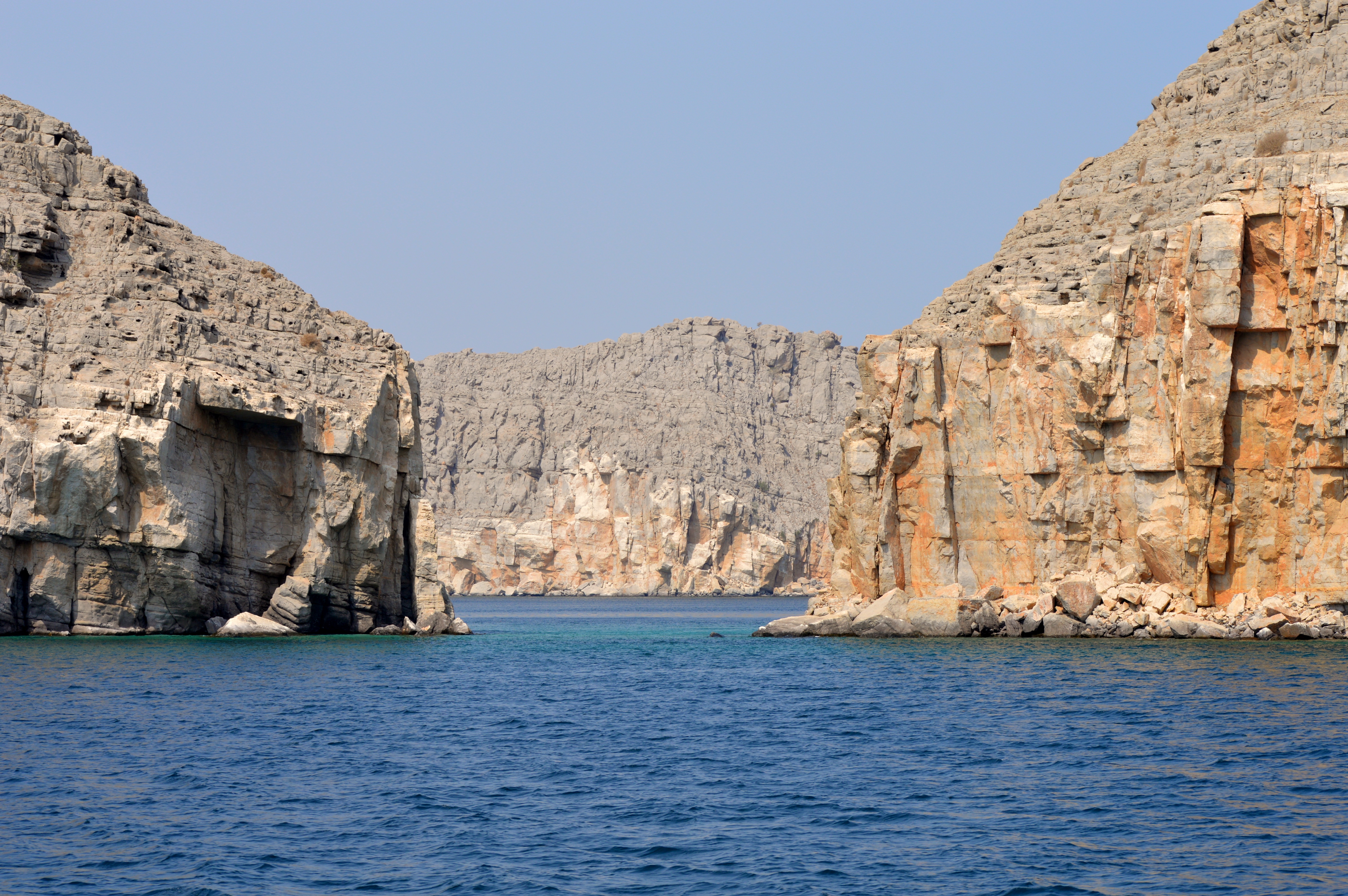
The Strait of Hormuz is a unique geographical bottleneck where the shipping lanes pass through the territorial waters of Iran and Oman. Under the United Nations Convention on the Law of the Sea (UNCLOS), vessels enjoy the right of transit passage, yet this right is functionally dependent on the absence of hostilities.
When a coastal state like Iran perceives a naval coalition as an act of encirclement rather than a defensive patrol, the risk profile for merchant vessels shifts from "random interference" to "targeted retaliation." For nations like India, which imports over 80% of its crude oil, participating in a U.S.-led fleet creates a direct target on their flagged vessels. New Delhi’s denial of talks with the U.S. regarding this specific plan is a strategic maneuver to maintain "strategic autonomy"—a policy designed to ensure that Indian energy security is not collateral damage in a bilateral Washington-Tehran conflict.
The Escalation-Trap Paradox
The primary deterrent to joining the U.S. plan is the absence of an off-ramp. In strategic theory, an escalation trap occurs when a defensive posture is interpreted as an offensive preparation, forcing the adversary to preemptively strike or harass.
- Information Asymmetry: Allied intelligence agencies often disagreed with the U.S. assessment of specific tanker attacks. Without a consensus on the "smoking gun," European powers feared that joining a naval task force would validate a casus belli they did not support.
- The Command and Control Dilemma: Operating under a U.S. Central Command (CENTCOM) umbrella implies a commitment to American Rules of Engagement (ROE). If a U.S. destroyer engages an Iranian fast-attack craft, every coalition member becomes a de facto combatant.
- Economic Backfire: For Japan and Germany, the goal is the uninterrupted flow of molecules. A massive naval presence in the Strait increases insurance premiums (War Risk Surcharges) for commercial shipping. The "remedy" of a naval escort can be more expensive than the "malady" of occasional harassment.
Structural Misalignment within NATO and the Quad
The refusal of the "big hitters" in NATO and the Quad to sign on highlights the fraying of the post-Cold War security consensus. The U.S. viewed the Hormuz plan as a test of alliance loyalty; the allies viewed it through the lens of regional stability.
The European Divergence
France and the UK initially explored a "European-led" maritime monitoring mission (EMASoH) based in Abu Dhabi. This was a deliberate attempt to decouple maritime security from the U.S. "maximum pressure" sanctions. By maintaining a separate command structure, Europe sought to signal to Iran that their presence was technical and protective, not political or punitive. This distinction is critical: Europe wanted to preserve the Joint Comprehensive Plan of Action (JCPOA), while the U.S. naval plan was seen as the kinetic arm of the JCPOA’s dismantling.
The Quad’s Indian Pivot
India’s position is defined by geographical proximity and a massive diaspora in the Gulf. Unlike the U.S., which is now a net exporter of energy thanks to shale, India is a massive net importer. Any disruption in the Persian Gulf has an immediate inflationary effect on the Indian economy. India’s decision to launch "Operation Sankalp"—a solo naval deployment—rather than joining the U.S. task force, serves two purposes:
- It protects Indian-flagged vessels without aligning with a specific geopolitical bloc.
- It keeps the communication channels open with Tehran, ensuring that Indian assets are not viewed as hostile.
The Cost Function of Independent vs. Coalition Escorts
There is a measurable economic delta between participating in a multinational coalition and running independent operations. A coalition offers "Economies of Scale" in terms of radar coverage, satellite data, and rapid response. However, these are offset by "Political Premia."
- Coalition Cost: $C = O + P$ (where $O$ is operational cost and $P$ is the political cost of ruined bilateral relations with the regional power).
- Independent Cost: $I = O + R$ (where $R$ is the resource strain of maintaining a long-range naval presence without local logistics).
For India and Japan, $R$ is currently lower than $P$. They would rather pay the high price of solo patrols than the existential price of being dragged into a regional war.
The Technology of Gray Zone Deniability
The modern conflict in the Strait of Hormuz is characterized by "Gray Zone" tactics: limpet mines, drone swarms, and GPS jamming. These technologies are designed to be "sub-kinetic"—meaning they cause damage without crossing the threshold that triggers a full military response.
A large-scale naval coalition is a sledgehammer designed for a conventional war, making it ill-equipped for these "mosquito" tactics. Intercepting a $20,000$ drone with a $2 million$ interceptor missile is an unsustainable attrition model. Allies recognized that the U.S. plan lacked a technical solution for these asymmetric threats, offering instead a symbolic presence that might actually provoke the very swarm attacks it was meant to deter.
Strategic Friction in the Indo-Pacific Context
The Hormuz failure serves as a precursor to future maritime disputes in the South China Sea. If the U.S. cannot secure a mandate for a chokepoint as vital as Hormuz, its ability to lead "Freedom of Navigation" operations (FONOPs) in the Pacific is called into question. The Quad (U.S., Japan, India, Australia) is often touted as a security bedrock, but the Hormuz incident proves that the Quad is a consultative body, not a military alliance. National interest in energy procurement consistently overrides the "norm-based order" when the two come into conflict.
The Operational Reality of Naval Escorts
Effective escorting requires a "hub and spoke" logistics model. A ship must be within 15–30 minutes of a distressed tanker to prevent a boarding. In a 21-mile wide strait, the reaction time is even shorter. A coalition requires a unified communication protocol (Link 16 or similar) which many smaller or non-NATO partners are reluctant to integrate because it exposes their own cryptographic standards to U.S. oversight.
The Inevitable Shift to Regionalized Security
The rejection of the Trump-era plan marks the end of the era where the U.S. Navy acted as the world’s "unpaid security guard." As the U.S. shifts focus to the "Great Power Competition" with China, it will increasingly demand that energy-dependent nations secure their own supply lines.
The move toward localized, independent patrols by India, Japan, and the European Union represents a fragmentation of global maritime security. This fragmentation reduces the risk of a global "clash of civilizations" sparked by a single incident in the Gulf, but it increases the risk of tactical errors and "friendly fire" due to a lack of coordination between the multiple independent fleets now operating in the region.
The strategic play for any energy-dependent nation now is to invest in "de-risking" through three specific vectors:
- Strategic Petroleum Reserves (SPR): Building a 90-day buffer to decouple domestic prices from immediate Strait of Hormuz volatility.
- Modular Naval Assets: Shifting from expensive destroyers to littoral mission ships capable of countering drone and mine threats at a lower cost-per-engagement.
- Diplomatic Multi-vectoring: Maintaining "Security Dialogue" status with both the U.S. and Iran to ensure merchant ships are seen as neutral infrastructure rather than strategic targets.
Nations that successfully navigate this tri-fold strategy will maintain sovereignty over their energy inputs; those that succumb to the pressure of joining binary naval blocs will find themselves funding a security model that invites the very instability it claims to prevent.