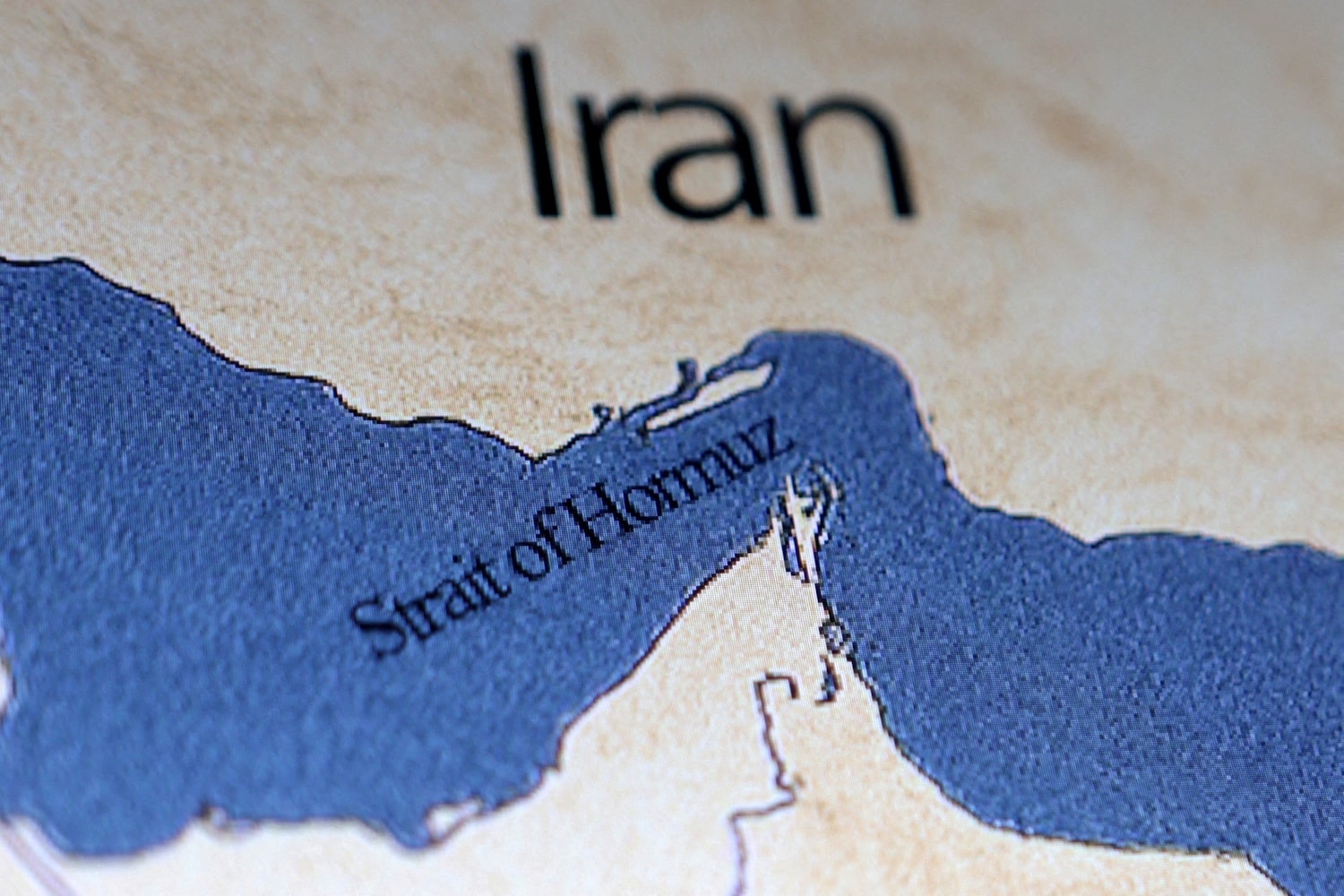
The Strait of Hormuz is the most dangerous choke point in the global economy, a narrow strip of water through which roughly 20 percent of the world’s daily oil consumption flows. It is not merely a shipping lane; it is a geographic carotid artery. If it were severed, even briefly, the shockwaves would trigger a global recession faster than any central bank could react. While many analysts treat the Strait as a binary problem—either it is open or it is closed—the reality is a grinding war of attrition defined by shadow tankers, electronic warfare, and a delicate balance of terror between regional powers and global consumers.
At its narrowest point, the shipping lanes in the Strait are only two miles wide in each direction. This tight squeeze forces the world’s largest Supertankers to navigate a predictable path, making them sitting ducks for any actor looking to disrupt the status quo. The math is simple and terrifying. Over 20 million barrels of oil pass through here every single day. There is no viable pipeline infrastructure on earth that can bypass this route entirely. If the Strait shuts down, the world loses a fifth of its energy supply overnight.
The Illusion of the Bypass
For decades, energy analysts and Gulf states have discussed "Hormuz bypass" projects. The idea is to move oil via overland pipelines to ports on the Red Sea or the Gulf of Oman, theoretically neutralizing the threat of a blockade. This is largely a fantasy.
While Saudi Arabia operates the East-West Pipeline and the UAE has the Abu Dhabi Crude Oil Pipeline, these conduits lack the capacity to handle more than a fraction of the total volume. Currently, these pipelines can move perhaps 6.5 million barrels per day. That leaves nearly 14 million barrels with nowhere to go if the Strait is compromised. Shipping costs would skyrocket, insurance premiums for tankers would become prohibitively expensive, and the "just-in-time" delivery model that fuels modern industry would collapse.
The physical constraints of the Strait also create a unique tactical advantage for Iran, which sits along the entire northern coast. Unlike traditional naval warfare that relies on massive destroyers, the strategy here involves "swarming"—using hundreds of fast-attack boats, sea mines, and shore-based missile batteries to overwhelm sophisticated Western defenses. It is an asymmetric nightmare.
The Shadow Fleet and Gray Zone Tactics
Security in the Strait is no longer about conventional fleets. We have entered an era of "gray zone" conflict where the identity of the aggressor is often obscured. In recent years, we have seen a rise in the use of the Shadow Fleet—uninsured, aging tankers with obscured ownership that transport sanctioned oil.
These vessels operate outside the traditional maritime legal framework. They frequently turn off their Automatic Identification Systems (AIS) to "go dark," making the Strait a chaotic environment for legitimate traffic. This isn't just a legal headache; it's a safety catastrophe waiting to happen. An oil spill from a rusted, third-hand tanker in these narrow waters would choke the lane just as effectively as a naval blockade.
The tactics used to harass shipping have also evolved. It is no longer just about limpet mines. We now see:
- GPS Spoofing: Commercial ships suddenly find their navigation systems placing them miles away from their actual location, sometimes drifting into hostile territorial waters.
- Drone Swarms: Low-cost loitering munitions can target the bridge or engine room of a tanker, disabling a billion-dollar asset for the price of a used sedan.
- Cyber Interdiction: Hacking the port management systems that coordinate the flow of traffic in and out of the Gulf.
These methods allow regional players to turn the "energy tap" up or down without ever firing a shot that would trigger a formal declaration of war. It is a slow-motion strangulation of global commerce.
The China Factor and the Shift in Dependency
The traditional narrative suggests that the United States is the primary protector of the Strait because it needs the oil. This is outdated. Due to the shale revolution, the U.S. is now a net exporter of crude. The real victims of a Hormuz shutdown would be in the East.
China, India, Japan, and South Korea are the primary destinations for the oil flowing through the Strait. China, in particular, imports roughly 75 percent of its oil, with a massive portion of that coming through this single point of failure. This creates a fascinating geopolitical irony: the U.S. Navy spends billions of dollars patrolling the Strait to protect the energy security of its primary economic rival, China.
Beijing is acutely aware of this "Malacca-Hormuz Trap." Their response has been the Belt and Road Initiative—building ports in Pakistan (Gwadar) and pipelines through Central Asia. Yet, none of these projects can replace the sheer scale of maritime transport. If the Strait closes, the lights go out in Shanghai and New Delhi long before they flicker in New York or London.
The Liquefied Natural Gas Crisis
While oil gets the headlines, the Strait is equally critical for Liquefied Natural Gas (LNG). Qatar, one of the world’s top LNG exporters, sends nearly all of its output through the Strait.
Unlike oil, which can be stored in strategic reserves for months, the global LNG market operates on a much tighter schedule. Many power plants in Europe and Asia rely on a steady stream of LNG to keep the grid stable. A disruption in the Strait would not just make gasoline expensive; it would literally freeze people out of their homes in winter and shut down the semiconductor factories that drive the global tech industry.
Why the Insurance Market Rules the Waves
The ultimate arbiter of the Strait’s viability isn't a general or a politician; it's a maritime underwriter in London. Shipping companies will only sail where they can get insurance.
Whenever tensions rise, the "War Risk" premiums for the Persian Gulf spike. If those premiums exceed the profit margin of the cargo, the ships stop moving. We saw this during the "Tanker War" of the 1980s, where hundreds of ships were attacked. Back then, it took a massive international naval escort (Operation Earnest Will) to keep the oil flowing. In today’s hyper-connected economy, the world lacks the stomach—and perhaps the naval capacity—to sustain such an operation for long.
The Fragility of Modern Deterrence
The assumption has always been that no one would be "crazy enough" to close the Strait because it would be economic suicide for the perpetrator as well. This logic assumes all actors are rational and value economic growth over ideological or survivalist goals.
History shows this is a dangerous gamble. When a regime feels backed into a corner by sanctions or internal unrest, the "nuclear option" of closing the Strait becomes an attractive way to force the international community to the bargaining table. The threat is the point. By keeping the world in a state of constant anxiety about the Strait, regional powers maintain a level of influence that far outstrips their actual military or economic size.
The Strait of Hormuz is a geographic reality that cannot be engineered away. We have built a global civilization on the assumption of cheap, frictionless energy movement, yet we allow that entire system to hinge on a waterway narrower than some shipping canals.
We are not one major event away from a crisis; we are currently living in a state of permanent, low-boil instability. The question is not if the Strait will be used as a weapon, but when the cumulative pressure of "gray zone" tactics will finally break the back of the global supply chain. Diversifying energy sources is a decades-long project, but the Strait demands a solution in days. The world is effectively holding its breath every time a tanker enters those narrow, emerald waters.
Check the current "War Risk" surcharges on your next logistics report to see the true price of this instability.