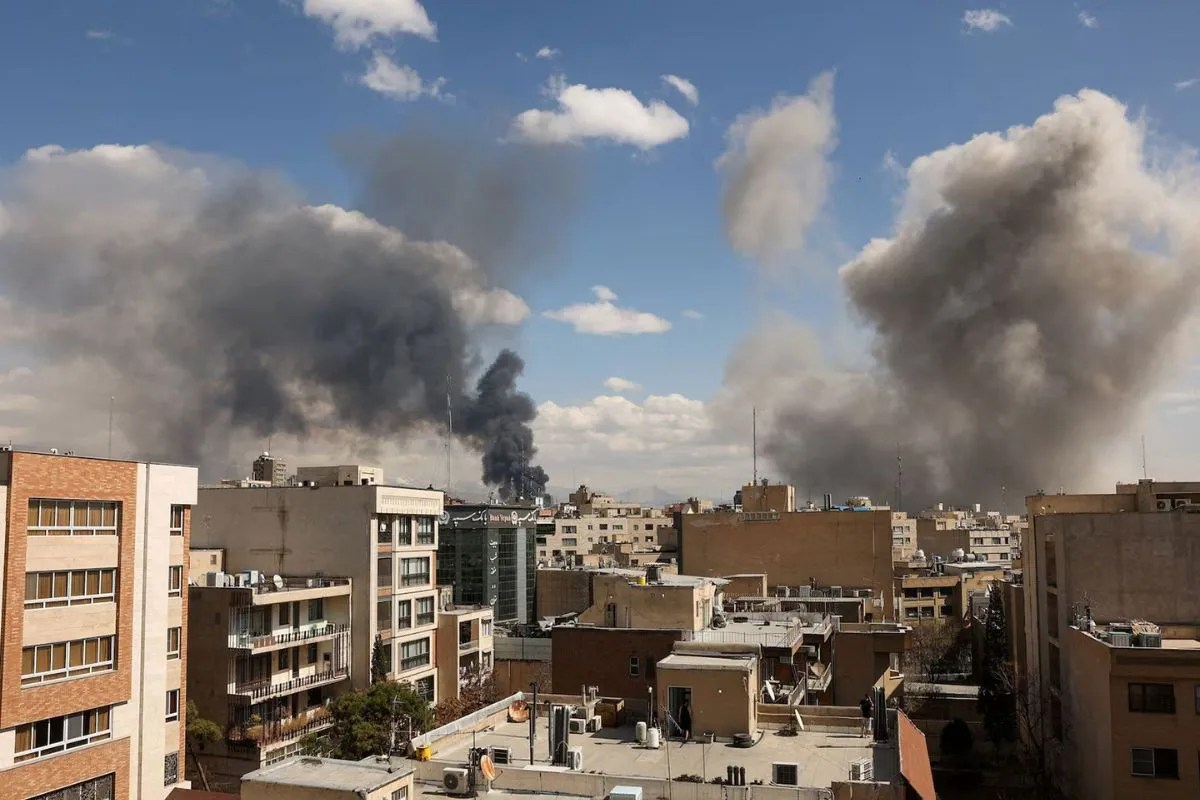
The rules of engagement in the Middle East just took a massive, heavy-duty turn. If you've been following the tension between the US, Israel, and Iran, you know the rhetoric is usually louder than the actual hardware used. That changed when reports surfaced of the US military dropping 5,000-pound bunker busters on Iranian-linked missile sites near the Strait of Hormuz. We aren't talking about precision surgical strikes with small yields anymore. This is a message written in concrete-shattering high explosives.
The Strait of Hormuz is the world's most important oil chokepoint. About a fifth of the world's liquid petroleum passes through this narrow stretch of water daily. When Iran positions advanced missile batteries there, they aren't just defending their coast. They're holding a knife to the throat of the global economy. The US decision to use "GBU" series heavy ordnance suggests that the targets weren't just mobile launchers on the surface. They were hardened, deeply buried facilities designed to survive standard Tomahawk cruise missile strikes.
Why the US Chose the Heavy Stuff
Most people don't realize how massive a 5,000-pound bomb actually is. For context, the standard JDAMs (Joint Direct Attack Munitions) used in most regional conflicts usually weigh around 500 to 2,000 pounds. Stepping up to the 5,000-pound class, like the GBU-28 or its newer iterations, means the Pentagon identified targets that a 2,000-pounder couldn't touch.
Iran has spent decades digging. They've built "missile cities" deep underground, protected by layers of reinforced concrete and mountain rock. If the US is dropping 5,000-pound bombs, it means they've moved past trying to scare Iran. They're actively neutralizing the ability to retaliate from underground silos. It's a clear signal to Tehran: your mountains aren't deep enough.
This isn't just a US-Iran spat. Israel's fingerprints are all over the intelligence gathering here. Israel has been vocal about the "Ring of Fire" strategy Iran uses to surround them with proxies. By hitting these specific sites near the Strait, the US is essentially doing the heavy lifting that Israel's air force—while capable—might struggle to do without massive tanker support over long distances.
The Economic Reality of a Closed Strait
If you think gas prices are high now, imagine a world where the Strait of Hormuz is a no-go zone. Iran has repeatedly threatened to close the waterway if they're pushed too far. However, there's a catch. Closing the Strait is a suicide move for Iran's own economy. They need to export their own oil to survive.
But a cornered regime doesn't always act rationally.
By taking out missile batteries before they can be used, the US is attempting a "pre-emptive defense." They want to make sure that if Iran decides to pull the trigger, the gun either jams or isn't there at all. It’s a high-stakes gamble. If the strikes don't completely destroy the launch capability, they might just provoke the exact blockade they're trying to prevent.
What These Bases Actually Look Like
Iranian state media has occasionally shown "leaked" footage of their underground bases. You see long tunnels filled with Sahab and Fateh missiles, manned by crews who live sub-surface. These aren't just storage units. They are active launch complexes.
- Hardened Entry Points: Heavily guarded blast doors that can withstand conventional hits.
- Internal Rail Systems: For moving heavy missiles quickly to different launch "holes."
- Independent Life Support: Meaning they can operate even if the surface is a wasteland.
Hitting these requires kinetic energy. A 5,000-pound bomb dropped from a high altitude gains immense speed. It uses that speed to punch through the earth before the fuse ignites the main charge. It’s basically a man-made earthquake.
The Escalation Ladder is Breaking
For years, the US and Iran played a game of "tit-for-tat." Iran would harass a tanker; the US would seize a shipment. Iran-backed groups would fire rockets at a base; the US would strike a warehouse in Syria. This latest action breaks that rhythm. Using heavy bombers like the B-2 or B-1B to deliver these payloads is a massive step up the escalation ladder.
I’ve seen this pattern before. When the military starts using "bunker busters," it usually means the diplomatic phase is effectively dead. You don't use these weapons to "send a message." You use them to destroy things that cannot be rebuilt quickly.
Some analysts argue this was a "demonstration of capability." Basically, a way to show Iran that the US can reach their nuclear facilities without actually hitting the nuclear sites yet. It’s a warning shot, just a very, very loud one.
The Israel Connection
Israel's role in this can't be understated. They provide the ground-level humint (human intelligence) that the US sometimes lacks. Knowing exactly where the ventilation shafts are for an underground base is the difference between a successful strike and a very expensive hole in the dirt.
Israel is currently fighting on multiple fronts. They don't have the luxury of a long-drawn-out war with Iran's primary forces while also dealing with Hezbollah in the north. By having the US strike the Hormuz sites, Israel gets its primary benefactor to clear the "back door" while they focus on the immediate threats on their borders. It's a strategic division of labor.
What Happens Tomorrow
Expect Iran to respond, but likely not where you'd think. They rarely go head-to-head with the US Navy. Instead, look for an increase in cyberattacks on Western infrastructure or "deniable" attacks on shipping in the Red Sea via the Houthis.
The real danger is a miscalculation. If one of these 5,000-pound bombs misses and hits a civilian area or a neutral ship, the "proportionality" argument goes out the window.
The US is betting that overwhelming force will lead to Iranian restraint. History shows that’s a coin flip. For now, the Strait remains open, but the tension is thick enough to cut with a knife. Watch the oil markets. If Brent Crude spikes, the "smart money" thinks the situation is about to get much worse.
If you want to stay ahead of this, stop watching the news cycles and start watching the movement of US carrier strike groups. If more than two are in the region, we're looking at a full-scale conflict, not just a series of strikes. Keep an eye on the B-52 deployments to Diego Garcia. That's the real tell.