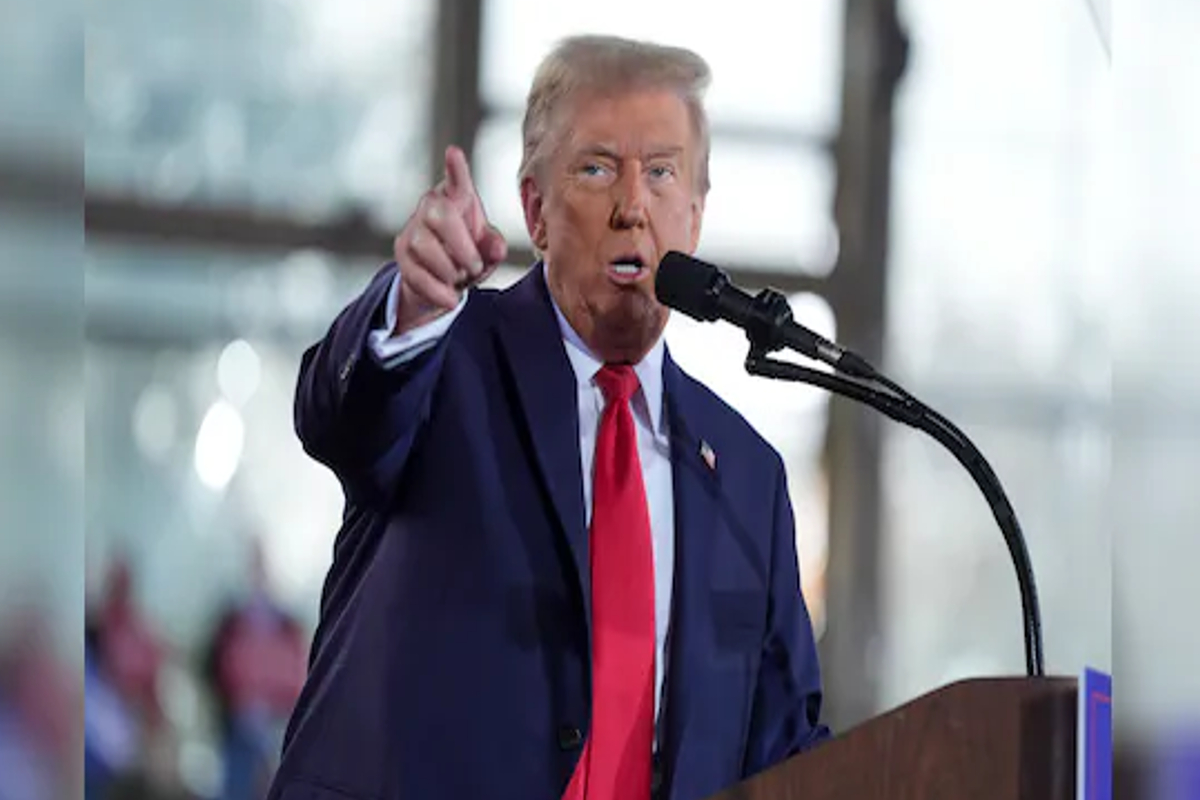
The silence in a room filled with high-stakes machinery is never actually silent. There is a hum. It is the sound of servers breathing, the faint electric buzz of fluorescent lights, and the heavy, rhythmic tapping of a finger against a mahogany desk. For Donald Trump, that silence has become a physical weight. It is the sound of a phone not ringing. Specifically, the phone that connects the Mar-a-Lago war room to the current administration’s decision-makers.
Power is a fickle ghost. One day you are the architect of the skyline; the next, you are shouting into a gale, watching your warnings vanish before they hit the ground. The recent outbursts from the former President regarding the lack of communication from the White House aren't just about ego. They are about the terrifying realization that the mechanisms of a superpower are being operated while the man who once held the gears is being locked out of the workshop. You might also find this similar coverage useful: The $2 Billion Pause and the High Stakes of Silence.
He isn't just angry. He is prophetic in a way that feels like a threat.
The Ghost at the Feast
Consider the optics of a shadow cabinet. In the world of high-level diplomacy and domestic crisis management, there is an unwritten rule of professional courtesy. When the ship hits a reef, you don't care who steered it yesterday; you look for the person who knows where the lifeboats are hidden. Trump’s recent tirades center on a singular, stinging grievance: he claims he has been sidelined during moments of national urgency where his specific brand of "deal-making" could have served as a pressure valve. As extensively documented in latest coverage by The New York Times, the implications are significant.
When he speaks of a "ruined future," he isn't just talking about polling numbers. He is talking about the erosion of a specific type of American leverage.
Imagine a CEO who is ousted in a hostile takeover. He sits in his home office, watching the stock price of his life’s work plummet because the new management refuses to take his calls. He knows where the skeletons are. He knows which vendors are overcharging and which overseas partners are planning to defect. He waits for the call. It never comes. Eventually, the frustration boils over into a public declaration: If you don't let me help you fix this, the collapse is on your hands.
The Currency of Threat
The language of the threat is a curious thing. When Trump warns that the "future will be bad" or suggests that certain players will "pay a price," he is using the only currency he has left in a locked-out state: fear of the alternative.
The strategy is simple. By positioning himself as the rejected savior, he ensures that every subsequent failure of the current administration is viewed through the lens of his absence. If the economy stutters, it’s because they didn’t listen. If a foreign conflict escalates, it’s because they lacked his "unpredictable" edge. It is a brilliant, if caustic, narrative arc. He is building a case for a future where his return isn't just a political choice, but a rescue mission.
But there is a human cost to this level of friction.
Politics at this level usually requires a certain degree of back-channeling. In the Cold War, the "Hotline" between Washington and Moscow existed specifically so that even the bitterest rivals could prevent a global catastrophe. When that line is cut—not by technology, but by sheer personal animosity—the margin for error shrinks to nothing. We are living in that margin.
The Invisible Stakes of the Snub
The news reports focus on the "fury" and the "threats." They capture the surface-level heat of the rhetoric. What they miss is the chilling reality of a divided command.
A nation is a story we all agree to believe in. When the former leader of that nation tells half the population that the current leadership is driving the bus off a cliff—and that he is being prevented from grabbing the wheel—the social fabric doesn't just tear. It dissolves.
The "threat" Trump issued isn't necessarily a promise of physical retribution. It is a promise of accountability. He is telling the world that he is keeping a ledger. In his mind, every snub is a line item. Every ignored piece of advice is a debt that will eventually be collected. This isn't just politics; it’s a vendetta wrapped in a campaign manifesto.
The Room Where It Doesn't Happen
There is a specific kind of loneliness that comes with being the most famous man in the world while being ignored by the people who matter most to your legacy.
Think of the "war room" environment. It’s a place of frantic energy, maps spread across tables, and constant updates. Now, imagine that same room when the updates stop coming. The television is on, showing the world in chaos, but the people on the screen act as if you don't exist. You have the solutions—or at least, you believe you do—but the gatekeepers have changed the locks.
The outbursts we see on social media and in press releases are the sound of a man trying to kick the door down from the outside.
He knows that his base feels that same exclusion. When he says "they aren't coming for me, they're coming for you," he is connecting his personal snub to the perceived slights of millions of Americans who feel the "elites" have muted their microphones as well. The narrative becomes a shared grievance.
The Price of a Broken Bridge
What happens when the "future" he predicts actually arrives?
If the situation worsens—whether it’s inflation, border security, or international skirmishes—Trump’s "I told you so" will be the loudest sound in the room. By warning of a "bad future" now, he is pre-buying the rights to the disaster. He is the insurance salesman who tells you your house will burn down, only to be found standing on the sidewalk with a bucket of water after the first spark flies.
The danger isn't in the words themselves. It’s in the vacuum they create. When there is no dialogue between the past and the present, the future becomes a battlefield rather than a destination.
He sits at the mahogany desk. The finger taps. The hum of the room continues. He looks at the phone, then at the camera, and then at the horizon. He isn't just waiting for a call anymore. He is waiting for the fire he predicted to get bright enough that they have no choice but to see him standing in the glow.
The red phone stays silent, but the air in the room is screaming.
The ledger is open. The pen is moving. And as the sun sets over the Atlantic, the man who was once the center of the world prepares for a reality where he is either the architect of the next era or the ghost who haunts its ruins.