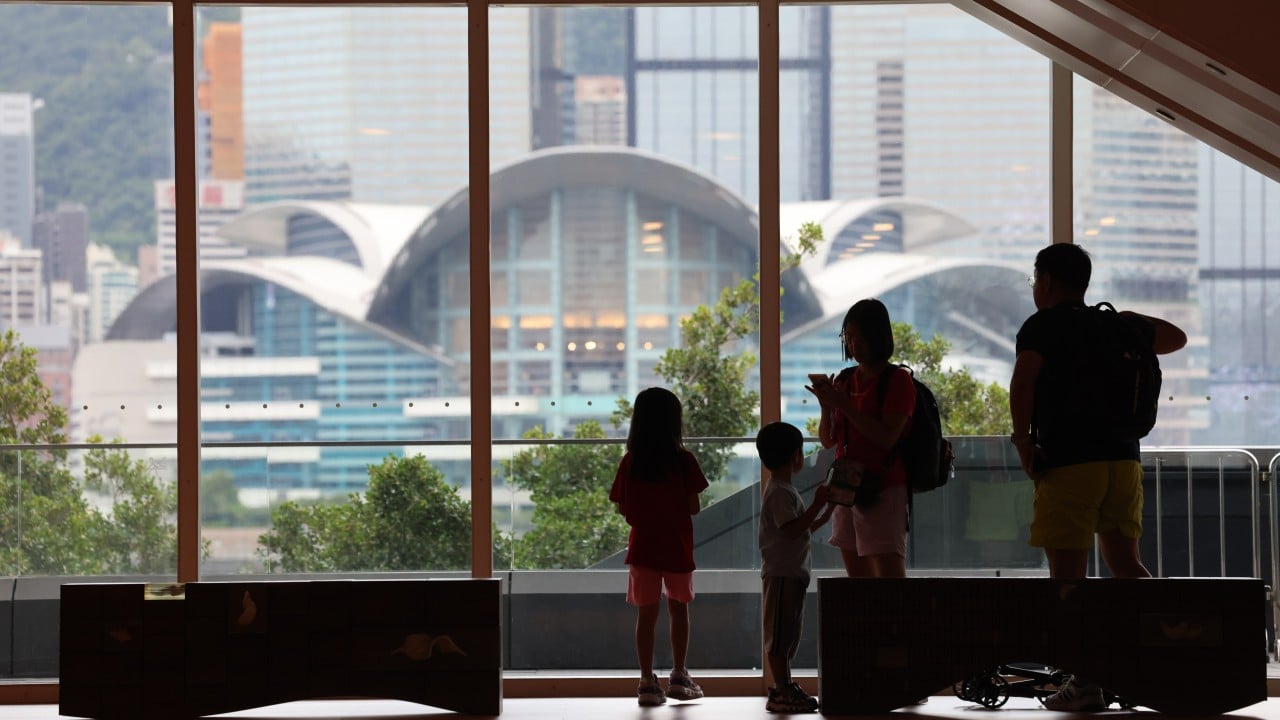
Six o'clock in the morning in Hong Kong does not sound like birdsong or the soft hum of a waking city. It sounds like the sharp, rhythmic snap of a Velcro backpack strap and the frantic boiling of a kettle.
Meet Mei. She is hypothetical, but if you walk down any street in Sha Tin or Central, you will see her face mirrored in a thousand tired eyes. She is thirty-four. She has a stable job in mid-level finance. She has a husband who works equally long hours in logistics. They have a small, impeccably clean apartment that eats sixty percent of their combined income. Recently making news in related news: Why Renting for Under £1000 a Month is Getting Harder in 2026.
They also have a void where a crib should be.
The government is worried about this void. Policymakers point to the city’s fertility rate—among the lowest in the world—and offer one-off cash handouts of HK$20,000 to new parents. They talk about "optimizing the population structure" as if children were lines of code in a spreadsheet. But for Mei, that cash bonus is a joke that isn't particularly funny. It wouldn't even cover three months of the extracurricular tutoring her child would eventually need just to survive the first grade. Additional details regarding the matter are covered by Vogue.
The problem isn't a lack of desire. It is a presence of fear. In Hong Kong, the nursery is not a place of rest; it is the starting block for a forty-year sprint.
The Invisible Weighted Vest
To understand why the cradles are empty, you have to look at the backpacks. Hong Kong’s education system is built on a foundation of high-stakes testing that begins almost before a child can tie their own shoes.
Imagine a staircase. In most places, a child climbs this staircase at their own pace, perhaps pausing to look out a window. In Hong Kong, the staircase is an escalator moving downward at high speed. If you aren't sprinting upward, you are losing ground.
By the time a child reaches primary school, the "shadow education" industry takes over. This isn't just a few hours of help with math. It is a multi-billion dollar machine of private tutors, cram schools, and weekend academies. Parents don't enroll their kids in these because they want to be "tiger parents." They do it because they are terrified. They see the limited spots at top-tier universities and the grueling competition for "decent" jobs, and they realize that a "normal" childhood is a luxury they cannot afford to give their offspring.
The stress is a physical weight. It sits in the shoulders of ten-year-olds who don't get home until 8:00 PM because they went straight from school to a coding clinic to a violin lesson. It sits in the bank accounts of parents who spend more on "enrichment" than they do on their own retirement.
When Mei looks at her empty spare room, she doesn't see a baby. She sees a decade of sleepless nights spent hovering over homework, a lifetime of financial sacrifice, and the crushing guilt of knowing she might be bringing a human being into a world where their value is measured solely by a public examination score.
The Myth of the Cash Cure
Governments love silver bullets. A cash handout is easy. It looks good on a press release. It suggests a problem has been "addressed."
However, fertility is not a retail transaction. You cannot buy a generation.
The HK$20,000 "baby bonus" is a drop of water in a burning forest. If the cost of living is a mountain, the government is offering a small step-stool. The real barriers are structural, cultural, and deeply psychological.
Consider the housing trap. In a city where "micro-flats" the size of a parking space are sold for millions, where do you put the stroller? Where does the child play? When the physical environment is designed for high-density efficiency rather than human flourishing, the biological impulse to expand the family is strangled by the walls themselves.
But even more than space, the city lacks time.
Hong Kong has some of the longest working hours on the planet. If Mei and her husband had a child, who would raise it? The standard answer is a domestic helper or the grandparents. This creates a cycle of "absentee parenting" where the bond between generations is stretched thin by the sheer necessity of survival. The parents work to pay for the tutors; the tutors replace the parents; the child grows up viewing life as a series of hurdles to be cleared rather than a life to be lived.
The Great Disconnect
There is a profound disconnect between the "macro" goals of the state and the "micro" reality of the dinner table.
The state wants workers. It wants taxpayers. It wants a demographic pyramid that doesn't look like an upside-down lightbulb. But the individual wants a life that feels meaningful.
The current education system is a meat grinder. It produces highly skilled, highly stressed individuals who are too exhausted to replicate the process for the next generation. We are witnessing a quiet, collective strike. By choosing not to have children, an entire generation is signaling that the current "price of entry" into Hong Kong society is too high.
They are saying that the stress is not worth the prize.
If the goal is truly to raise the birth rate, the solution isn't in the treasury. It’s in the classroom. It’s in the labor laws. It’s in the very definition of what a "successful" life looks like in this vertical city.
A Different Kind of Success
What if a child’s worth wasn't tied to their rank in a cohort of thirty thousand?
What if the education system valued creativity over rote memorization, or mental health over a perfect transcript?
To change the birth rate, you have to change the culture of competition. This requires more than just policy tweaks; it requires a dismantling of the "prestige" trap. As long as society dictates that there are only three "good" career paths—doctor, lawyer, or financier—the pressure on the education system will remain explosive.
When the pressure is that high, the container eventually cracks.
Mei sits at her kitchen table tonight, looking at a flyer for a new luxury development. The ad shows a smiling couple and a golden retriever. There is no child in the ad. Even the marketers know that in the current climate, a child is a complication, a financial liability, a source of potential failure.
She turns off the light. The room remains empty.
Until a parent can look at their child without immediately worrying about their university entrance exams fifteen years in the future, the silence in Hong Kong’s nurseries will only grow louder. The city is waiting for a reason to breathe, for a sign that life is allowed to be something more than a race to the top of a shrinking hill.
The most expensive thing in Hong Kong isn't a penthouse in the Mid-Levels. It’s the peace of mind to believe that a child’s future won't be a struggle for survival, but a journey of discovery. Until that becomes affordable, the cradles will stay still.


