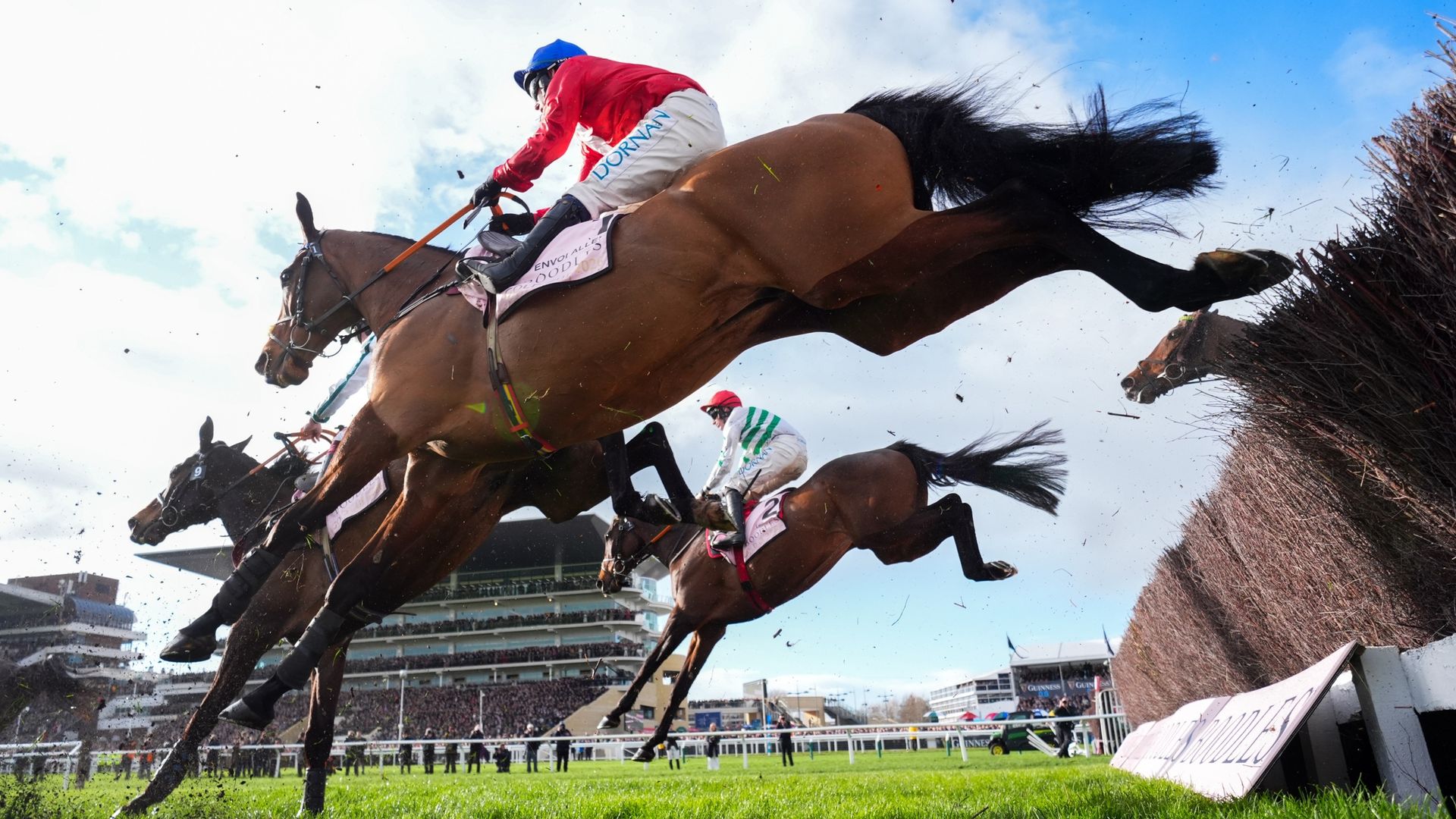
The headlines are predictable. They are written before the first fence is even jumped. A horse falls at the Cheltenham Festival, the green screens go up, and the digital mob starts sharpening their pitchforks. They call for bans. They call for "bloodless" sport. They mourn a "tragedy" while fundamentally failing to understand the biological reality of the animal they claim to protect.
The "lazy consensus" suggests that horse racing is a cruel, archaic meat grinder. The reality is that these three fatalities are a statistical anomaly in a sport that has spent the last decade obsessing over risk mitigation to a degree that would make a Formula 1 engineer blush. If you want to talk about animal welfare, stop looking at the racecourse and start looking at the millions of "pasture pets" rotting in paddocks with untreated laminitis because their owners think a lack of exercise is "natural."
The Myth of the Fragile Thoroughbred
The public views the Thoroughbred as a glass figurine. This is a fundamental misunderstanding of equine physiology. These animals are evolutionary masterpieces of bone density and cardiovascular output. They are built to run. A Thoroughbred in peak condition has a heart that can weigh up to 10 kilograms and a spleen that acts as a natural blood doper, injecting red cells into the system during exertion.
When a horse suffers a fatal injury on track, it isn't usually because the "sport is too hard." It is often a freak mechanical failure.
Data from the British Horseracing Authority (BHA) shows that the fatality rate in British racing has fallen by a third over the last 20 years. We are currently looking at a rate of approximately 0.2% of runners. To put that in perspective, you are more likely to have a heart attack while jogging in a park than a horse is to suffer a fatal injury during a sanctioned race.
The High Cost of Safety
I have seen trainers spend six figures on floor-to-ceiling diagnostic imaging—MRI, CT, and nuclear scintigraphy—just to find a microscopic stress fracture that might become a problem. No other animal on the planet receives this level of preventative medical care.
The industry has already capitulated to the optics-driven crowd by:
- Reducing field sizes.
- Softening the core of the fences.
- Leveling the landing zones to remove "traps."
- Strictly regulating whip use to the point of absurdity.
The result? The "purists" argue the sport is being diluted, while the "abolitionists" remain unsatisfied. You cannot satisfy a group whose goal is the total extinction of the working horse. Because make no mistake: if racing ends, the Thoroughbred breed as we know it effectively ceases to exist. There is no economic model that supports the maintenance of these high-performance athletes as backyard ornaments.
The Logic of Risk
The modern world has developed a pathological allergy to risk. We want the spectacle of the Cheltenham Gold Cup but we want it wrapped in bubble wrap.
Racing is dangerous. That is the point. It is a test of courage, speed, and stamina. The horses know it. If you have ever stood at the start of a 3-mile chase, you would know that you don't "force" a half-ton animal to jump a five-foot fence at 30 miles per hour. They do it because the competitive instinct is bred into their marrow.
When we lose three horses in a week, it is a PR disaster, but is it a moral failure?
Consider the "Fracture Gap." Most fatal injuries occur because of pre-existing micro-fractures that are invisible to the naked eye. The industry is currently "leveraging"—to use a corporate term I despise—standing PET scan technology to catch these before they break. This is the cutting edge of veterinary science, funded entirely by the betting levy. Without racing, this science dies.
The Hypocrisy of the "Animal Lover"
Let's address the "People Also Ask" questions that dominate Google every March: "Is horse racing cruel?"
The answer is a brutal "No," especially when compared to the alternative. A racehorse lives a life of elite athleticism, precision nutrition, and daily professional care. Compare this to the average domestic horse:
- Obesity: The leading killer of horses in the UK isn't the Grand National; it's overfeeding by "loving" owners.
- Neglect: Thousands of horses are abandoned annually when they become an economic burden.
- Lack of Purpose: A Thoroughbred without a job is a neurotic, self-destructive animal.
By attacking Cheltenham, activists are attacking the very infrastructure that keeps the equine industry solvent. If you take away the £4 billion that racing contributes to the UK economy, you aren't "saving" horses. You are signing a mass euthanasia warrant for the 50,000 Thoroughbreds currently in training or breeding.
The Nuance You Missed
The competitor article lamented the death of a horse in his "last race." It framed the timing as a cruel irony.
Actually, the timing is irrelevant. The tragedy isn't that a horse died; the tragedy is that we have become a society so detached from the cycle of life and death that we think we can legislate away mortality. We accept that humans die in high-speed car races. We accept that mountaineers die on Everest. Yet, we demand a 0% mortality rate for an animal that is biologically designed for high-stakes flight.
The downside to my stance? Yes, it sounds cold. It lacks the "empathy" that sells newspapers. It acknowledges that sometimes, despite the best vets and the safest turf, things break.
Dismantling the Abolitionist Premise
The argument that "horses don't choose to race" is the ultimate rhetorical trap. Horses don't "choose" to be ridden at all. They don't "choose" to live in stables or be vaccinated. Domesticity is a non-consensual agreement. If your metric for morality is the animal's "choice," then you must logically oppose all pet ownership, all farming, and all zoos.
Most people aren't ready for that level of consistency. They just want to feel virtuous by tweeting about a horse that fell on Channel 4.
Stop looking for a villain in the paddock. The trainers are devastated. The grooms are in tears. The owners are heartbroken. They lose a family member and a massive financial investment in the same breath. They don't need a lecture from someone who can't tell a hock from a knee.
The sport doesn't need to be "fixed" by people who hate it. It needs to be defended by people who understand that a life of purpose, even one with inherent risk, is superior to a life of stagnant, "safe" extinction.
Next time a horse goes down, look at the stats, not the slow-motion replay.
Go look at the 497 other horses that jumped perfectly, ran like the wind, and returned to their stables to be fed better than you. That is the story of Cheltenham. The fatalities are the exception that proves the rule of the sport's incredible success in animal husbandry.
Stop apologizing for the risk. Start respecting the athlete.