A silent room in northern Virginia smells of stale coffee and ionized air. There is no smoke, no shouting, and no smell of cordite. Instead, there is the soft hum of cooling fans and the rhythmic clicking of mechanical keyboards. Thousands of miles away, the desert air over the Middle East is thick with heat, but here, the war is fought in lines of code and high-resolution pixels.
This is the new anatomy of a strike. When the United States recently moved against Iranian-backed targets, it wasn't just a display of raw physical power. It was a demonstration of a terrifyingly efficient marriage between silicon and steel. We are witnessing the first era of the "algorithmic offensive," where the decision to pull a trigger is increasingly guided by an artificial mind before a human finger even touches the button.
The Ghost in the Machine
To understand the weight of this shift, consider a hypothetical intelligence analyst named Sarah. Ten years ago, Sarah would have spent eighteen hours a day squinting at grainy satellite feeds, trying to distinguish a truck carrying grain from a truck carrying short-range missiles. Her eyes would tire. Her judgment would fray. She might miss the subtle shadow that reveals a hidden launch site.
Today, Sarah has a silent partner.
The Department of Defense has integrated sophisticated Large Language Models (LLMs), including systems developed by companies like Anthropic, to sift through the digital deluge. This isn't science fiction. It is the logistical backbone of modern targeting. These models don't "choose" to kill, but they organize the chaos of the battlefield into a menu of options. They scan intercepted communications, analyze heat signatures, and cross-reference troop movements in milliseconds.
When the U.S. military strikes, the "where" and "when" are often suggested by a machine that has digested more data than a human could in a thousand lifetimes. This creates a strange, clinical distance. The stakes are no longer just about who has the biggest bomb, but who has the cleanest data. If the model misinterprets a signal, the kinetic consequence is a crater in the wrong place.
The Sound of Thirty Tons of Silence
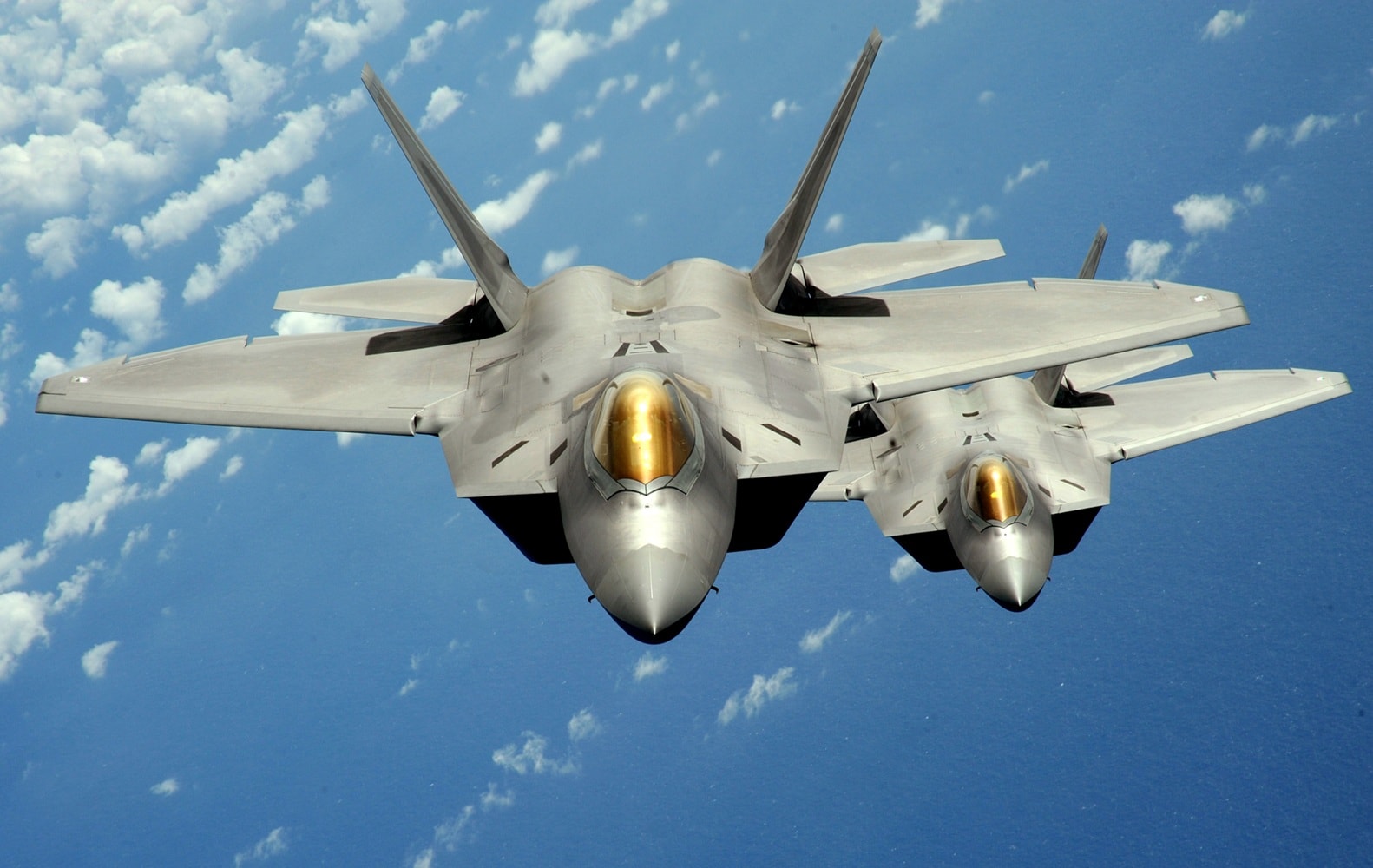
While the software identifies the target, the B-2 Spirit remains the ultimate expression of the hardware. To see a B-2 on a runway is to see something that looks like it fell out of a future that hasn't happened yet. It is a black, serrated wing that defies the traditional geometry of flight.
During the strikes against Houthi storage facilities and Iranian-linked assets, the B-2 was the heavy hitter. It is a ghost that carries the weight of a mountain. Flying from the continental United States, these bombers represent a reach that is almost psychological. They don't need local bases. They don't need permission from neighbors. They simply appear, drop a payload of precision-guided munitions, and vanish back into the slipstream.
The B-2 is the scalpel to the drone’s needle. When the U.S. decides that a hardened bunker buried deep beneath the earth needs to cease existing, they don't send a swarm; they send the Spirit. It is an aging platform, yet it remains the only thing in the sky that can deliver that specific brand of "anytime, anywhere" devastation. The human cost of a B-2 strike is absolute. There is no warning. There is only the sudden, violent reorganization of the landscape.
The Swarm and the Suicide Drone
At the other end of the spectrum lies the loitering munition, colloquially known as the suicide drone. If the B-2 is a thunderstorm, the Switchblade or the Phoenix Ghost is a hornet.
Think about a small team of soldiers on the ground. They aren't calling in a multi-billion dollar bomber. They are pulling a tube out of a backpack. They launch a small, winged device that flies over a ridge, sending back a live video feed. The operator sees what the drone sees. When a target is identified—perhaps a mobile rocket launcher or a command vehicle—the operator locks on. The drone doesn't drop a bomb. The drone is the bomb.
It dives.
This is the democratization of airpower. It turns a single platoon into a precision air force. In the recent exchanges with Iranian-backed militias, these "one-way" drones have been used by both sides, creating a terrifyingly low barrier to entry for high-stakes warfare. It is no longer about who has the best pilots; it's about who has the best sensors and the most expendable hardware.
The Invisible Stakes of the Algorithmic Shield
We often focus on the explosions because they are easy to film. We miss the electronic warfare (EW) that happens in the seconds before the impact. Before a B-2 enters a contested airspace, or a drone makes its final run, the air is flooded with invisible noise.
U.S. assets use high-powered "jamming" suites to blind enemy radar and sever the links between Iranian commanders and their proxies. This is a game of digital cat and mouse. If the U.S. can "spoof" a GPS signal, an incoming Iranian drone might think it is five miles away from its actual location, causing it to crash harmlessly into the sea.
But this works both ways. Iran has invested heavily in its own electronic warfare capabilities. This creates a "gray zone" where the war is won or lost before a single shot is fired. If your communications are down, you are fighting blind. If your GPS is compromised, your "smart" weapons become very dumb, very quickly.
The human element here is one of profound anxiety. Imagine being a technician in a radar shack, watching your screen dissolve into static. You know something is coming. You just don't know from where.
The Heavy Price of Precision
There is a myth that precision weapons make war cleaner. We tell ourselves that because we can hit a specific window from thirty thousand feet, the "collateral damage" is a thing of the past.
The reality is bloodier.
When an AI identifies a target, it is working on probabilities. It says there is a 92% chance that this building is a munitions depot. It doesn't tell you about the family living in the basement because their house was destroyed three months ago. It doesn't account for the human desperation that leads people to huddle near the only source of power in a war zone, which just happens to be next to a military target.
The U.S. use of these weapons is designed to be surgical, but a surgery performed with a sledgehammer is still a trauma. The psychological impact on the populations in Iraq, Syria, and Yemen cannot be quantified in a briefing room. The sound of a drone overhead—a persistent, lawnmower-like buzz—becomes a form of torture. It is the sound of an invisible judge, jury, and executioner circling in the clouds.
The Logic of the Unmanned
The shift toward unmanned systems and AI-driven targeting is fueled by a simple, cold logic: the preservation of American lives. By using B-2s launched from Missouri or drones piloted from Nevada, the U.S. removes its soldiers from the immediate line of fire.
But this creates a new kind of moral vacuum. When the risk to your own side is reduced to zero, the threshold for using force drops. It becomes easier to "order a strike" when the only thing coming home in a box is a piece of charred circuit board. This is the hidden cost of the technological edge. It makes the act of war feel like an administrative task.
The Iranian strategy, conversely, relies on volume and deniability. By providing thousands of cheap drones to various groups, they create a "death by a thousand cuts" scenario. They don't need a B-2. They just need one drone out of a hundred to get through the defenses. It is a battle between the elite and the exhausted.
The Echoes in the Dark
The weapons used against Iran and its proxies are masterpieces of engineering. The B-2 Spirit is a marvel of physics. The AI models are triumphs of mathematics. But at the end of every flight path, there is a human being.
The invisible stakes are found in the transition from human-led warfare to machine-assisted slaughter. We are teaching our machines how to identify our enemies. We are giving our wings the ability to hide from sight. We are creating a world where the first sign of a conflict is not a declaration of war, but a sudden, inexplicable loss of signal—followed by a flash of light that turns the night into a brief, terrifying day.
In that silent room in Virginia, the analyst hits 'refresh.' The machine suggests a new set of coordinates. The cycle begins again. The black wing banks into a turn, invisible to the world below, carrying the heavy, quiet burden of a choice made by an algorithm.
The desert waits. The machine learns. The wing flies on.