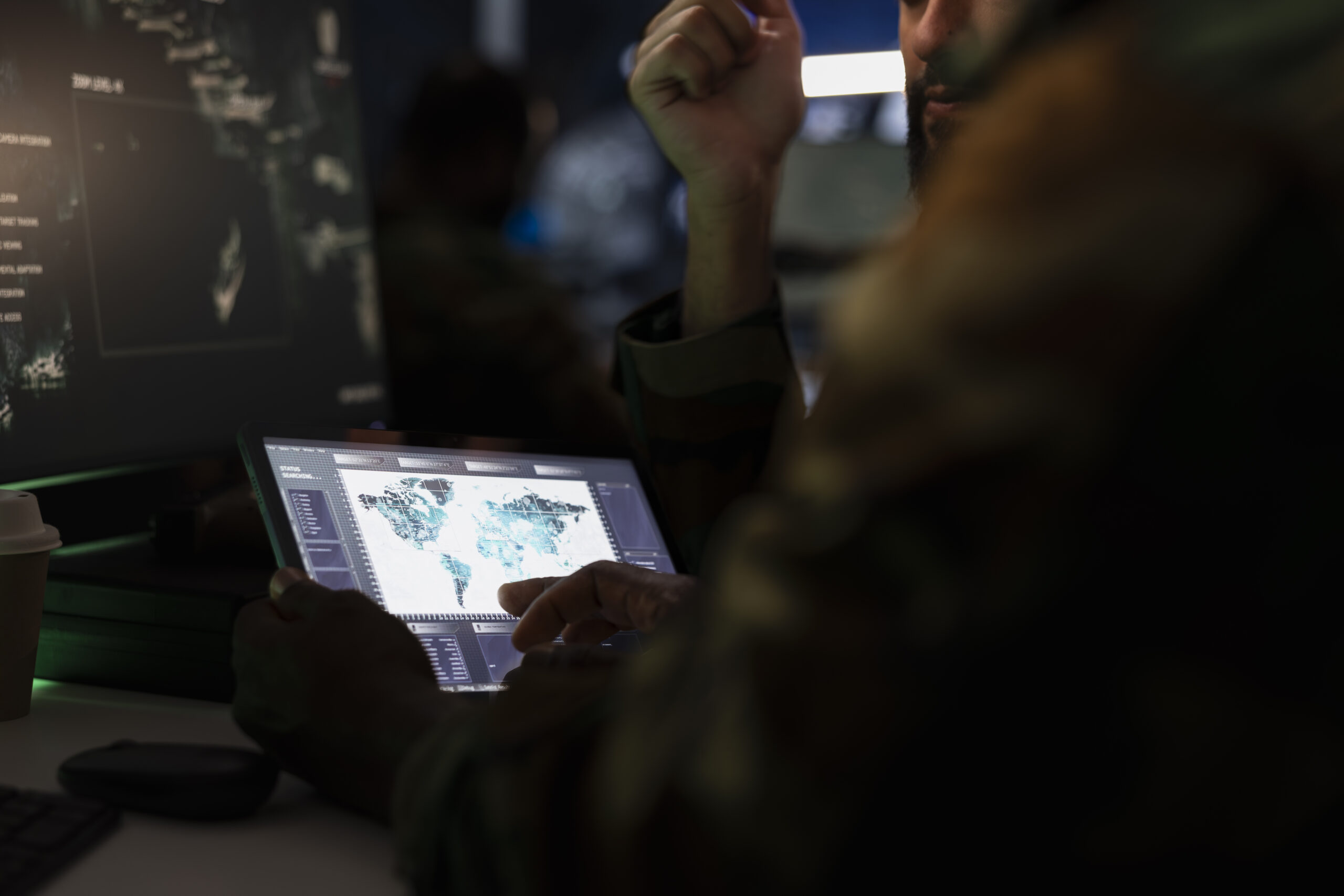
Modern power projection has transitioned from simple kinetic attrition to a multi-domain orchestration where the primary constraint is no longer explosive yield, but the speed of the sensor-to-shooter loop. The recent deployment of B-2 Spirit stealth bombers, loitering munitions (suicide drones), and Large Language Model (LLM) architectures—specifically Anthropic’s Claude—signals a fundamental shift in how the United States executes high-intensity strikes against sophisticated adversaries like Iran. This is not a mere display of force; it is the operationalization of an integrated kill web designed to bypass traditional air defenses while minimizing collateral risk through high-precision algorithmic targeting.
The Kinetic Triad: Stealth, Persistence, and Mass
The choice of assets in these strikes reveals a deliberate layering of capabilities designed to overwhelm an Integrated Air Defense System (IADS). Each component addresses a specific vulnerability in the Iranian defensive posture:
- Deep Penetration via the B-2 Spirit: The B-2 remains the only operational platform capable of delivering massive payloads, such as the GBU-57 Massive Ordnance Penetrator (MOP), against hardened and deeply buried targets (HDBTs). While drones provide persistence, the B-2 provides the physical force necessary to collapse reinforced command-and-control bunkers that are impervious to lighter munitions.
- Saturation through Loitering Munitions: Suicide drones serve as a low-cost "mass" variable. By flooding the radar environment, these systems force an adversary to expend high-cost interceptors on low-cost targets. Beyond simple decoys, these units provide "man-in-the-loop" terminal guidance, allowing for real-time target verification that fixed-wing bombers cannot achieve from high altitudes.
- Algorithmic Orchestration: The inclusion of AI models like Anthropic’s Claude indicates that the bottleneck in modern warfare—the analysis of vast quantities of signals intelligence (SIGINT) and geospatial intelligence (GEOINT)—is being automated.
The Role of LLMs in Target Acquisition and Verification
The presence of Anthropic AI in a combat context suggests a move toward Cognitive Electronic Warfare and automated battle management. Contrary to popularized depictions of "autonomous robots," the actual utility of an LLM in a strike package involves the synthesis of unstructured data.
Military intelligence generates petabytes of data from satellite imagery, intercepted communications, and human intelligence. Human analysts are the current friction point. An LLM capable of high-speed context processing can:
- Cross-reference real-time drone feeds against historical satellite imagery to detect "pattern-of-life" changes.
- Translate and summarize intercepted Iranian tactical communications to identify high-value personnel movements.
- Assess collateral damage estimates (CDE) in milliseconds by analyzing urban density data against the blast radius of specific munitions.
This creates a compressed OODA loop (Observe, Orient, Decide, Act). When an AI identifies a target signature that matches a specific profile, it doesn't pull the trigger; instead, it presents a prioritized list of targets to a commander with a confidence interval and a rationale. This shifts the commander's role from "searcher" to "verifier," drastically increasing the tempo of operations.
Strategic Logic: The Cost-Exchange Ratio
The deployment of a $2 billion stealth bomber alongside a $20,000 drone is an exercise in managing the cost-exchange ratio. Iran’s defensive strategy relies on "asymmetric denial"—using cheap missiles to threaten expensive ships and planes. The U.S. response is a counter-asymmetry.
The use of loitering munitions forces the Iranian Tor or S-300 missile systems to reveal their positions. Once a radar site activates to engage a drone, the B-2 or a stand-off missile can neutralize that site. This SEAD (Suppression of Enemy Air Defenses) tactic is enhanced by AI, which can distinguish between the electronic signature of a real radar unit and a sophisticated decoy faster than a human operator could.
Vulnerabilities in Algorithmic Warfare
Despite the efficiency gains, the integration of AI into kinetic strikes introduces "brittleness" into the system. High-performance models like those developed by Anthropic are trained on data that may not perfectly reflect the "noise" of a battlefield.
- Adversarial Examples: Iranian forces could employ physical "adversarial attacks"—specific camouflaging or lighting techniques designed to trick computer vision models into misidentifying a school as a military depot or vice versa.
- Hallucination Risks: In high-stress, low-data environments, LLMs may "hallucinate" connections between disparate intelligence points, leading to false positives in target identification.
- Latency and Connectivity: The cloud-based nature of sophisticated AI requires significant bandwidth. In a contested electromagnetic environment, the link between the edge (the drone/bomber) and the compute (the AI) is a primary point of failure.
Tactical Evolution: From Deconfliction to Integration
Traditional strikes rely on deconfliction—ensuring different units stay out of each other’s way. The current framework moves toward Dynamic Integration. In this model, the B-2 is not just a bomber; it is a node in a mesh network.
Data captured by the B-2’s advanced radar is fed into the AI, which then redirects the flight paths of loitering munitions to plug gaps in the sensor net. This creates a "transparent" battlefield where hiding becomes statistically improbable. The drones act as the eyes, the AI as the brain, and the B-2 as the heavy fist.
Geopolitical Implications of the Tech-Kinetic Hybrid
The use of Anthropic AI, a product of the private sector, highlights the blurring lines between civilian tech and defense. This creates a new "Arms Race of Inference." Success is no longer determined solely by who has the most missiles, but by who has the most efficient weights and biases in their neural networks.
Iran’s response will likely involve "data poisoning"—attempting to feed false information into Western intelligence streams to degrade the training sets or operational inputs of these AI systems. Furthermore, the reliance on AI creates a "speed trap": if one side uses AI to accelerate their decision-making, the other side must do the same to survive, potentially leading to an automated escalation cycle where humans are unable to intervene before a conflict spirals.
Operational Framework for Future Engagements
To maintain an advantage in this environment, military planners must move beyond "bolt-on" AI solutions. The next phase involves:
- Edge-Optimized Models: Moving AI processing from centralized servers to the actual hardware (drones and bombers) to eliminate latency and reduce reliance on vulnerable satellite links.
- Explainable AI (XAI): Developing systems that don't just provide a target, but explain the logic behind the selection, allowing human operators to quickly spot "algorithmic bias" or errors in reasoning.
- Red-Teaming the Algorithm: Continuous testing of targeting AIs against creative, non-linear human tactics to ensure the model doesn't become predictable.
The strike against Iranian-backed targets is a proof of concept for a doctrine where kinetic force is secondary to informational dominance. The B-2 provides the physical capability to strike, but the AI provides the strategic permission by reducing uncertainty.
The most effective counter-measure for an adversary is no longer just "stealth" or "armor," but "ambiguity." As targeting becomes more algorithmic, the value of being unpredictable increases exponentially. Forces must now optimize for "algorithmic survival," which involves rotating signatures, spoofing sensors, and creating enough noise to crash the processing power of the attacker's models.
Strategic victory in this paradigm belongs to the side that can maintain a high-fidelity picture of the battlefield while simultaneously injecting maximum entropy into the enemy's data stream.
Begin immediate transition of tactical data links to support high-bandwidth, low-latency inference at the edge, while establishing a permanent "Algorithmic Red Team" to stress-test targeting models against unconventional Iranian camouflage and deception tactics.
Would you like me to develop a comparative analysis of the electronic signatures used by B-2 bombers versus contemporary loitering munitions to identify specific sensor-fusion vulnerabilities?