The traditional rules of engagement in the Middle East have been shredded. For decades, the friction between Israel and Iran operated within a predictable, if bloody, framework of plausible deniability and proxy skirmishes. That era is over. As Israel intensifies its air campaign across Lebanon and Syria, and Iran responds by mobilizing its regional network for direct and indirect strikes, the world is witnessing a fundamental shift from a "war between wars" to a high-intensity regional conflict that neither side seems able to de-escalate.
This is no longer about tactical containment. Israel's current strategy aims to permanently degrade the "Axis of Resistance," specifically targeting the logistical arteries that connect Tehran to the Mediterranean. Meanwhile, Iran is moving beyond its reliance on Hezbollah to create a multi-front pressure cooker involving militias in Iraq and Yemen. The danger isn't just the missiles; it is the fact that both powers have calculated that the cost of restraint now exceeds the risk of total war.
The Death of Plausible Deniability
For years, the "gray zone" was a comfortable space for both Jerusalem and Tehran. If a shipment of Iranian components was hit in the Sudanese desert or a scientist disappeared in a Tehran suburb, there was enough ambiguity to avoid a full-scale retaliatory cycle. That ambiguity acted as a pressure valve.
That valve has failed.
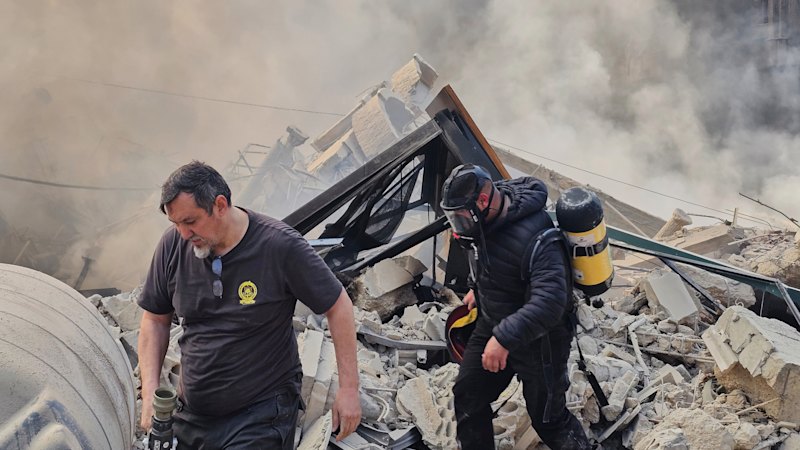
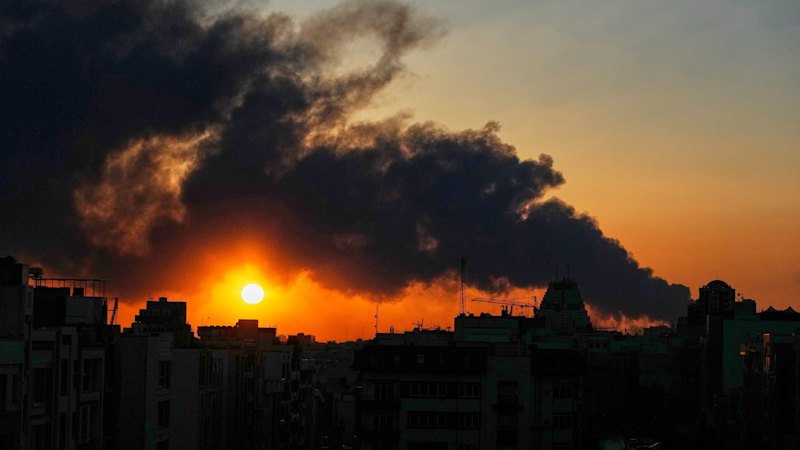
The current Israeli air campaign has moved from surgical strikes on convoys to the systematic dismantling of entire command structures. This isn't just about stopping a few rockets; it is an attempt to rewrite the security map of the Levant. When Israel strikes deep into sovereign territory or targets high-level diplomatic and military assets, it is sending a message that the old borders of the shadow war no longer exist.
Iran has received the message and changed its own calculus. By launching direct ballistic missile barrages from its own soil and coordinating simultaneous attacks from the Houthis and Iraqi paramilitaries, Tehran is signaling that it will no longer allow its proxies to take the heat alone. The "unity of fronts" strategy is no longer a rhetorical threat—it is an operational reality that complicates Israeli air defense and forces the IDF to spread its resources thin across three or four different horizons.
The Logistics of a Forever Strike
Airpower is often viewed as a clean, clinical tool. In reality, it is a grinding war of attrition. To understand why Israel continues these strikes despite the risk of a wider conflagration, one has to look at the "land bridge."
Iran’s influence relies on a physical corridor that runs from Iraq through eastern Syria and into Lebanon. If that corridor stays open, Hezbollah can replenish its precision-guided munition (PGM) stockpiles faster than Israel can destroy them. Israel’s objective is to make this corridor unusable. This involves:
- Targeting the Al-Bukamal crossing to stop the initial flow of hardware.
- Striking "scientific research centers" in Masyaf and other Syrian locales that serve as domestic assembly plants for Iranian tech.
- Interrupting the maritime routes into the port of Latakia.
The problem with this strategy is its inherent "expiration date." You cannot bomb a supply line into permanent non-existence. You can only delay the inevitable. This creates a feedback loop where Israel must strike more frequently to maintain the same level of security, which in turn forces Iran to find more creative—and often more provocative—ways to smuggle its assets, including using civilian infrastructure or high-altitude drone flights that are harder to intercept without sparking a diplomatic crisis.
The Shiite Coordination Framework and the Iraqi Wildcard
While Lebanon and Gaza dominate the headlines, the real shift in the regional balance is happening in Baghdad. Iraq has become the primary theater for Iranian "strategic depth."
The militias operating under the umbrella of the Islamic Resistance in Iraq are no longer just local political players. They are becoming a sophisticated long-range strike force. By using Iraqi territory to launch drones and cruise missiles toward Eilat or the Golan Heights, Iran creates a dilemma for Israel: Does the IDF retaliate against Iraqi sovereign territory, risking a diplomatic break with a key U.S. partner, or does it ignore the threat and allow a new front to solidify?
This Iraqi involvement is a calculated move to overstretch the Arrow, David’s Sling, and Iron Dome systems. Every drone launched from Iraq requires the same expensive interceptor as one launched from Lebanon. The math of this war favors the side with the cheaper ammunition. When an Iranian-made drone costing $20,000 forces the deployment of a $2 million interceptor missile, the economic sustainability of the defense comes into question.
The Intelligence Gap and the Risk of Miscalculation
Investigative looks into the recent strike patterns reveal a terrifying trend: the window for communication has closed. In previous years, there were back-channel messages—often through the U.S., Oman, or Qatar—that allowed both sides to "save face" after a strike.
Today, those channels are silent.
The intelligence services on both sides are operating with "high-bias" frameworks. Israel believes that Iran is weakened by internal dissent and economic collapse, making it the perfect time to strike. Iran believes that Israel is fractured by internal political strife and exhausted by a multi-front war, making it the perfect time to push.
When both sides believe their opponent is on the ropes, neither side will blink. This is how world wars start—not through a planned invasion, but through a series of tactical successes that lead to a strategic catastrophe.
The Missile Math
| Weapon System | Origin | Estimated Cost | Interceptor Cost |
|---|---|---|---|
| Shahed-136 Drone | Iran | $20,000 - $50,000 | $2M (Patriot/Arrow) |
| Fateh-110 Missile | Iran | $100,000 - $150,000 | $1M+ (David's Sling) |
| Tamir Interceptor | Israel | N/A | $40,000 - $50,000 |
| Hypersonic (Claimed) | Iran | Unknown | Unknown |
The table above illustrates the sheer asymmetry of the conflict. Israel is winning the kinetic battle—it hits more targets and loses fewer people—but it is fighting an uphill battle against the economics of modern warfare.
The Role of the Empty Chair
The United States finds itself in a reactive posture. While Washington provides the hardware and the diplomatic cover for Israeli operations, it has lost its ability to dictate the tempo of the conflict. The U.S. goal is "regional stability," a concept that seems increasingly detached from the reality on the ground.
By failing to provide a credible "day after" plan for the regional security architecture, the U.S. has left a vacuum that is being filled by more radical elements in both the Israeli cabinet and the IRGC leadership. Without a diplomatic off-ramp that addresses Iran's regional aspirations and Israel's fundamental right to security, the air strikes will continue until they eventually hit something—a chemical plant, a nuclear facility, or a high-casualty civilian target—that makes a general war unavoidable.
The Technology of Attrition
We are seeing the first real-world test of AI-driven target selection. The IDF's "Gospel" system and other automated intelligence platforms have allowed for a pace of target generation that was previously impossible. This explains why the volume of strikes has skyrocketed.
However, technology cannot solve a political problem. You can have the most sophisticated targeting algorithm in the world, but if the underlying strategy is simply "hit them until they stop," you are not engaged in statesmanship; you are engaged in high-tech demolition. Iran has responded by hardening its infrastructure, moving drone factories deep underground, and decentralizing its command structure so that no single strike can decapitate the movement.
The "widening" of the attacks is not a sign of strength for either side. It is a sign of desperation. Israel strikes because it cannot find a political solution to the threat on its border. Iran attacks because it cannot allow its regional project to be dismantled without a fight.
The result is a region where the sky is constantly filled with metal, and the ground is increasingly unstable. If you want to know where this ends, stop looking at the maps of today and start looking at the history of 1914. A single misfire in a secondary theater like the Red Sea or the Syrian desert could be the spark that turns a decade of shadow boxing into a century of fire.
Monitor the movement of tankers in the Persian Gulf and the deployment of American THAAD batteries in the region. These are the only metrics that matter now. The rhetoric of "de-escalation" is a ghost; the reality is a hardening of positions that leaves no room for anything but more kinetic force.
Check the flight tracking data over the Amman-Baghdad corridor tonight. If the patterns hold, the next 72 hours will define whether the current "widening" of attacks is a temporary surge or the beginning of the end for the current Middle Eastern order.