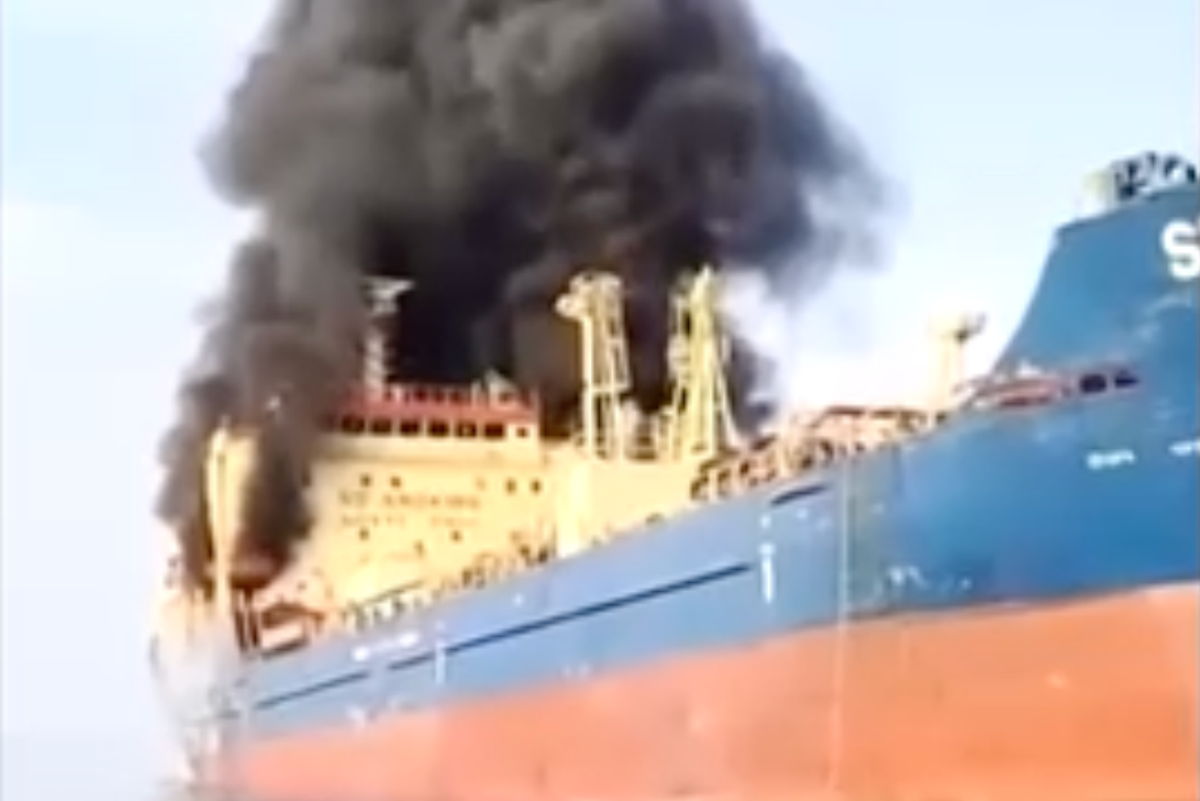
The glass towers of Dubai were built on a single, fragile promise: that the chaos of the Middle East would stay on the other side of the Persian Gulf. For twenty years, this city-state successfully branded itself as a neutral, tax-free sanctuary where Russian oligarchs, British influencers, and Indian tech moguls could coexist in a climate-controlled bubble. That bubble has finally been punctured. When Iranian missiles and drones streaked across the regional sky, they did more than test air defense systems. They shredded the marketing narrative that Dubai is a safe harbor.
The risk profile for the United Arab Emirates has fundamentally shifted. Investors who previously viewed Dubai as a desert version of Singapore are now forced to reckon with its proximity to a volatile geopolitical fault line. The city's survival depends on an invisible shield of diplomacy and defense that suddenly feels much thinner. If the "safe" part of the "safe, tax-free oasis" disappears, the entire economic model of the UAE begins to crumble under the weight of its own ambition.
The Cost of Proximity
Dubai’s geography has always been its greatest asset and its most dangerous liability. It sits just across the water from Iran, a country that has repeatedly shown it can disrupt global energy markets and shipping lanes at will. For a long time, the UAE managed this by playing a sophisticated game of hedging. It maintained deep trade ties with Tehran while simultaneously hosting a massive U.S. military presence and normalizing relations with Israel through the Abraham Accords.
This balancing act was designed to make Dubai untouchable. The logic was simple: if everyone has a stake in Dubai’s success, no one will dare to strike it.
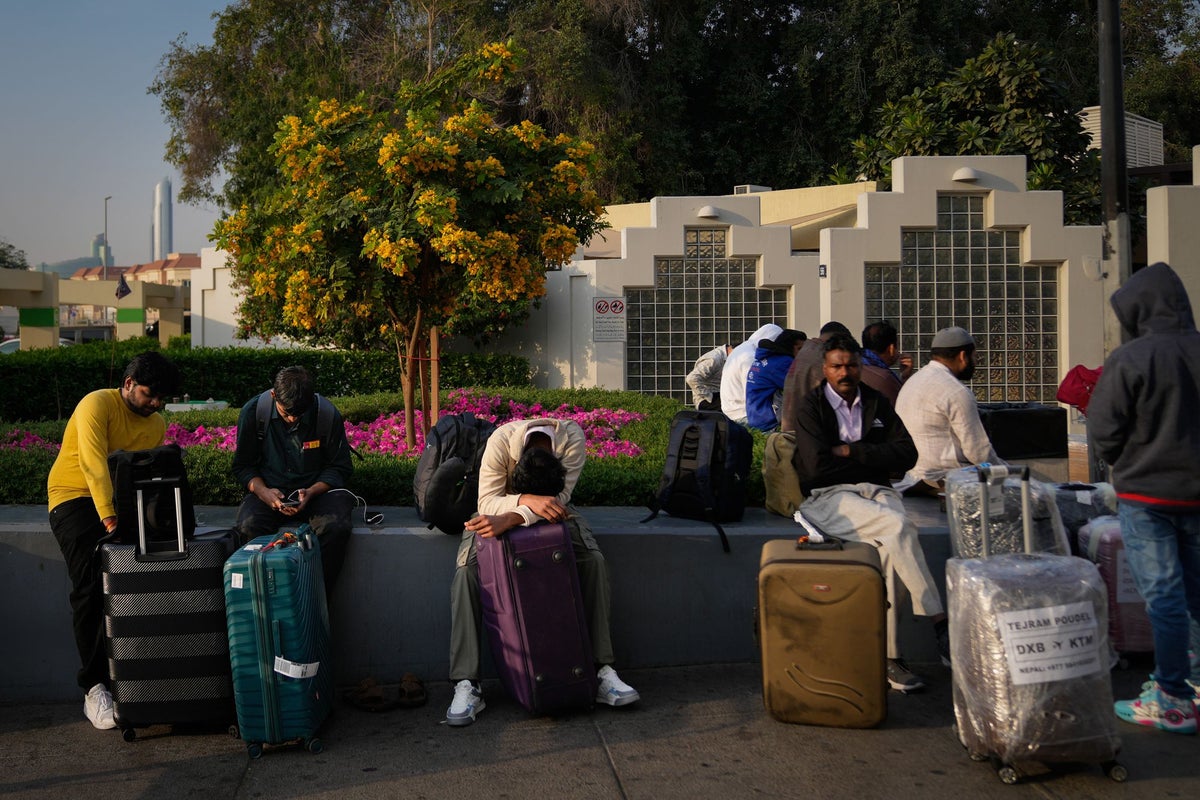
But modern warfare has become cheaper and more asymmetric. A single drone strike on a desalination plant or a luxury high-rise doesn't need to win a war to be effective. It only needs to drive up insurance premiums and spook the expatriate workforce. Dubai is not a nation-state in the traditional sense; it is a service economy masquerading as a country. Its population is roughly 90% foreign nationals. These people do not have deep roots in the sand. They are there for the lifestyle and the savings. The moment the cost of living—measured in both Dirhams and anxiety—outweighs the benefits, they will leave.
The Insurance Crisis and the Capital Flight Risk
The immediate threat isn't necessarily a direct hit on the Burj Khalifa. It is the subtle, creeping economic strangulation that comes with being designated a high-risk zone.
Shipping companies and airlines are already recalculating. When the perceived risk of regional conflict spikes, war-risk insurance premiums follow. This is a direct tax on a city that prides itself on having none. If it becomes significantly more expensive to fly cargo into Al Maktoum International or to dock a tanker at Jebel Ali, the competitive advantage of the UAE evaporates.
- Logistics Costs: Increased premiums for air and sea freight.
- Real Estate Cooling: Institutional investors hate uncertainty more than they hate taxes.
- The Talent Drain: High-net-worth individuals are mobile. If Dubai feels like a front-line state, Lisbon, Singapore, or Riyadh start looking much more attractive.
We are seeing the beginning of a "wait and see" period in the luxury property market. The off-plan sales that drive Dubai's construction engine rely on the belief that the future will be better than the present. When that belief is replaced by images of intercepted projectiles over neighboring skies, the down payments dry up.
The Riyadh Rivalry
While Dubai stares across the Gulf at Iran, it must also look over its shoulder at Saudi Arabia. Crown Prince Mohammed bin Salman is currently executing a plan to strip Dubai of its status as the region’s undisputed business hub. Saudi Arabia’s "Project HQ" mandate, which requires multinational companies to move their regional headquarters to Riyadh or lose out on government contracts, was already putting pressure on the UAE.
Until now, Dubai’s pitch was easy: "Come here because we have the beaches, the bars, and the safety that Riyadh lacks."
But if Dubai is no longer seen as uniquely safe, the Saudi narrative gains ground. Saudi Arabia has the sovereign wealth and the domestic market size to absorb shocks that would shatter the UAE. Riyadh is betting that it can buy its way into becoming the new center of gravity. Dubai, lacking the same oil reserves and vast territory, cannot afford a prolonged period of instability. It needs the world to believe in the "Dubai Miracle" every single day. One bad week can undo a decade of branding.
The Fragility of a Rentier State
Dubai’s infrastructure is a marvel of engineering, but it is also a collection of high-value targets. The city’s reliance on desalination plants for water and a massive, interconnected power grid for air conditioning makes it vulnerable to even minor disruptions. In a traditional city, a power outage is an inconvenience. In Dubai, where the outdoor temperature regularly exceeds 45°C, it is a humanitarian crisis.
The UAE has spent billions on the "Barakah" nuclear power plant and sophisticated missile defense batteries like the American-made THAAD and Patriot systems. These are impressive, but they are not a total solution. The sheer volume of low-cost threats—drones and short-range missiles—means that any defense can be saturated.
The investigative reality is that the UAE’s security is now outsourced to a complex web of international alliances that are increasingly strained. Washington’s commitment to the region is no longer a blank check. As the U.S. pivots toward East Asia, the Gulf states are left to wonder if the American umbrella will be there when the rain actually starts. This realization is what drove the UAE to rejoin the maritime coalition led by the U.S. while simultaneously trying to mend fences with Iran. They are desperate to lower the temperature because they know their skyscraper economy cannot survive a fire.
The Myth of Neutrality
For years, Dubai functioned as the world's "gray market" capital. It was where you went to do the deals that couldn't be done in London or New York. This neutrality was profitable. It brought in Russian money after the invasion of Ukraine and kept the doors open for Chinese investment.
However, neutrality is a luxury of the secure. When the regional "Cold War" between various factions turns hot, being "everyone's friend" turns into being "no one's priority."
The recent escalations have shown that the UAE cannot simply opt out of the neighborhood's problems. The drones that fly over the Gulf do not care about Dubai’s neutral status or its tourism statistics. This puts the UAE government in an impossible position: if they lean too far toward the West for protection, they provoke Iran. If they lean too far toward regional de-escalation, they risk alienating the security partners who provide the actual hardware that keeps their skies clear.
The End of the "Tax-Free" Psychological Edge
While not directly related to missile strikes, the UAE's recent introduction of a 9% corporate tax was the first crack in the "tax-free" facade. It was a signal that the state needs more reliable revenue streams as the costs of maintaining a global hub rise.
When you combine a new tax regime with a heightened security risk, the "Dubai Math" changes for a foreign CEO.
$$(Tax + Insurance Costs + Security Risk) > (Lifestyle + Infrastructure Benefits)$$
If that equation remains tilted the wrong way for too long, the exodus will be quiet but devastating. It won't be a mass panic at the airport; it will be the slow expiration of leases and the relocation of "Regional VP" roles to safer, more stable jurisdictions.
The skyscrapers still shine, and the malls are still full, but the atmosphere has changed. There is a newfound restlessness among the elite who call Dubai home. They are looking at the flight paths and the defense maps. They are asking how much a view of the Gulf is worth if the Gulf is no longer a moat, but a bridge for conflict.
Dubai’s leadership is now tasked with the ultimate PR challenge: selling a dream of permanence in a region defined by volatility. They have proven skeptics wrong before, but those skeptics were usually doubting their ability to build. This time, the doubt is about their ability to protect what has already been built. The "Safe Oasis" is now a front-line state, and no amount of gold plating can hide that reality.
The next few months will determine if Dubai remains a global capital or reverts to being a regional curiosity. The investors are watching the skies, and for the first time in a generation, they don't like what they see.
Secure your exits. The era of consequence-free growth in the desert has ended.