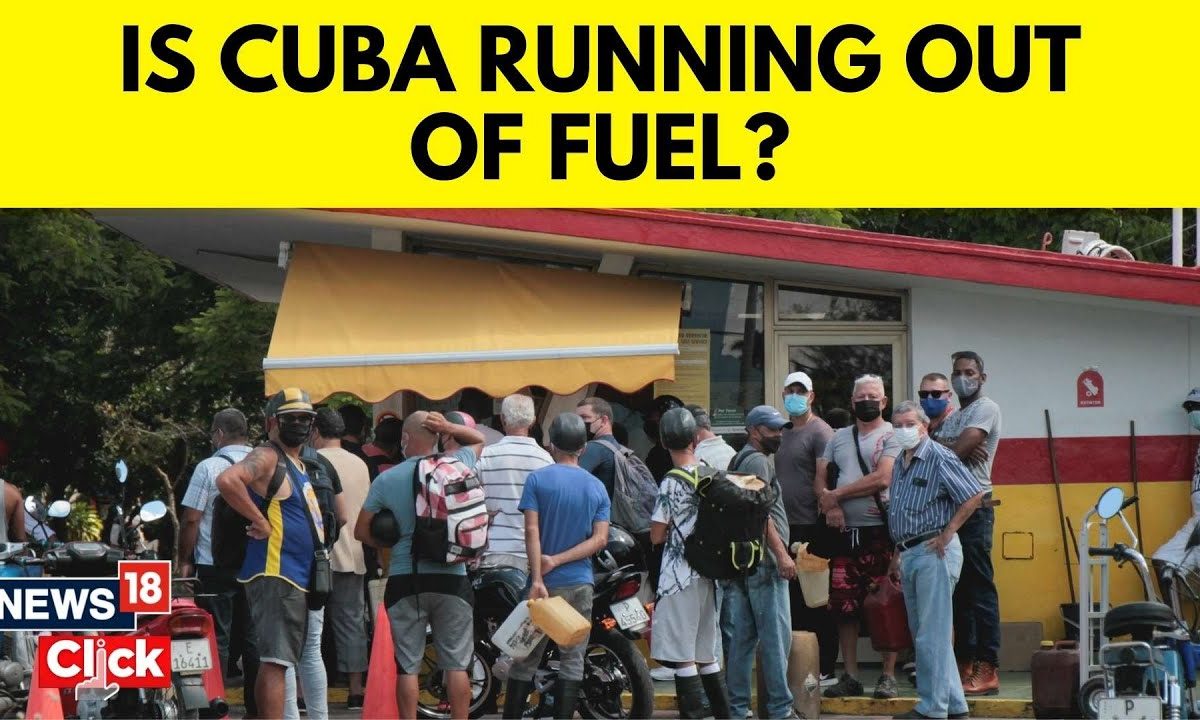
The lights aren't just flickering in Havana anymore. They're staying off for eighteen hours a day. If you think the "blockade" is just some dusty Cold War relic or a talking point for politicians, you haven't stood in a three-day line for five gallons of gasoline. I'm telling you, the situation on the ground right now is the most desperate it's been since the Soviet Union collapsed in the early nineties.
The U.S. oil blockade against Cuba isn't a single wall. It's a suffocating web of sanctions that targets every ship, every insurer, and every bank involved in getting energy to the island. While Washington describes these moves as "targeted pressure" on the government, the math on the street tells a different story. When the tankers don't dock, the power plants fail. When the power plants fail, the food in the few functioning refrigerators rots. It's a brutal cycle that hits the most vulnerable people first.
The mechanics of a modern energy siege
Most people don't realize how specific these sanctions are. Under the current rules, any vessel that carries oil to Cuba risks being blacklisted by the U.S. Treasury Department. Imagine you're a shipping company owner. Would you risk losing access to the entire American financial system just to deliver one cargo of crude to a Caribbean island? Probably not.
This creates a massive "risk premium." Cuba has to pay way above market rates to find anyone willing to take the chance. Even then, the logistical hurdles are insane. Since 2019, the U.S. has ramped up pressure on Venezuela, which used to be Cuba's primary supplier. With Venezuelan production in shambles and shipping routes monitored by satellite, the flow has slowed to a trickle.
Data from vessel tracking services shows a sharp decline in arrivals at the Port of Mariel over the last year. We're looking at a shortfall of nearly 40% compared to what the island needs just to keep the basic grid stable. This isn't just about cars or transport. It's about the very infrastructure of survival.
Life in the dark is the new normal
Statistics don't capture the smell of charcoal smoke rising from balconies because people can't use electric stoves. They don't capture the silence of a city where the fans have stopped spinning in 90-degree heat.
I've seen reports of hospitals having to prioritize which surgeries get backup generator power. Think about that for a second. A surgeon has to decide if your procedure is "essential" enough to burn the last few liters of diesel. Public transport has basically vanished in the provinces. People are hitching rides on horse-drawn carts or walking miles under a punishing sun just to get to work.
Critics often point to the Cuban government's mismanagement as the real culprit. Look, there's no doubt that an aging, centralized bureaucracy makes things worse. The power plants are decades old and desperately need parts they can't buy because of the same financial restrictions. But you can't ignore the primary cause. If you cut off the fuel, the engine stops. It doesn't matter who's behind the wheel.
The ripple effect on food and water
Energy is everything. You need fuel to run the pumps that bring water to apartment buildings. You need diesel for the tractors that harvest crops and the trucks that bring them to the city markets.
Because the energy grid is so unstable, the Cuban government has been forced to implement "programed blackouts." But these aren't always predictable. A sudden failure at the Antonio Guiteras plant—the island's largest—can plunge half the country into darkness without warning.
When the power goes out, the water pumps stop. In many parts of Old Havana, people now rely on "pipas" or water trucks. But guess what? The water trucks need fuel too. It's a cascading failure. The price of basic goods has skyrocketed because the cost of moving those goods has doubled or tripled. Inflation isn't just a number on a spreadsheet here; it's the difference between eating one meal or two.
Why 2026 is different
We're seeing a shift in how the international community reacts to this. For years, the UN General Assembly has voted almost unanimously to condemn the embargo. But the specific "oil blockade" initiated under the previous U.S. administration and maintained by the current one is a sharper blade.
The inclusion of Cuba on the "State Sponsors of Terrorism" list is the real kicker. It makes international banks terrified to process any transaction involving the island. Even if a friendly country wants to gift oil to Cuba, finding a bank to handle the paperwork is nearly impossible. This financial freeze is just as effective as a physical naval blockade.
The human cost of political leverage
The stated goal of these sanctions is to encourage democratic change. But after six decades, the evidence suggests the opposite happens. The pressure doesn't usually break the people in power; it breaks the people at the bottom.
Young Cubans are leaving in record numbers. We're seeing the largest migratory wave in the island's history. When you talk to those leaving, they don't always lead with political grievances. They talk about the dark. They talk about the heat. They talk about the feeling of a future being turned off.
It's a "slow-motion humanitarian crisis." It doesn't have the sudden shock of a natural disaster, so it rarely stays in the headlines for long. But the cumulative weight of it is crushing the middle class and destroying the dreams of an entire generation.
The path forward is through the grid
Solving this isn't just about lifting a few sanctions. It's about a total overhaul of how Cuba gets its power. There's a lot of talk about moving to renewables like solar and wind. Cuba has plenty of sun, obviously. But installing massive solar farms requires—you guessed it—upfront capital and imported technology. Both are currently blocked.
If there's going to be any relief, it has to start with an "energy humanitarian corridor." This would mean allowing specific, monitored shipments of fuel and grid parts to bypass the sanctions web. It wouldn't require a total policy shift from Washington, just a recognition that a collapsing power grid helps no one.
Right now, the policy is essentially a stalemate where the only losers are the civilians. If you want to understand the modern Cuban experience, stop looking at the posters of Che Guevara and start looking at the empty fuel gauges and the silent transformers. That's where the real story is written.
To stay informed on this evolving situation, track the daily "deficit" reports from the Unión Eléctrica de Cuba (UNE). These numbers, usually posted on social media, give the most accurate look at how much of the country is in the dark at any given moment. Supporting organizations that provide direct medical aid to the island can also help mitigate the impact of these power failures on local clinics. Stop thinking of this as a political debate and start seeing it as a survival crisis.