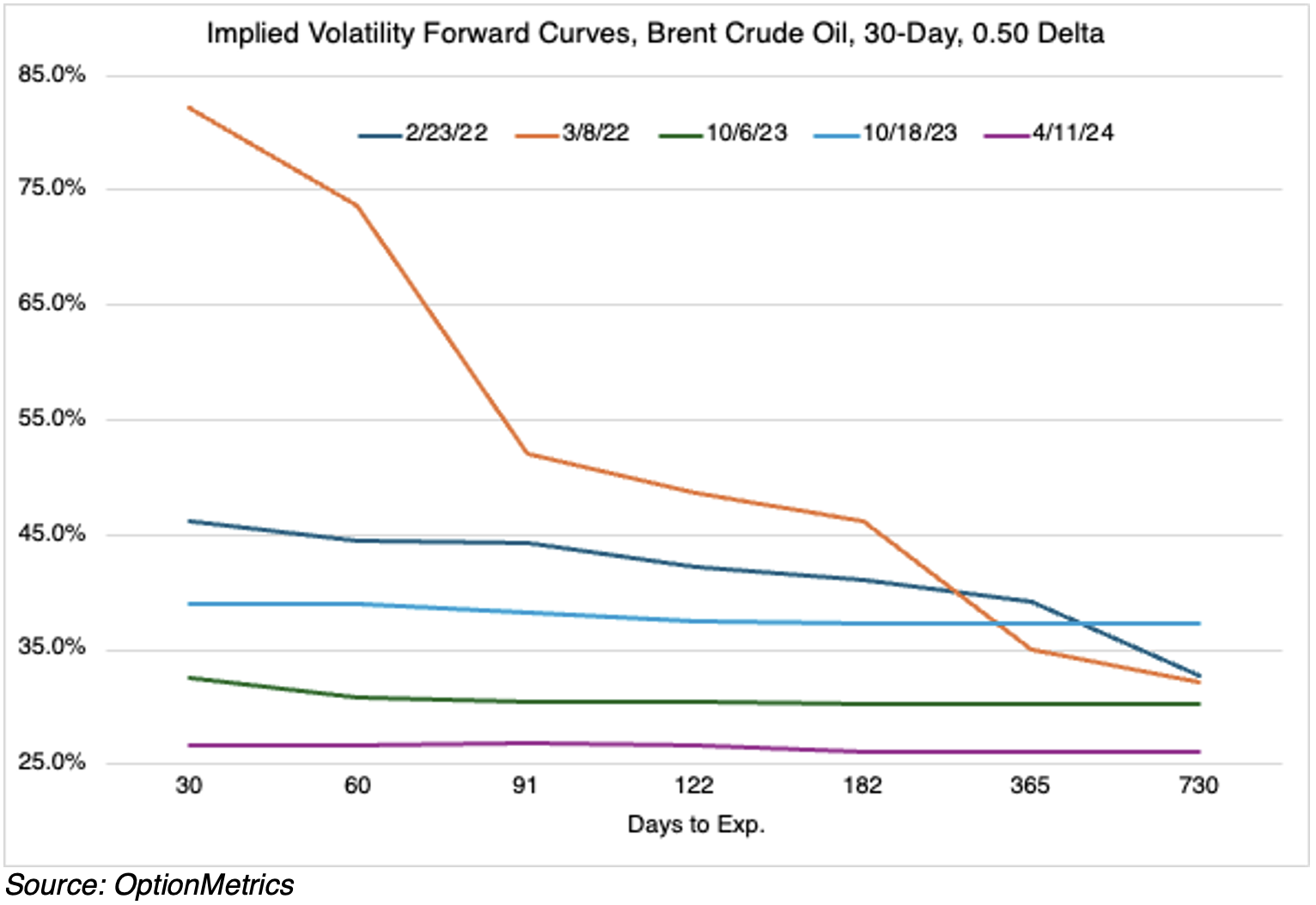
Energy markets currently operate under a "perpetual friction" model where the threat of Iranian kinetic action is structurally integrated into the price of Brent and WTI. While headlines often predict a catastrophic price shock, a rigorous deconstruction of global supply chains, spare capacity, and logistical bottlenecks suggests that any price appreciation following a strike on Iranian soil is more likely to be a correction of the "security discount" than a move toward a new, permanent price floor. The market is not waiting for a shock; it is waiting for the resolution of a long-standing ambiguity.
The Mechanics of the Geopolitical Risk Premium
To understand why a strike on Iran might produce a "nasty" but predictable outcome, one must quantify the Geopolitical Risk Premium (GRP). The GRP is the delta between the marginal cost of production plus a standard profit margin and the current trading price. Historically, this premium fluctuates based on the perceived probability of a supply disruption.
The Buffer Variable: Global Spare Capacity
The primary mitigating factor in any Iranian escalation scenario is the distribution of global spare capacity. As of early 2026, the following dynamics dictate the ceiling of any price rally:
- OPEC+ Strategic Reserve: Saudi Arabia and the United Arab Emirates maintain a combined spare capacity exceeding 3 million barrels per day (mb/d). This volume can be brought online within 30 to 90 days, effectively offsetting a complete cessation of Iranian exports, which currently fluctuate between 1.2 and 1.6 mb/d.
- The Non-OPEC Surge: Sustained production growth from the United States, Guyana, and Brazil has shifted the global supply curve. The U.S. remains the world’s largest producer, acting as a "price-responsive" buffer. When prices exceed $85 per barrel, marginal drilling in the Permian Basin becomes hyper-efficient, increasing supply and dampening long-term spikes.
- OECD Inventories: While commercial inventories fluctuate, the Strategic Petroleum Reserve (SPR) in the U.S. and equivalent holdings in IEA member nations provide a secondary layer of protection against short-term physical shortages.
The Strait of Hormuz: A Logic of Probability vs. Impact
The most significant variable in this analysis is the Strait of Hormuz, a chokepoint through which approximately 20% of the world's total oil consumption passes daily. The "nasty" element of a strike on Iran is not the damage to Iranian refineries, but the potential for Iran to retaliate by obstructing this passage.
The Escaltion Matrix
If a strike occurs, the market will categorize the response into three distinct tiers of severity:
- Tier 1: Targeted Kinetic Response. Iran targets regional energy infrastructure (e.g., Abqaiq-style drone strikes). This causes a temporary spike (+$5 to $10/bbl) that fades as repairs are quantified.
- Tier 2: Maritime Harassment. Increased boarding of tankers or mine-laying in the Persian Gulf. This raises insurance premiums and shipping costs, creating a sustained $10 to $15 increase in the price floor due to logistical friction.
- Tier 3: Total Blockade. An attempt to close the Strait of Hormuz. This is the "black swan" scenario where prices could theoretically exceed $150/bbl. However, this is structurally unsustainable for Iran; it would constitute an act of economic suicide, severing their own export capabilities and inviting a multilateral military response that would likely end the current regime’s control over its energy assets.
The China Factor: The Invisible Floor
The efficacy of sanctions and the impact of strikes are fundamentally altered by China’s role as the primary buyer of Iranian "teapot" crude. Because China utilizes non-dollar payment systems and "dark fleet" tankers, Iranian oil flows are largely decoupled from Western financial pressure.
A strike that physically disables Iranian export terminals (like Kharg Island) would force China to seek equivalent volumes from the spot market. This creates a displacement effect. While the total global supply remains the same (assuming OPEC+ fills the gap), the sudden shift in purchasing patterns creates localized volatility in the Brent-Urals-ESPO spreads. The "shock" is therefore less about a lack of oil and more about a sudden, violent reorganization of the global buyer-seller matrix.
The Cost Function of Downstream Disruption
If Iranian refineries are targeted, the global impact is felt more in the refined products market than in the crude market. Iran is a significant producer of fuel oil and gasoil. A reduction in these specific distillates puts upward pressure on crack spreads—the difference between the price of crude oil and the petroleum products extracted from it.
Refined Product Sensitivity
- Gasoil Scarcity: Any disruption to Iranian refining capacity tightens the global middle distillate market, particularly impacting European and Asian industrial sectors that rely on these fuels for transport and power generation.
- Logistical Redundancy: Unlike crude, which can be rerouted through pipelines (such as the East-West Pipeline in Saudi Arabia), refined products are often consumed closer to the source or shipped in smaller, more specific batches. This makes the downstream market more sensitive to localized kinetic damage.
Evaluating the "Shock" Fallacy
The reason a strike is "not a shock" to institutional players is the concept of Efficient Market Discounting. The probability of a strike has been non-zero for decades. As a result, capital expenditure in the energy sector has already factored in this risk.
The primary reason for current price stability despite Middle Eastern tension is the transition from a "Peak Supply" mindset to a "Fragile Demand" mindset. Global demand growth is slowing, particularly in developed economies transitioning toward electrification. Therefore, a supply disruption that might have caused a 50% price spike in 2005 might only cause a 15% spike today. The elasticity of the market has increased.
The Role of Algorithmic Trading
Modern oil markets are dominated by Commodity Trading Advisors (CTAs) and algorithmic models that trigger sell-offs once certain technical thresholds are met. If a strike occurs and does not immediately result in a Tier 3 blockade, these algorithms will likely "sell the news." The initial spike is driven by human panic; the subsequent correction is driven by automated logic that recognizes the underlying supply-demand balance remains intact.
Strategic Recommendation for Market Participants
The optimal play in the event of an Iranian strike is a "Volatility Fade" strategy. Analysis of the last twenty years of Middle Eastern kinetic events shows that the price peak typically occurs within 48 to 72 hours of the initial event.
Investors and energy-heavy industries should avoid hedging at the peak of the news cycle. Instead, focus on the "Term Structure" of the futures market. If the market moves into deep backwardation—where the immediate price is significantly higher than the future price—it signals that the shortage is perceived as temporary.
- Quantify the Physical Loss: Monitor satellite imagery of Kharg Island and the Goureh-Jask pipeline. If the infrastructure remains intact, the price rally is purely psychological.
- Monitor the SPR Response: If the IEA announces a coordinated stock release, it provides a physical and psychological cap on prices.
- Assess the Insurance Delta: Watch the Lloyd’s of London War Risk premiums for the Persian Gulf. This is a more accurate leading indicator of actual supply friction than any news headline.
The fundamental reality is that while a strike on Iran is a significant geopolitical event, the global energy system has built-in redundancies—from American shale to Saudi spare capacity—that transform a potential catastrophe into a manageable, albeit expensive, logistical challenge.
Establish a long-term position in non-OPEC producers with low geopolitical exposure (Guyana, Canada, and the US Permian) to hedge against the structural upward shift in the GRP, while maintaining liquidity to capitalize on the mean reversion that inevitably follows localized kinetic shocks. Regardless of the tactical outcome of a strike, the long-term trend remains a battle between geopolitical friction and technological deflation in the energy sector.