Hong Kong's skyline is about to get a lot more digital. A major firm from Mainland China just locked in a deal to build a massive supercomputing center in the Northern Metropolis. This isn't just another construction project. It's a loud statement about where the city's economy is heading. For years, people complained that Hong Kong was falling behind in the high-tech race. Those days are over.
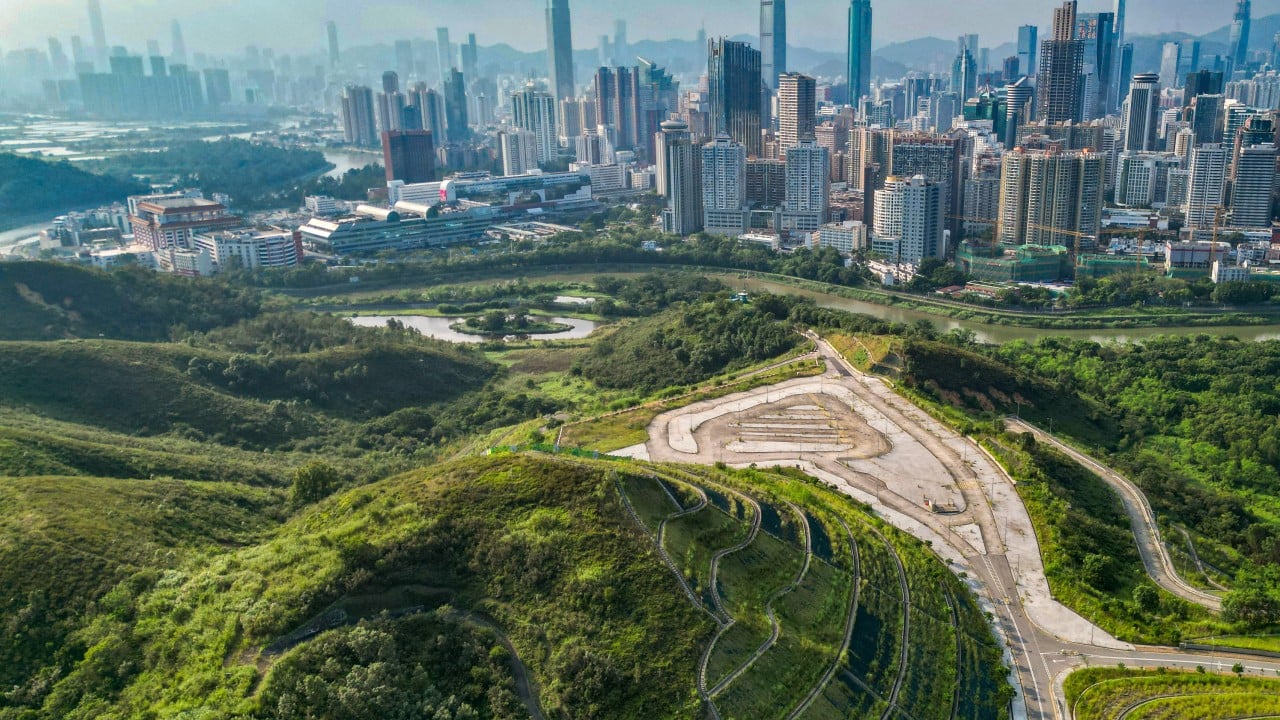
The Northern Metropolis serves as the canvas for this shift. By placing a high-capacity computing hub right at the border, the government is effectively tethering Hong Kong’s financial expertise to the Mainland’s raw industrial power. You’ve likely heard the buzz about "Silicon Valley of the East," but this project provides the actual engine room to make that happen.
The Northern Metropolis moves from map to reality
Plans for the Northern Metropolis have felt like a distant dream for a while. We saw the colorful maps and the ambitious housing targets. However, the arrival of a heavy-hitting Mainland firm to build a dedicated supercomputing center gives the project immediate teeth. It proves the area won't just be a collection of commuter towns. It's going to be a functional tech corridor.
This facility specifically targets the San Tin Technopole. Think of this as the brain of the entire development. When you have a supercomputing center locally, you aren't just renting cloud space from a server in Virginia or Singapore. You're building a sovereign data environment. That matters for latency. It matters for security. Most importantly, it matters for the startups that can't afford to build their own hardware but need massive processing power to survive.
What this means for local AI development
Artificial Intelligence isn't magic. It's math. Specifically, it's a lot of math performed very quickly on thousands of interconnected GPUs. If Hong Kong wants to be a leader in AI-driven finance or biotech, it needs the "compute" to back it up.
Currently, many local firms rely on external providers. That's fine for basic tasks. But if you're training a Large Language Model or simulating complex drug interactions, you need proximity. Having a Mainland firm—experienced in the massive scale of Shenzhen's tech ecosystem—handle the build-out ensures the infrastructure is world-class. They aren't guessing. They've done this across dozens of provinces already.
The sheer scale of the energy requirements for these centers is often underestimated. We're talking about a facility that needs its own dedicated power management and cooling systems. The Northern Metropolis offers the physical footprint that simply doesn't exist in crowded areas like Central or Kowloon. It’s the only place where this kind of "industrial-scale" digital work can actually happen.
Bridging the gap with Shenzhen
Integration is the word of the decade here. By bringing in a Mainland firm for this specific project, the Hong Kong government is ensuring compatibility. It’s about creating a smooth flow of data and talent between the two sides of the border.
If you're a developer in Shenzhen, you want to know that your tools work the same way in Hong Kong. If you're a Hong Kong researcher, you want access to the same high-tier hardware your peers in Beijing use. This center acts as the physical bridge. It makes the border feel less like a wall and more like a high-speed data connection.
Critics often worry about data privacy or the influence of Mainland firms. Those are fair points to discuss. However, from a purely competitive standpoint, Hong Kong can't afford to be picky. The global race for computing power is cutthroat. The US, Europe, and the Middle East are all pouring billions into these "digital factories." If Hong Kong doesn't build this now, the talent will simply move elsewhere. Probably to Singapore.
The impact on the job market
Don't expect thousands of manual labor jobs from a supercomputing center. These places are mostly quiet rooms full of blinking lights and humming fans. The real job growth happens in the ecosystem around the center.
- Software Engineers: They need to be on-site to manage the deployments.
- Data Scientists: They’ll flock to the Northern Metropolis because that’s where the processing power lives.
- Cybersecurity Experts: A hub this size is a target. It needs a massive defense shield.
- Maintenance Specialists: High-density liquid cooling and power distribution require niche skills.
I’ve seen this happen in other tech hubs. You build the infrastructure, and the people follow. It creates a gravity well. Suddenly, the coffee shops in San Tin aren't just serving locals; they're the meeting spots for the next generation of tech founders.
Moving past the hype
Let's be honest. Building the shell of a building is easy. Loading it with the right hardware and making it accessible to the private sector is the hard part. The success of this Mainland-led project depends on the "terms of service." If the computing power is too expensive or too restricted, it becomes a white elephant.
The government needs to ensure there's a clear pipeline for local universities and small businesses to use these resources. We don't need a fortress; we need a utility. It should be as easy to get computing power as it is to get water or electricity.
If you're an investor or a tech professional, you should be watching the procurement details closely. The specific hardware being installed will tell us exactly what kind of industries Hong Kong is betting on. If it's heavy on H100s or equivalent Chinese-made chips, we know AI is the priority. If it's more focused on storage and broad-spectrum processing, it's likely a play for big data and "Smart City" management.
Get your team ready for a shift toward the north. Start looking at the zoning around the San Tin Technopole now. The physical work is starting, and once the power turns on, the digital landscape of the city changes forever. This isn't just about a building. It's about Hong Kong finally deciding to play the high-stakes tech game for real.