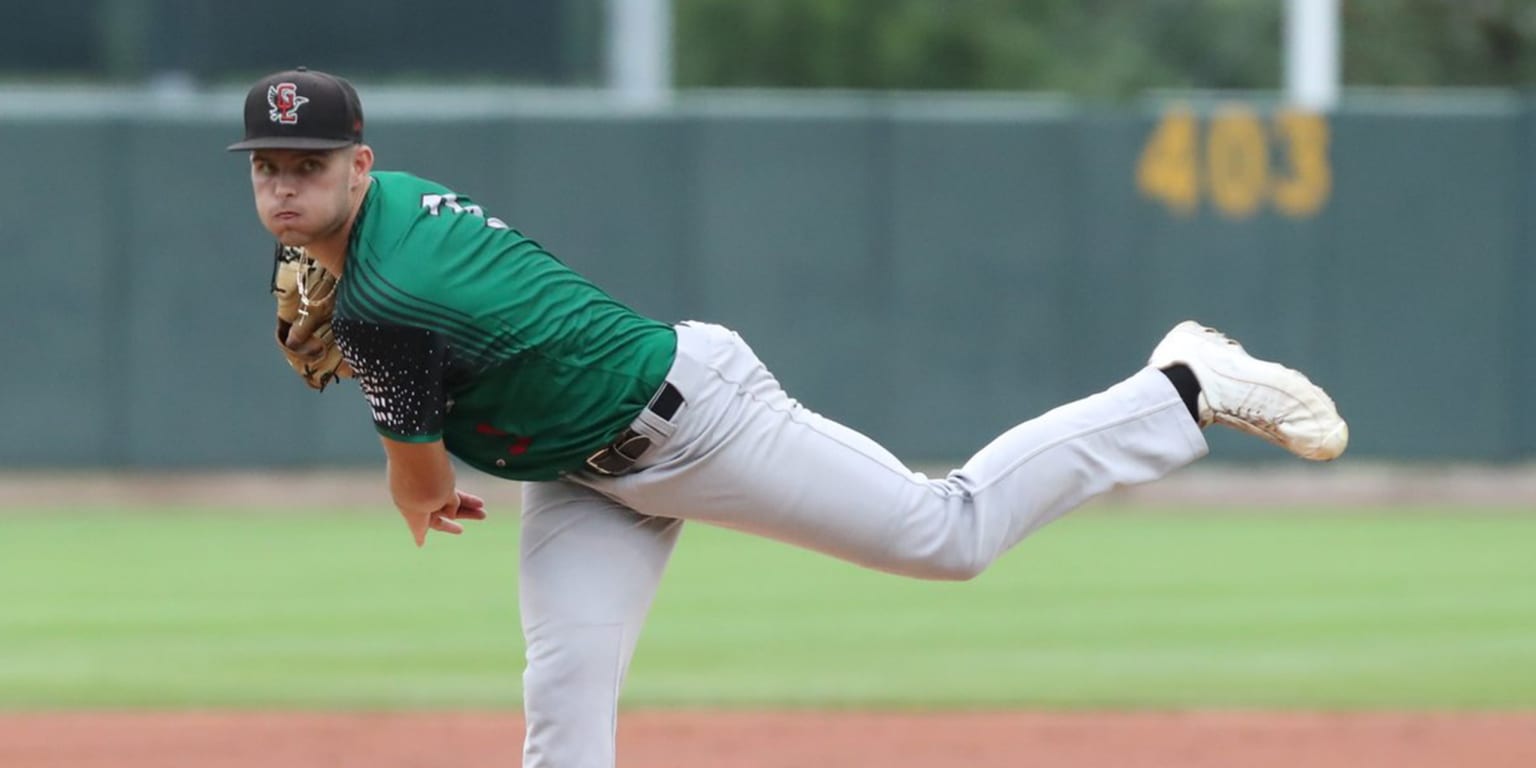
High school baseball rankings have become the scouting world's version of a house of mirrors. While local newspapers and national outlets churn out lists of the "top 25" teams, they often miss the actual mechanics driving these programs to the top. It isn't just about who has the best shortstop or a pitcher throwing 95 mph. It is about a specialized, high-stakes ecosystem where public schools are being squeezed out by private "athletic academies" that recruit across state lines. This is no longer a game of neighborhood pride; it is a billion-dollar audition for the MLB Draft and Power Five scholarships.
To understand why a certain team sits at the top of the board, you have to look at the transfer portal—which has unofficially arrived at the secondary school level. Coaches at elite programs now act more like General Managers. They don't just develop the kids in their zip code. They curate a roster. This shift has created a massive talent gap that makes standard rankings almost secondary to the industrial-strength pipelines these schools have built.
The Myth of the Level Playing Field
Most fans look at a top 25 list and see 25 great baseball teams. An industry insider sees a divided map. On one side, you have the traditional powerhouse public schools, usually located in warm-weather states like Texas, Florida, and California. These programs benefit from year-round play and massive tax bases that fund stadium-quality facilities. On the other side, you have the private prep schools and sports-centric academies that operate under entirely different sets of rules.
Traditional rankings often fail to account for the "strength of schedule" in a way that reflects reality. A public school in Georgia might go 30-2 against local competition, while a private academy plays a national "barnstorming" schedule against other top-tier prospects. When these teams are ranked side-by-side, the data is inherently flawed. The private academy is essentially a minor league team in disguise, while the public school is still dealing with the realities of academic eligibility and geographic boundaries.
The disparity is most evident in the pitching rotations. In a typical high school environment, a team is lucky to have one "ace" who can touch 90 mph. In the upper echelons of the national rankings, it is common to see three or four starters who have already committed to Division I programs. This isn't a fluke of nature. It is the result of a concentrated effort to pull elite arms into specific hubs.
The Velocity Arms Race
Velocity has become the primary currency of high school rankings. If a team has three pitchers hitting high numbers on the radar gun, they are virtually guaranteed a spot in the top 10. But this obsession with speed has a dark side that the rankings rarely mention. The pressure to maintain these rankings drives a culture of over-use and premature specialization.
- Tommy John Surgery: The rate of ulnar collateral ligament reconstructions in high-school-aged pitchers has skyrocketed.
- Showcase Fatigue: Elite players are often expected to play for their high school during the week and travel for "showcase" events on weekends.
- Burnout: The mental toll of being a "ranked" prospect before one can even drive a car is immense.
Rankings validate the "win-at-all-costs" mentality. When a coach's job or a school's prestige depends on staying in the top 25, the health of a seventeen-year-old’s elbow often becomes a secondary concern. We are seeing a generation of "disposable" arms—pitchers who are ranked at the top of the nation in May and undergo major surgery by August.
The Scouting Bureaucracy and the Ranking Loop
How does a team actually get ranked? It isn't just about wins and losses. There is a complex interplay between local journalists, national scouting services, and college recruiters. Often, a team moves up the rankings because their individual players are ranked high as prospects. This creates a circular logic.
"A team is good because it has ranked prospects. The prospects are ranked high because they play for a top-tier team."
This feedback loop ignores the late bloomers and the teams that win through cohesive play rather than individual star power. It also heavily favors schools that can afford to send their players to expensive summer circuits. If a scout hasn't seen a player at a $1,000-per-entry tournament in Florida, that player—and by extension, his team—is less likely to be recognized in national polls.
Money is the silent arbiter of the rankings. The equipment, the private coaching, and the travel costs required to get onto the national radar have turned high school baseball into an "upper-middle-class" sport. The gritty, blue-collar baseball story still exists, but you’ll rarely find it in the top 10. Those spots are reserved for the programs with the highest ROI for parents and investors.
Regional Dominance and the Weather Divide
The rankings are perpetually tilted toward the Sun Belt. It is a simple matter of math and repetitions. A shortstop in Southern California or Florida will see three times as many ground balls in a calendar year as a shortstop in Ohio or Illinois. This "repetition gap" is nearly impossible to bridge, regardless of raw talent.
The Big Three States
- Florida: The undisputed capital of the baseball academy. The state’s ability to produce professional-ready talent is unmatched, largely due to the sheer number of specialized private schools.
- Texas: Known for producing high-velocity right-handed pitchers. The high school playoff system in Texas is arguably more intense than many college environments.
- California: The home of "skill position" players. The emphasis here is often on technique, swing mechanics, and defensive fluidity.
When a team from the Northeast or the Midwest breaks into the top 25, it is a statistical anomaly. They are often dismissed as "paper tigers" until they prove themselves in early-season tournaments in the South. This creates a coastal bias that permeates every ranking list, often overlooking genuine team excellence in colder climates simply because the "eye test" favors the more polished, year-round players.
The Recruitment Paradox
College coaches used to use high school games as their primary scouting ground. That is no longer the case. Most recruiting happens during the summer on the "travel ball" circuit. This has shifted the purpose of the high school season. For the top-ranked teams, the spring season is now a victory lap—a chance to maintain their status and stay sharp for the professional scouts.
For the players on these top 25 teams, the pressure is suffocating. They are expected to perform like professionals while navigating the social and academic pressures of being a teenager. The rankings serve as a public leaderboard for their future earnings. A drop in the rankings can mean a slide in draft stock, which translates to hundreds of thousands of dollars in lost signing bonuses.
The Forgotten Element of Coaching
In the rush to highlight "five-tool" players, we often forget the role of the dugout. High school baseball coaching has evolved into a sophisticated profession. The top-ranked programs are no longer led by the local gym teacher. They are led by former professional players and career coaches who utilize Rapsodo data, K-Vest motion analysis, and advanced video scouting.
The difference between a top 25 team and an unranked team is often found in the "tech budget." If a program can afford the latest biomechanical sensors, they can optimize their players in ways a standard program cannot. This "data divide" is the next frontier of high school sports. It allows elite programs to "manufacture" talent, taking a raw athlete and turning him into a ranked prospect through precision engineering.
Essential Tech in Elite Programs
- Launch Angle Trackers: Used to overhaul a hitter’s swing for maximum power output.
- High-Speed Cameras: Essential for pitch design and identifying mechanical flaws in real-time.
- Weighted Ball Programs: Controversial but effective for building arm speed and velocity.
These tools are expensive. Their presence in a program is a leading indicator of where that school will land in the rankings. We are essentially ranking the quality of a school's athletic department budget as much as we are ranking the players on the field.
The Future of the Rankings Industry
The industry is moving toward a more data-driven approach, but the "human element" still dominates the top 25 lists. This leads to a lot of "legacy ranking," where a school is ranked highly simply because of its name and history, rather than its current roster. This creates a barrier for emerging programs trying to break into the elite circle.
We are also seeing the rise of "Super Teams." This happens when three or four elite prospects from different areas all decide to "reclassify" or transfer to the same powerhouse school for their senior year. This concentration of talent makes for a dominant team, but it sours the spirit of high school sports. It turns the "top 25" into a list of the most successful recruiters, not the best developers of local talent.
If you want to find the real future of baseball, don't just look at the wins column of a newspaper ranking. Look at the box scores and see who is playing the most difficult schedules. Look at the pitch counts and see which coaches are protecting their players' futures instead of chasing a plastic trophy. The most valuable programs aren't always the ones at the top of a subjective list; they are the ones producing players who are still healthy and productive five years after graduation.
The current ranking system is a relic of a simpler time, struggling to keep up with a sport that has become a high-velocity, high-finance industry. Until we acknowledge the massive structural advantages that create these "top 25" teams, the rankings will remain a surface-level look at a much deeper, more complex reality.
Stop looking at the numbers next to the names. Start looking at the machinery that put them there.
Ask yourself why a school with 500 students is competing with a 4,000-student public powerhouse, or why a specialized academy with no "home district" is allowed to occupy the same list as a neighborhood school. The answer reveals the truth about where the game is headed. High school baseball isn't just a game anymore; it’s a factory floor, and the rankings are the quality control reports for the next generation of professional assets.
Investigate the funding. Track the transfers. Follow the velocity. Only then will you see the real top 25.