Traditional media access relies on a structured hierarchy of press secretaries, scheduled briefings, and vetted inquiries. This system serves as a protective buffer, filtering communication to ensure message discipline. However, certain high-profile political figures, most notably Donald Trump, operate via a decentralized communication model that prioritizes direct, unmediated engagement. Accessing such a subject requires moving away from institutional protocol toward a strategy of behavioral exploitation—identifying the physiological and psychological windows where the subject’s internal filters are at their lowest.
The effectiveness of "cold calling" a sitting or former president is not a matter of luck; it is a calculation of circadian rhythms, ego-validation loops, and the bypass of gatekeeper infrastructure.
The Circadian Arbitrage of High-Stakes Outreach
The most significant bottleneck in political journalism is the "Gatekeeper Variable." During standard business hours, a principal is surrounded by staff whose primary KPI (Key Performance Indicator) is risk mitigation. To achieve direct contact, a reporter must identify the Operational Gap: the time when the subject is physically separated from their protective staff.
For a subject known for chronic insomnia or late-night media consumption, the window between 11:00 PM and 3:00 AM represents a period of "Circadian Arbitrage." During these hours:
- Staff Latency increases: The press team is off-duty or in a reduced state of readiness.
- Executive Function declines: Sleep deprivation impairs the prefrontal cortex, which governs impulse control and social filtering.
- The Need for External Feedback peaks: In the absence of an immediate physical audience, the subject often turns to digital or telephonic interaction to satisfy the ego-validation loop.
Successful reporters treat the telephone not as a tool for a scheduled interview, but as a direct-to-brain interface that functions best when the subject’s "Institutional Shield" is powered down.
The Mechanics of the Bypass
The "Cold Call" strategy succeeds by leveraging three distinct psychological triggers that override the subject's natural skepticism.
The Curiosity Gap and the Unknown Caller
In a high-power environment, an unrecognized number is often perceived not as a threat, but as a potential opportunity or a piece of intelligence not yet possessed. For a subject who thrives on "insider" information, the ringing of a personal device acts as a dopamine trigger. The risk of missing a "deal" or a piece of praise outweighs the risk of a hostile encounter.
The Ego-Validation Feedback Loop
The principal’s willingness to stay on the line depends on the reporter's ability to frame the interaction as a consultation rather than an interrogation. If the reporter adopts the persona of a "chronicler of greatness" or a "conduit for the truth," they align themselves with the subject's internal narrative. This reduces the friction of the interaction, converting a potentially adversarial interview into a collaborative monologue.
The Personalization of the Medium
Text-based communication (email, DM) allows for reflection and editing—both of which favor the gatekeeper. Voice-to-voice communication is visceral. It forces an immediate response and allows the reporter to use "active listening" cues to prolong the engagement. The goal is to reach a state of Conversational Inertia, where the subject feels it is more effort to hang up than to continue talking.
Structural Vulnerabilities in Managed Communication
The reliance on direct calling highlights a systemic failure in modern political PR: the inability to control a principal who views themselves as their own best advocate. This creates a Control Asymmetry. While the communications team works to craft a polished, multi-week "rollout" for a policy or statement, the principal can dismantle that entire framework in a six-minute unscheduled phone call.
Reporters who master this understand the Three Pillars of Direct Access:
- Platform Alignment: Knowing which news cycle the subject is currently obsessed with and positioning the call as a "check-in" on that specific topic.
- The Proximity Illusion: Using language that suggests the reporter is part of the subject’s inner circle or social orbit, even if the relationship is strictly professional.
- The Zero-Friction Entry: Starting the conversation with a statement of fact or a compliment rather than a question. Questions trigger defensiveness; statements trigger the urge to elaborate or correct.
The Cost Function of Direct Engagement
While the rewards of this strategy are high—yielding raw, unspun quotes that move markets and define headlines—the "Cost Function" for the journalist involves a total erosion of professional boundaries.
The "Always-On" requirement means the reporter must be prepared to conduct a high-stakes interview at any hour. This creates a state of Secondary Insomnia, where the journalist’s schedule becomes a mirror of the subject’s. Furthermore, there is the risk of "Source Captivity." When a subject grants a reporter high-level, unmediated access, there is an implicit (and sometimes explicit) expectation of favorable framing. The reporter must navigate the tension between maintaining the access and fulfilling the duty of critical analysis.
The Architecture of the "Midnight" Interview
When the phone is answered at 1:00 AM, the reporter has approximately 15 seconds to establish the "Frame of Engagement." The hierarchy of the conversation usually follows a predictable decay:
- Phase 1: Recognition (0-15 seconds): The subject identifies the caller. The caller must provide immediate value (e.g., "I just saw the latest poll/segment").
- Phase 2: The Grievance Airing (1-5 minutes): The subject vents about perceived slights. The reporter must act as a "passive vessel," offering non-committal affirmations.
- Phase 3: The Insight Dump (5-15 minutes): Having felt heard, the subject begins to provide "off-the-cuff" remarks on policy, personnel, or strategy. This is where the actual news is generated.
- Phase 4: The Loop (15+ minutes): The conversation begins to repeat. This is the danger zone where the subject may realize they have said too much and attempt to "re-index" the conversation as off-the-record retroactively.
Navigating the Ethical Gray Zone of Retroactive Embargoes
One of the most complex aspects of this "Guerilla Journalism" is the management of attribution. Subjects who engage in late-night calls often attempt to move things "off the record" only after realizing the gravity of their statements.
To maintain the integrity of the data, the reporter must establish the Standard of Presence at the start of the call. If the subject answers a known reporter's line, the default state is "on the record" unless explicitly stated otherwise. However, enforcing this standard requires a level of professional leverage that few journalists possess. The power dynamic is skewed: the subject can cut off access forever if they feel "betrayed" by the publication of their own words.
Mapping the Future of Executive Access
As political figures increasingly adopt the "Influencer Model" of leadership—prioritizing direct engagement over institutional media—the role of the traditional press corps will continue to bifurcate.
One group will remain within the "Formal Protocol," receiving the vetted, sanitized, and ultimately less valuable information provided by the press office. The second group—the "Access Engineers"—will continue to refine the tactics of behavioral exploitation. They will use data-scraping to track a subject’s online activity in real-time, identifying the exact moment of peak engagement (e.g., three minutes after a specific cable news segment airs) to initiate contact.
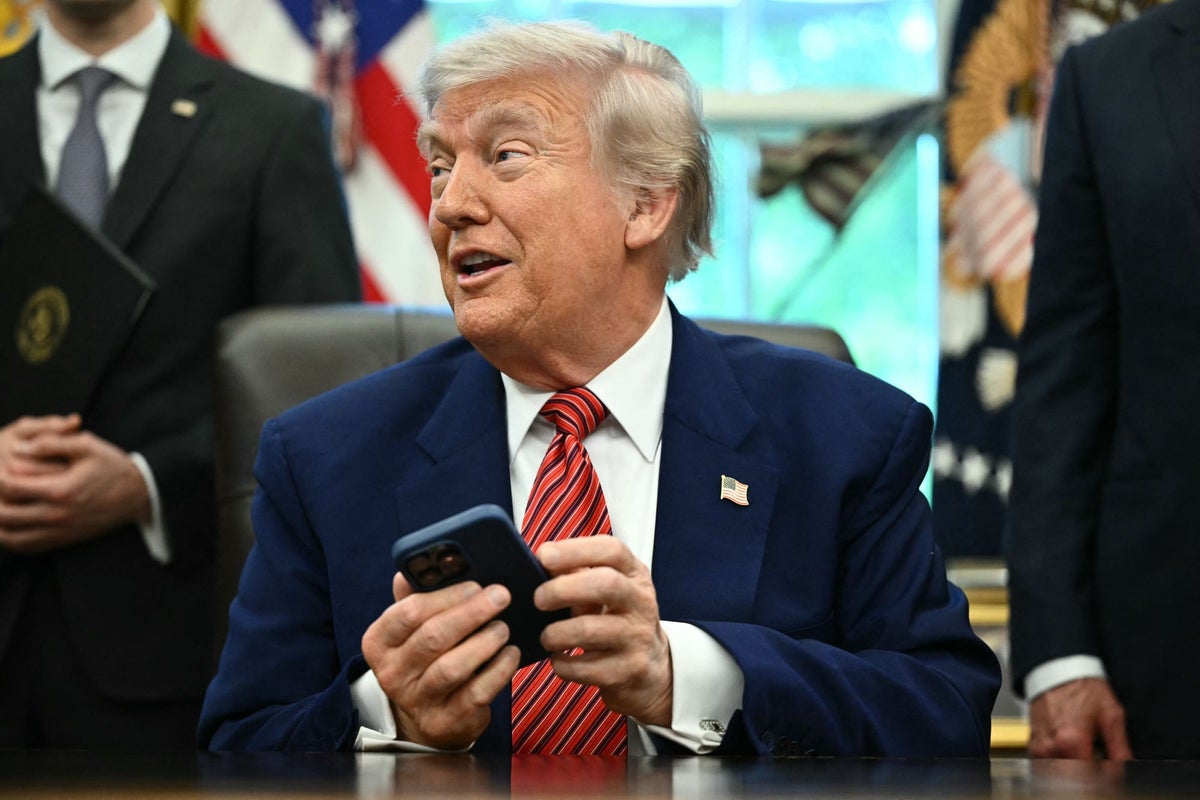
The gatekeeper is not being bypassed by better arguments or more prestigious mastheads; they are being bypassed by the simple realization that at 2:15 AM, the most powerful man in the world is often just another person with a smartphone and a need to be heard.
Identify the specific media trigger—a specific television program or social media account—that most reliably provokes a reaction from the subject. Map the time-delay between the trigger and the subject's peak digital activity. Position all outreach within a five-minute window of that peak to catch the subject in a state of high physiological arousal and low cognitive resistance. Use "Consultative Framing" to ensure the subject perceives the reporter as a peer-level observer rather than an external auditor. This is the only way to ensure the phone is not only answered but that the conversation yields actionable intelligence.



.jpg?width=1200&auto=webp&trim=0%2C100%2C0%2C100)